Wing (Chair) Nut

Those of you who read this blog regularly know that some of my “adventures” don’t always stick. After flying through the air on a trapeze, I didn’t run away and join the circus. Nor have I joined a synchronized swimming team (although I did think about it). One activity that I tried, fell in love with, and have continued is upholstery. I took my first upholstery class in the early days of this blog over a year ago. I was immediately drawn to the combination of creativity and design with sheer physical effort. Upholstery has it all: I could indulge my love of color and interior design while working my day’s frustrations out by ripping and yanking a chair apart and pulling and stretching fabric into place.

Many of you have read, and watched as I tackled my third, and most difficult project to date: a wing chair. I bought the chair (and its twin) on ebay for $99 for the pair (an amazing deal) and found the Albert Hadley fabric at Griswold’s fabric outlet (a real treasure trove). I had to rip the chair to shreds and build it back up, tightening springs, and layering cotton upon muslin upon burlap with a beautiful final layer of fabric.

I started working on this chair in January…so obviously I am not the speediest upholsterer. I had ups and down in the process (I even broke my chair’s leg on Valentine’s Day…I have that effect on dates), and I needed a lot of help, but I am finally finished!

Many of the activities I try for this blog are challenging physically, others are a test of confidence, or even emotionally demanding. This wing chair was a test of my patience. This was a long, hard process. I desperately wanted to be (very) good at upholstering. And while this blog has inspired an evolution of sorts — I am no longer afraid of being bad at something — the prolonged nature of this upholstery project really tested this evolved version of me. I can handle being bad at something for an afternoon or event a full day. But week after week…that was starting to get to me. I was learning as I progressed, but my teacher had to correct me often and I had to re-do elements of the chair often.

There was no real resolution to my frustration, but I was able to sit with it, come to peace with the fact that upholstery is a skill and art that people study for years. Who was I to expect to be good, or even proficient at it in just one year? But all that frustration melted away when I hauled my chair into the corner of my bedroom and saw how beautiful it is, how comfortable it is, and how accomplished I feel. And as I sit in my wing chair writing this post, all the hard work and frustration feels well worth it, and I can’t wait to get started on my next project.

For those who missed my previous posts, here is a step-by-step pictorial of my greatest upholstery accomplishment to date:
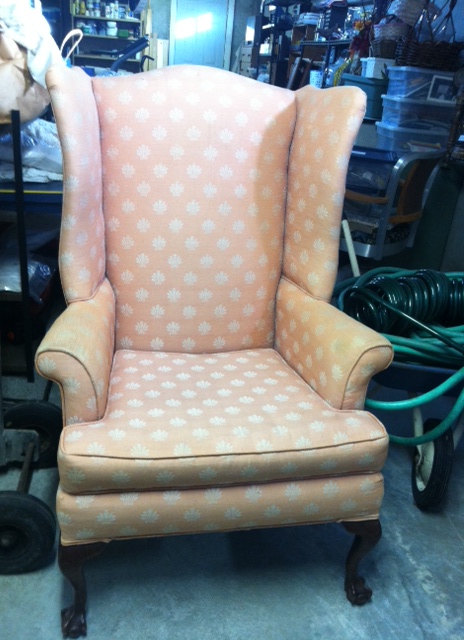
This is what I started with
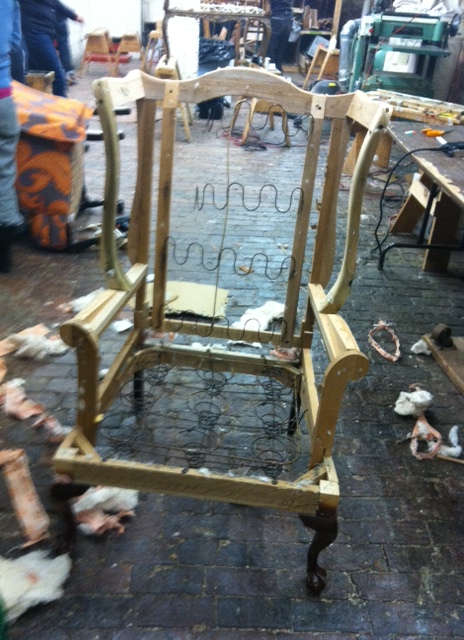
My naked char after taking it apart
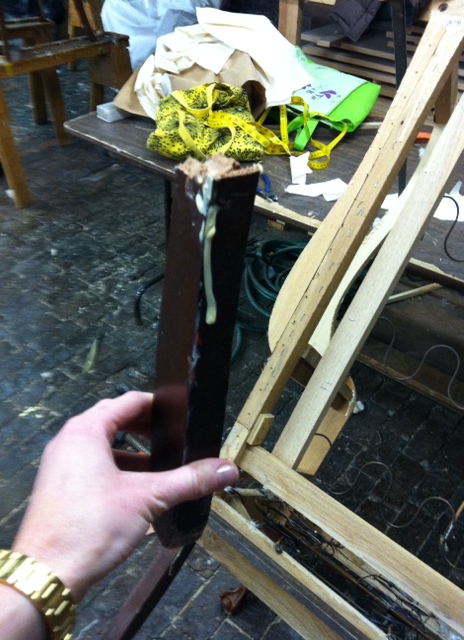
Then I broke one of the legs off…not the best day
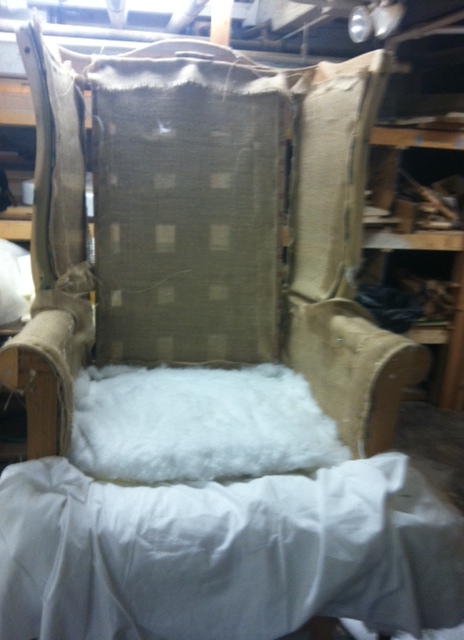
Leg reattached, springs tightened, starting to layer cotton and burlap
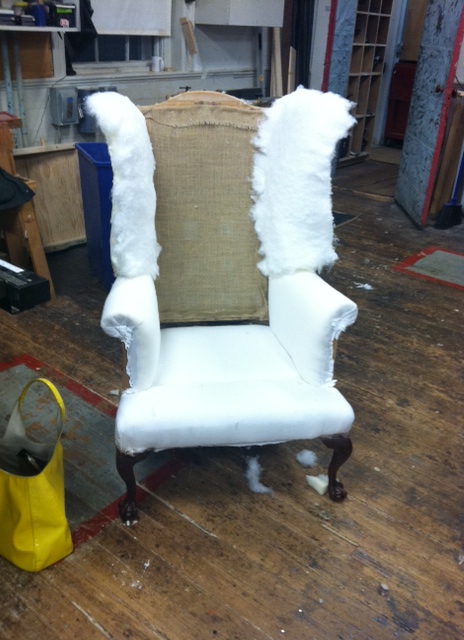
More cotton…
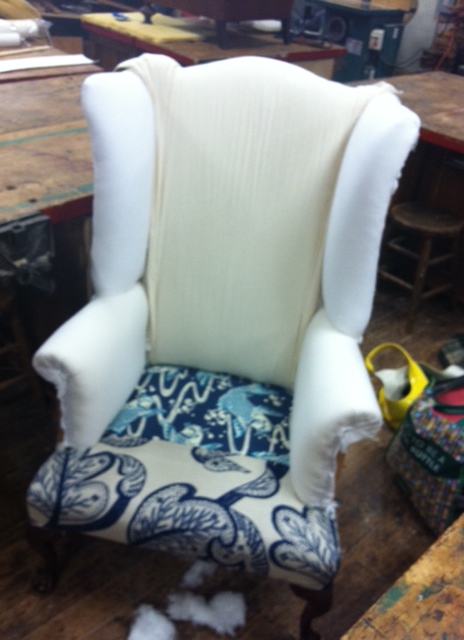
It started looking like a chair
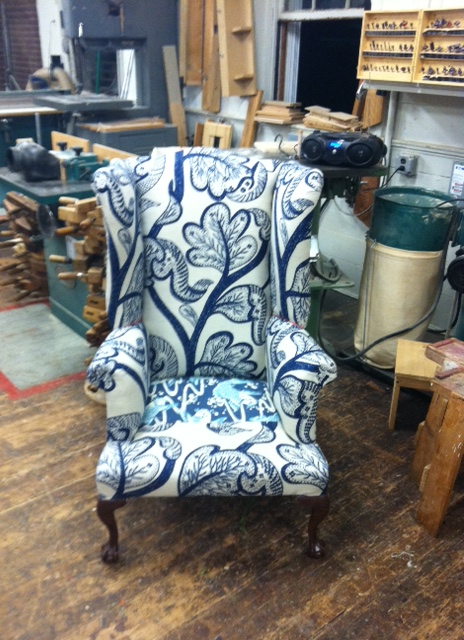
Almost done…

The finished product in my bedroom, the perfect writing perch
Great Expectations

So, as I have hyped over the last week, I attended my first fashion show in New York over the weekend, a true fashion adventure. As it turns out my expectations were a little too high. Don’t worry, armed with all of your great suggestions I managed to create a killer outfit (more on that later). My dear friend Jenna and I did our research. That is to be expected, of course, she is an accomplished journalist and I have not quite been able to truly shake that habit yet. We examined fall trends and the shows from last week. We even enlisted the advice of stylists, both of the professional variety as well as you, my citizen fashionistas. We were ready!

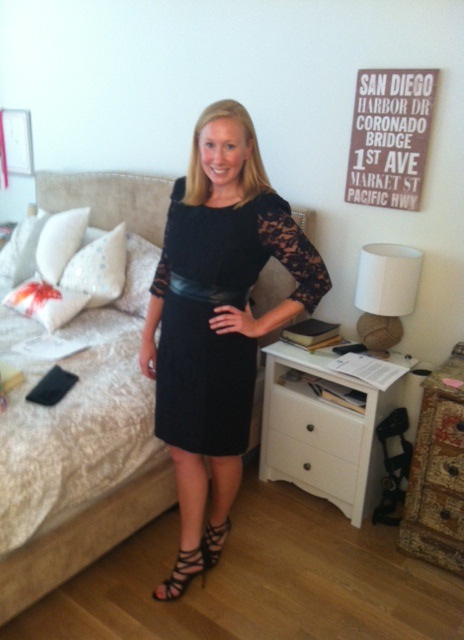
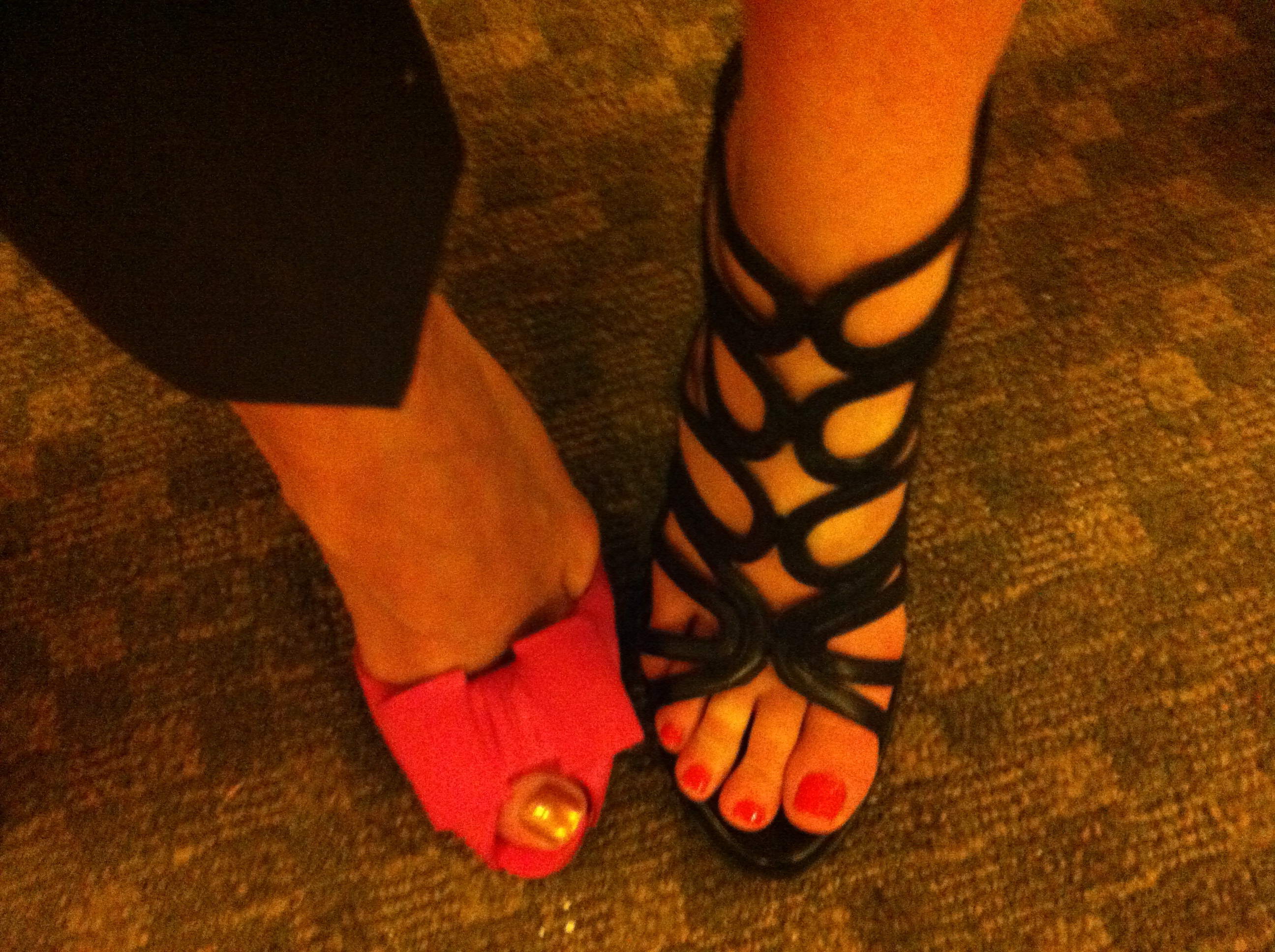
Our killer shoes

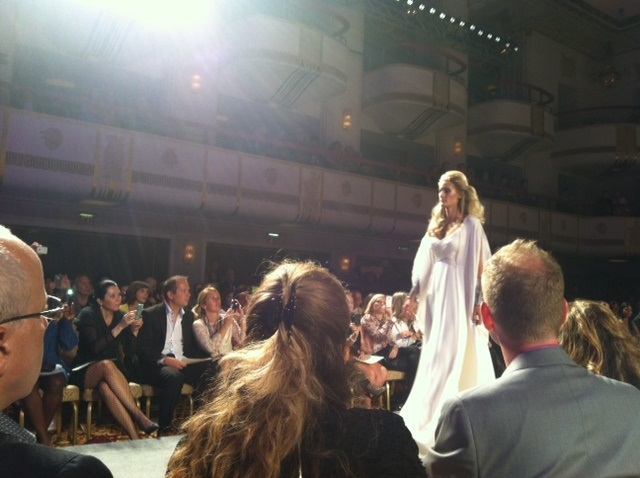
Honestly, getting ready for the show may have been more fun than the actual show. Closet fashion shows with girlfriends are tough to beat, aren’t they? We rolled up to the Waldorf and took our seats, not in the front row, but in the second (not to shabby).

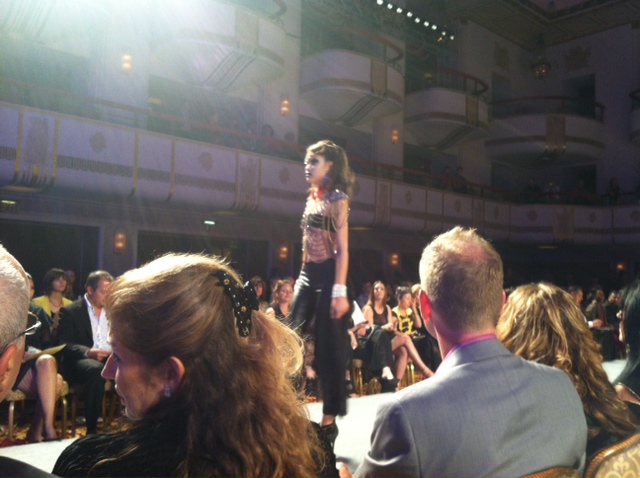
With the show featuring couture, I expected the type of hyper-stylized and eclectic looks that we saw come down the runway. What I did not expect were the eclectic outfits of our fellow audience members. The ratio of fashionista to fashion victim was slanted in the wrong direction. I even spotted a banana clip with bejeweled interlocking “Cs.” Neither Coco Chanel nor Karl Lagerfeld OK’d that! Judging from the crowd you would think we had walked into an episode of “The Real Housewives of New Jersey.” It was a people-watcher’s dream.

We saw the work of three international designers. First up was Wendy Luzon whose work included sparkly chains dangling from bedazzled shoulder pads.

A good shot of the offending banana clip

Isabel Zapardiez showed some elaborate wedding gowns in hues of ivory and blush with distinct headwear that at times looked like tiny birds were taking up residence in the model’s nest-like hair styles.

Last up was Giovanni LoPresti, who dressed his models in masks and funky night club-worthy pieces incorporating leather and sequins. This was couture, so I don’t think anyone is supposed to wear the looks exactly the way they were presented on the runway, and that’s probably a good thing.

My first fashion show was a great experience, even if it didn’t quite live up to my Oscar de la Renta fantasies. I had been a little nervous about being overdressed, underdressed, or not dressed just right, but I was also expecting a scene out of “The Devil Wears Prada,” with stick-thin stylists and editors fighting over seats in the front row. This was certainly not that, but I didn’t know that until we got inside. Outside the Waldorf, my anticipation gnawed at me as my heart beat faster and faster. But walking in with my friend, I put on a confident smile, added a little strut to my steps and sauntered in like I belonged…then exhaled in relief as we sat down — the realization sinking in that we were not the ones who should to feel self-conscious.

Crazy fashion show lighting, but our smiles are obvious

Now to the good part, my outfit: the dress was my own, by tibi. My leather sash and clutch came from the closet of Whitney Dayton Brunet and those amazing shoes are Luxury Rebel courtesy of Jenna Lee, my date for the evening. Thank you for all your suggestions, I incorporated many of them into this ensemble.

I can’t express enough appreciation for Molly Galler and Wheeler del Toro for sending me to my first fashion show. It was quite an experience and I am now prepared for when Oscar invites me to his spring 2013 show in February (pretty please).

My Nightly Adventure

As you all know I was in NYC this past weekend to attend a fashion show (more on that in the coming days), and it turned into a very auspicious weekend trip!  As regular readers of this blog know, sometimes my adventures take me on the road (New York, Minnesota, and Chicago, that post coming soon, to name a few). Being a self-financed blogger, I’m always looking for ways to cut travel costs.

This past weekend while in New York, a producer for NBC Nightly News asked me to offer my observations on trying to find deals on hotels. Of course, I was happy to oblige!  Click here or on the image below to watch the resulting story.

Having spent a large part of my career in TV, the interview felt like going home. Much like New York itself, the news industry is a wonderful place to visit, but I am really enjoying this new life adventure of mine. Thanks to all of you for coming along with me, and enjoy the show!

Front Row or Bust

My celebration of Fashion Week rolls on with a surprise opportunity. Thanks to Molly Galler, the great blogger behind PopBopShop, and Wheeler Del Toro of 3 Scoops in Brighton, MA I will be going to a Couture Fashion Week show on Saturday. What more could a fashionista like me wish for?

The picture that won me Fashion Week tickets. Courtesy of Kara Kochalko

These tickets were part of a giveaway that Molly hosted. To win we had to submit a picture of ourselves in our most front-row-worthy outfit. As you all know, I never do anything half way, so I took this as a challenge. I grabbed an armful of fun items from my closet and pleaded with the talented Kara Kochalko to capture me doing my best Anna Wintour impersonation, minus the bangs. The result you can see here, and the rest, as they say, is history.

This is going to be a challenge of confidence as opposed to the majority of my other escapades which tend to be challenges in a physical or emotional sense. I have to strut into the Waldorf Astoria (hopefully on a carpet in some shade of red) looking like I belong there. Now, I know and love fashion, but couture? Each of these pieces will be made to order for its future owner who will no doubt spend thousands of dollars on each piece. I, on the other hand, will be spending $25 on a Bolt Bus ticket to NYC.

I always think about what I am going to wear on my adventures, but this time it actually matters!  Black is always safe in New York, but for the theatrics of a couture show, a little extra may be necessary…maybe one of Marie Galvin’s fascinators? The clock is ticking for me to perfect my double air kiss and to find the ultimate Fashion Week ensemble.

Here’s where you come in: I need your help and will take any and all suggestions on what to wear. Leave me a comment, send me an email, tweet, instagram a picture, send a carrier pigeon, anything! I will be headed to NYC on Friday afternoon so be sure to weigh in before then. Keep in mind that if I fall in love with your idea, I have to be able to find it in Boston this week, or with little time to spare in Manhattan on Saturday afternoon.

I will, of course, document every moment of my fashionable adventure so you will get to see whose suggestions I take. Ciao Darlings (I am practicing already)!

Many thanks to Kara Kochalko for being generous with her time and her camera. She also took my profile picture, so as you can see she is very talented. Thanks also go out to Molly Galler and Wheeler Del Toro of 3 Scoops for making this would-be fashionista’s style dream come true.

Fascinating Fascinators

Photo courtesy of FameFlynet Pictures

The past year and a half has been full of new experiences for the Duchess of Cambridge (the former Kate Middleton), as well as for those who love her from afar. The “Kate Effect,” as the infatuation with her fashion choices has come to be called, has influenced style across the globe. Dresses that she is seen wearing sell out in hours and the demand for them has even crashed lucky retailers’ websites. I have to admit, that I am one of the many who are obsessed impressed with the future queen’s style and grace.

The one element of Kate’s outfits that is most striking to American audiences is her headwear: we Yankees love those Brit’s hats. There was a parade of fascinators worn by nearly every guest at the royal wedding last year and Kate has dazzled us with her choice of fascinators from her first trip abroad as a royal to the Queen’s Diamond Jubilee. As Americans – and specifically Bostonians – get more familiar with the different ways to top off an outfit, the demand has grown for toppers themselves.

Photo courtesy of Jeff J Mitchell/Getty Images Europe

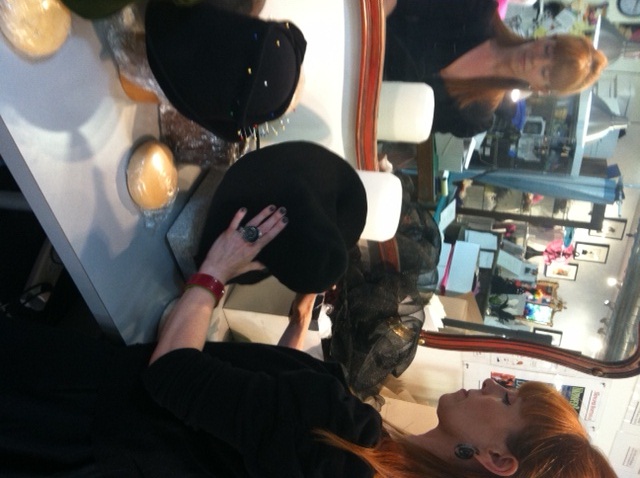
Boston’s only trained milliner (I tried to find another and was unable, which is why I have deemed her the “only,” speak up if I’m incorrect) has been the beneficiary of this spike in fascination with fascinators. Irish-born Marie Galvin of Galvin-ized Headwear has been making hats in Boston since 1998, and has been in her current location in the city’s South End since 2007.  She started out in fashion design (her grandmother was also a designer), but was struck by the power of a hat.

“You can go from drab to fab in a couple seconds,” Marie said cheerfully on the late summer afternoon I spent with her. She says a person stands taller when they wear a hat; they walk with more confidence and with an extra bounce in their step. I tried it, it’s true.

Marie was already living in Boston when she started her love affair with hats. She could not find any schools or milliners to learn from, so she bought old books on millinery and taught herself. Many of the materials and equipment she needed were not available in the States, so she had to order them from the UK, the mother land of millinery. It was a hard road, but hat-by-hat she got better and better. Today she executes her designs in the back of her boutique which looks like the Santa’s workshop of hats with Marie as the one and only elf.

Marie makes all sorts of hats: chic and warm winter hats, berets, fascinators and couture pieces for weddings and special occasions. Her creations are whimsical and playful, they can be sexy, and sometimes practical, but are always beautiful. Her shop is the place to go for Kentucky Derby toppers and increasingly spring and summer weddings.

Marie steaming the felt

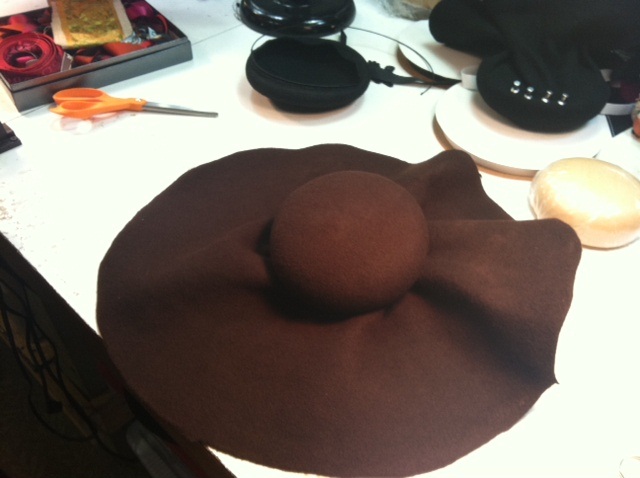
To celebrate the start of Fashion Week and because we are inching our way into fall (I am shedding a tear as I type this), Marie thought I should try my hand (literally) at making a beret. Marie makes each of her hats by hand and it can take days to complete one piece. For this beret we started with felt, sounds simple enough right? Wrong! The felt, has to be flexible enough to be stretched over a form. To do that, Marie steams the material until it becomes malleable. Marie holds the fabric over a steam machine that spits out boiling vapor, which can be a little tricky…seriously…I scalded my fingers. Next, Marie and I stretched the fabric over the beret form and pinned it in place. This typically has to sit overnight to fully take on the appropriate shape. Much like a morning show cooking segment, Marie had berets at different stages of development set up for me. So instead of coming back the next day, we cut off the excess felt and moved on to sewing a thin wire to the edge of another beret that had already been left overnight. We used a huge needle because the felt is so thick. Much like my upholstery projects, it was one of those moments that I wish I knew more about sewing. The wire gives the beret shape and we then covered our work with piece of glossy black grosgrain ribbon.

On the mold

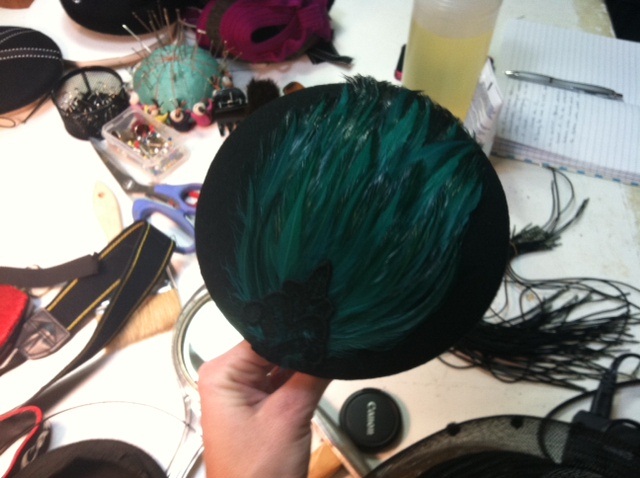
The hallmark of Marie’s pieces is the attention to detail, one look inside her shop and that is clear. For the beret we were working on Marie showed me how she hand-stitches beautiful jewel tone feathers to the top. This beret is perfect for fall and a perfect way to wade into the waters of fashion headwear. The beret fastens around your head with a thin piece of elastic that disappears into your hair, even my ginger locks. I was so happy to learn that this is how Kate’s hats stay so perfectly in place.

The process of making a hat – even a relatively simple one like the beret – is complex and takes a great deal of time. And Marie does all this after she has designed the hat…in her head she says. The real testaments to her talent are the fascinators on display in her shop. I am dying to get one, specifically the navy one at the bottom of this post. I just need the right party or wedding to which to wear it. Hint, hint my friends. Millinery is a lost art, as is, perhaps , the wearing of these elegant accessories.

My Beautiful beret

The making of this beret, and I am sure it is the case with all of Marie’s creations, requires a lot of my patience (a virtue that I am gradually acquiring week-by-week), it is similar to upholstery in that way. My generation of post-feminist daughters, were in large part spared the “Home Ec” classes that our mothers and grandmothers suffered through (or took joy in, I am not judging). As a result, I have had to get comfortable with sewing, cooking and other domestic tasks that were once considered women’s’ “jobs,” in my 20s and now my 30s, as opposed to in the middle school classroom.  This is an odd feeling at times, and an interesting cultural discussion to have.

Marie’s work will be featured in an exhibit opening this Saturday, September 8th, at The Peabody Essex Museum. The exhibit “Hats” will also feature the work of some of the world’s most well-known milliners. Marie will be on-hand on Saturday to lead a discussion on choosing and styling the perfect hat, she will be followed by a presentation by Stephen Jones, he is like the Chanel of milliners. So this is a big deal! This is sure to be an amazing opening day and I hope to see you there!

Courtesy of Anna Sikora, one of Marie’s satisfied customers

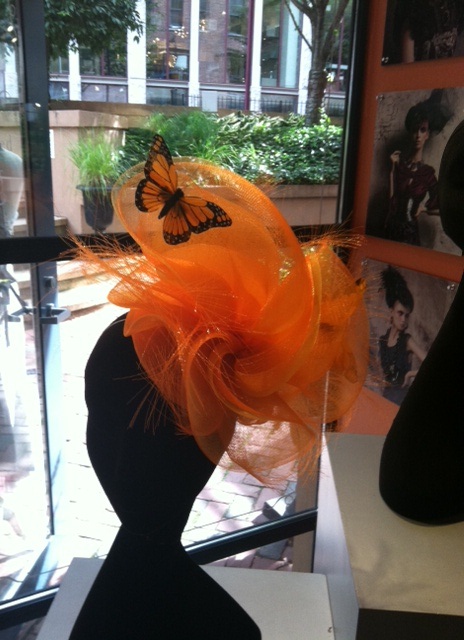
One of Marie’s more whimsical creations

My favorite! It has my name on it, just waiting for the right occasion

I was not compensated in any way for this post, and the berets I worked on are on sale at Galvin-ized Headwear.

On a Roll

One of the suggestions that came out of my beer tasting party was that I should try more food-orientated adventures. Because I always listen to the requests I receive (please take note and send your suggested adventures my way), I sought out what I thought would be a culinary challenge: learning to make sushi. I love to eat sushi, so at the very least I figured it was a good skill to have. I headed to Sea To You Sushi in Brookline, MA for a lesson on making what is arguably the first “fast food,” dating back to the 8th Century.

The class was packed and it seemed to be a date night for many of my classmates. Wrestling with raw fish doesn’t seem like the most romantic evening, but who am I to judge. Our teacher walked us though the process of rolling a typical inside-out roll a few times and then we grabbed our seaweed and got at it ourselves. For all you sushi lovers out there, here is a step-by-step guide from an (new) expert:

First, take a ball of rice (imagine a killer snow ball. I used roughly a grapefruit-sized ball for two rolls) and work it into a white layer covering one side of the seaweed. My teacher said that you don’t want it to be too think of a layer, so once you press the rice in, go back and pick the excess off if you have any spots of thick coverage.

My sushi ingredients including my snowball of rice

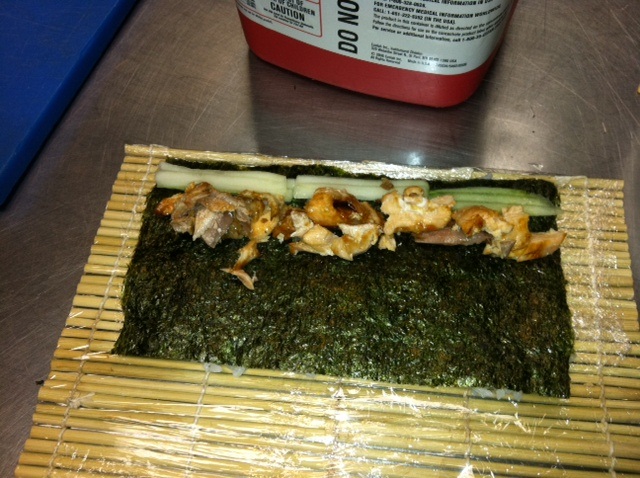
Next, flip your seaweed over and lay out your fish and vegetables of choice long ways on the naked side of the seaweed. I went with salmon and cucumber (there was raw fish available, but I played it safe and started out with the cooked option).

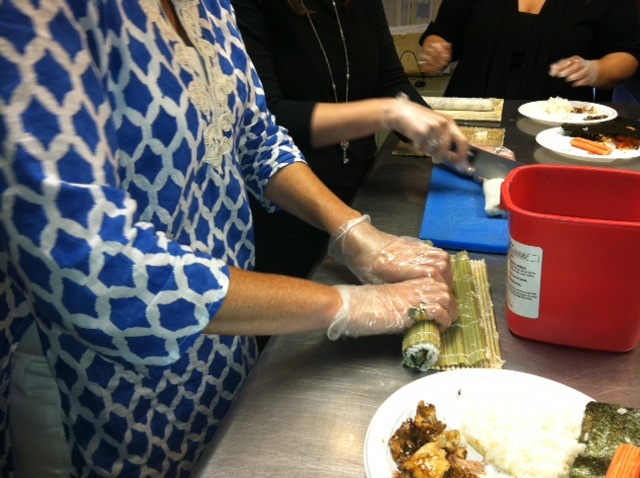
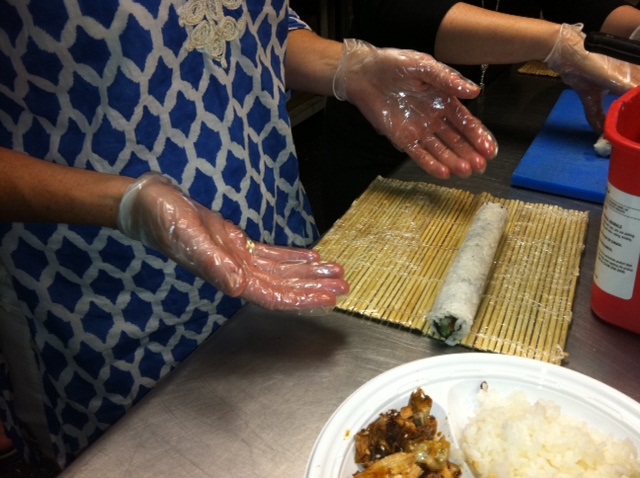
Next, line up your seaweed on a bamboo mat and roll it up. We used a technique that our teacher called “cat paws.” It’s a pretty self-explanatory way to illustrate how to wrap your hands around your rolls. Imagine a cat using their paws on your sushi (appetizing, I know).

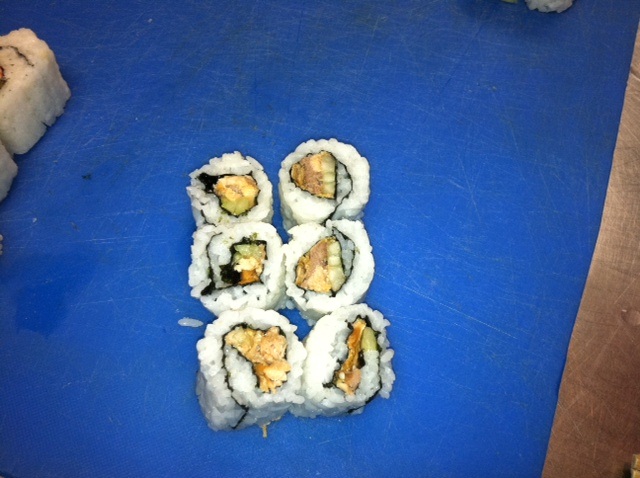
And Voila! A beautiful and delicious sushi roll.

We learned some fancy cutting techniques, but I could not slice my rolls on a diagonal. I think if I used a more robust helping of rice it would have been easier to cut. As an alternative, I went for a straight cut.

We were able to eat what we made and it was yummy. Some of my classmates, those on dates, seemed to be making enough sushi to feed an army, or at least a large dinner party. I, on the other hand, quit after crafting three rolls; and I couldn’t even finish that much.

I thought making sushi was going to be really difficult, but in fact it was rather easy. Having said that, what I have to assume is the most critical factor in a sturdy sushi roll was created before we arrived for class. Namely, we did not make the rice! Sushi rice, or sticky rice as it is also known, has to be just right in order to be rolled into dinner.

While sushi rolling certainly takes some skill, it was a little anticlimactic for me (but I think would make a great evening activity with friends). I hypothesize that’s because my usual adventures have conditioned me to expect these new experiences to be tough! As a result, the fact that I caught on to rolling sushi rather quickly was somewhat of a let down. What does this tell me? No, not that I should up the ante and invest in a culinary torch, but that I really like a challenge. As uncomfortable as being bad at things makes me, I hate things to be easy even more. Please note, I promise to challenge myself more in the future — whether it is physically or emotionally — and share those experiences with you. I know that I am up to this challenge!

This post is not intended to knock sushi making as an activity. It’s certainly fun, and I repeat, easy! Anyone can do it. And I encourage you to give it a try at home with friends…and maybe even a date.

I paid for this sushi making class and was not compensated in any way for this post

The Passing of a Legend – and a Teacher

I am taking a brief break from my escapades to remember a legend who we lost two weeks ago. In her obituary in the New York Times, Judith Crist was described as one of “America’s most widely read film critics for more than three decades.” She tormented film makers (one of whom famously referred to her as “Judas Crist”) and broke barriers for female journalists, but she was also a passionate and hard-driving teacher of generations of journalists. Generations with an “s,” I am not sure if anyone else can claim that title.

Photo by Thomas Victor

Crist graduated from the Columbia Graduate School of Journalism in 1945 and  went on to write movie reviews for the New York Herald Tribune, New York Magazine, Gourmet, Ladies’ Home Journal and was the “Today” show’s first regular movie critic. In addition to her own writing, she returned to the J School to teach young journalists to write clearly and with purpose and conviction.

When I arrived at Columbia, I had worked exclusively in TV and Radio. I was not a print writer, or at least I didn’t think I was. Second semester we could choose from a host of electives, including a criticism class taught by Crist. Students had to submit a writing sample in order to gain entry into the class. Crist reviewed all the pieces and hand-pick her class from them. This is classic Judith Crist; just like her reviews of the classic movies of the last century, she didn’t have much patience for those who she deemed were wasting her time.

I submitted a story that I wrote about the rise of Muslim converts in New York City post 9/11 (I cannot explain how, but that piece found its way to this Muslim message board). I had gone “undercover” for this story, attending conversion classes at a local mosque with a pastel pashmina covering my head. I was very proud of this story, but I thought it wouldn’t compare to the work of those students who were focused on a career in print (as opposed to broadcast). I doubted Crist would even get through the first paragraph of my submission. I was quite literally amazed, when I was informed that I had made it. Judith Crist wanted me to be in her class.

Her goal was to turn us into critics and columnists who make strong, intelligent arguments free of stylistic and grammatical errors. Just like her reviews, her comments on our work could be scathing and acerbic (an adjective that appeared in every obit I read on her). Our pieces were usually covered in her elegant script – in bright red ink. Typos, vague phrasing, weak arguments and simple stupidity were not accepted in her class – which actually took place in her living room on the Upper West Side (she was not as ambulatory as she once was).  She pulled no punches in her criticism, which sometimes led to tears, battles over her lack of cultural sensitivity or understanding of modern (circa 2005) trends.  As hard as she could be, if you made an intelligent argument about your literary choices or offered a valid explanation for taking a certain approach she was the first person to acknowledge that she may have been wrong.

Photo by Gabe Palacio/ImageDirect

You wanted to please Judith Crist. I worked harder, edited more and spend more time on my assignments for her class than any other class during J School. Once, and it only happened once, I had a completely error free piece. She waved the black and white pages in the air; it seemed she thought it was as big a deal as I did…or at least that’s what I want to believe.

Judith Crist helped me find my literary voice.  That voice, and my confidence in it, was one of the reasons I was able to take the leap to start this blog. I have to thank her — not only for breaking the gender barriers that allowed me to be the female journalist I was — but also for her tough love as a teacher, that enables me to be the writer I am today.

Olympic Endeavors – Fencing

The 30th Olympiad came to a close just 48 hours ago, but it already feels like the Olympic spirit has left the building. I, for one, am not quite ready to end the Olympic celebration, so I am going to keep the party going with…fencing!

Fencing began in Spain in the 1450’s and spread abroad through battlefield encounters with other nations. Modern fencing is one of only five events that have been a part of every Summer Olympics since the birth of the modern Olympic movement in 1896. The Boston Fencing Club traces its roots back even further, to 1858. It’s the oldest fencing club in the country, so it seemed like the most appropriate place to pick up a sword – specifically a foil – for the first time.

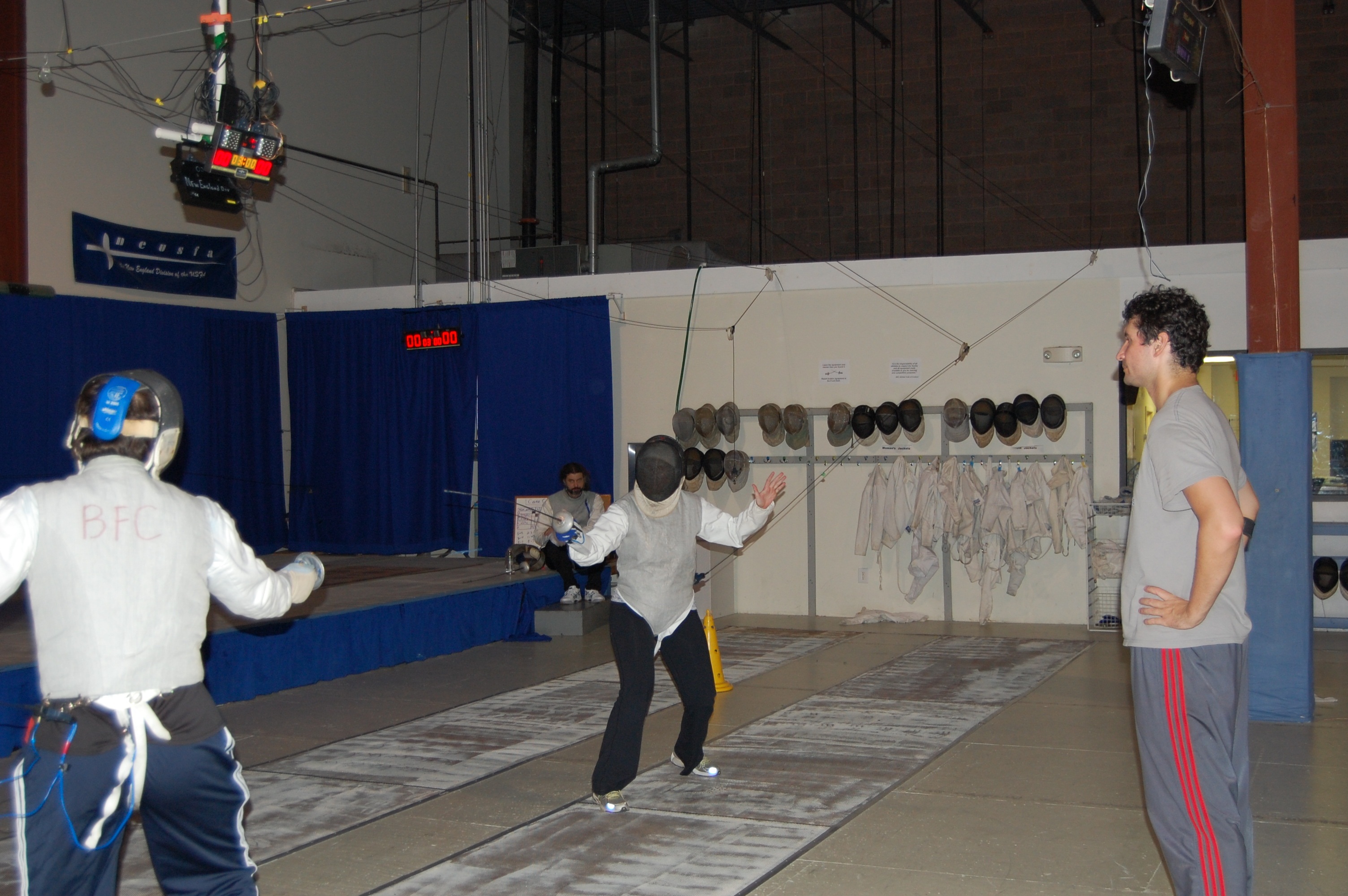
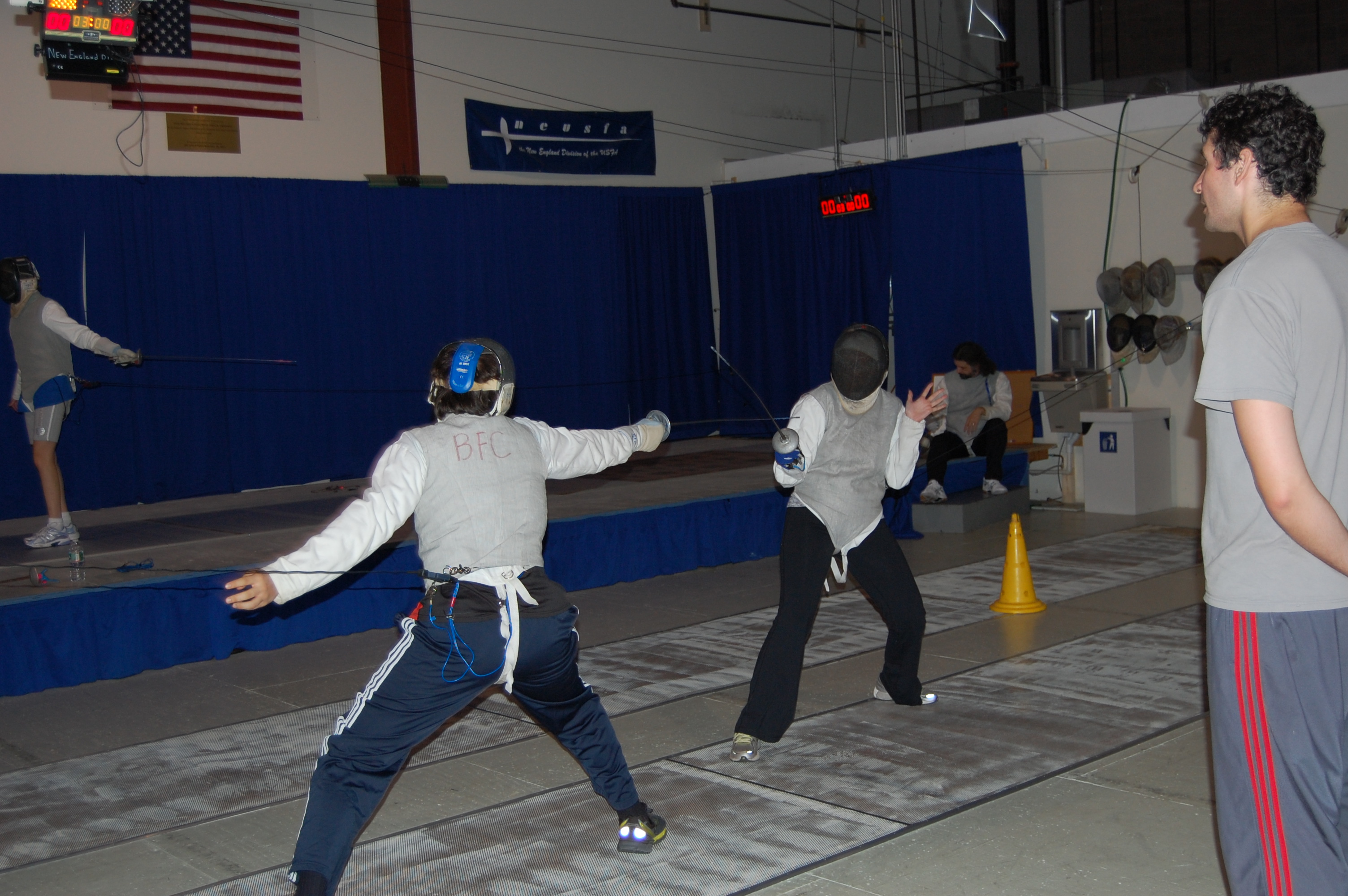
Fencing with Adam looking on

I started my evening of being en guard” with a private lesson with Adam, one of the club’s instructors, whom was a collegiate fencer and is a great teacher. We went over the basics including the three styles of fencing (foil — which I would be learning — sabre and epee), where I should be aiming (the upper torso) and how one scores (in foil, just a clean touch with the tip of the blade).  He outfitted me in all the necessary gear and I stepped on to the strip (the area that acts as the boundary in which one fences).

When Adam and I said “en guard” for the first time, I felt my pulse quicken. I was loaded with plastic and canvas protection, and the tip of the foil was not particularly sharp, but I was nervous that I would hurt Adam if I stuck him. A few times I actually asked him if my “touches” hurt. Of course they didn’t, but I think I was having trouble wrapping my mind around the fact that I was waving a sword at another person.

It’s not surprising that I was worried about Adam’s safety, and not necessarily my own. I do that a lot. I worry about my family and friends and I have a track record of compromising myself in favor of others. Depending on the circumstances, this can make me a very devoted friend, or alternatively, a masochist…and now I was brandishing a sword.

As we got going, Adam advised me to stop “bouncing around.” Fencers tend to move almost as a reflection of their opponent. If one takes a step back, their opponent will advance in their direction trying to push their opponent back, closer to the edge of the strip. I had not realized it, but I must have been hopping instead of fencing. Not the most aggressive or intimidating look, I’m sure.

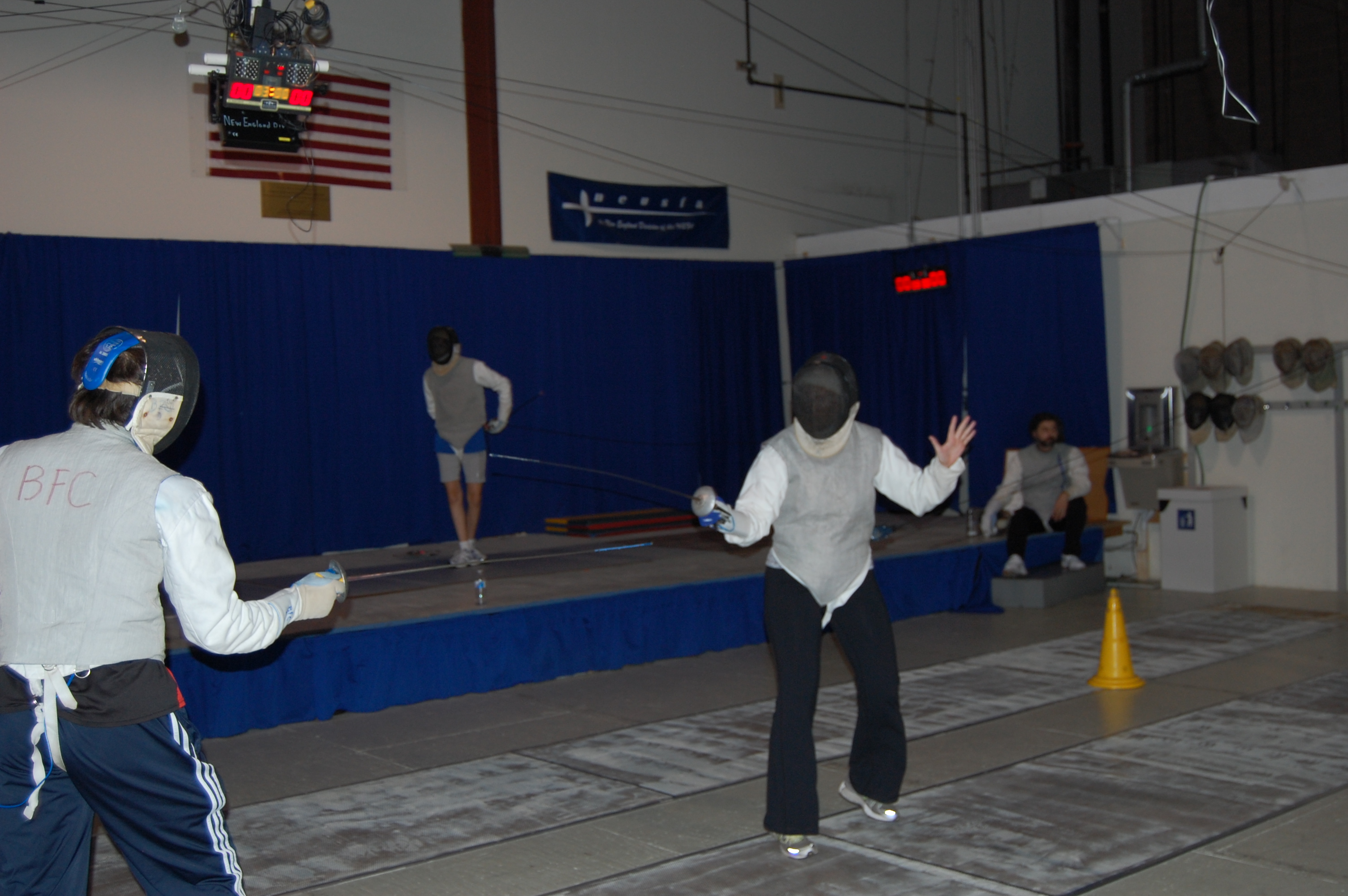
En guard!

After some initial sparring, Adam introduced the concept of “right of way.” In the simplest terms, the rule dictates that if both fencers touch one another at the same time, the fencer who began the offensive action gets the point. This may not sound all that complicated, but when you are on the strip with a sword in your hand and you have someone trying to stick you, it becomes difficult to keep track of who has right of way. This rule exemplified how subtle yet complex this sport is. Fencers must keep track of who has the right of way, while still being present in the moment, trying to “touch” your opponent while moving and blocking in an attempt to avoid being “touched” yourself.

Adam and I sparred a while and then I joined Adam’s adult class which, while filled with novice fencers, had weeks of experience on me. When I stepped onto the strip with my new opponents my adrenaline was really pumping. I felt as nervous as if the sword in my hand was real and sharp. If you had asked me about the lesson I had just learned, I probably would have said “right of what?”

I felt my heart pumping, and the killer instincts I never knew I had took over. I still felt myself bouncing a bit, but this time it was an aggressive bounce (I’m sure). I advanced towards my opponent with my foil pointed at his chest and after a few lunges and parries (blocks) I landed a touch. My opponent landed one as well, but it didn’t hurt, in fact I barely felt it. If the electronic score keeper had not buzzed I would likely not have noticed. I had no idea which one of us had the right of way, but I wasn’t waiting to find out, I was going after my opponent and if I lost a point, oh well, I was fencing!

He got me on the arm

Now I am not in any way advocating aggressive behavior, but for me to fence a stranger and not stop to as how he is feeling, or unleash the classic emilyism, “Oh my goodness,” was quite a breakthrough. With a sword (albeit one used for sport) aimed at me, all my competitive and survival instincts took hold and not only did I defended myself, but I went on the offensive! While I am not totally sure who won, that is (almost) beside the point.

Many thanks to Adam and Helen and everyone at The Boston Fencing Club for letting me join their class and for helping me unleash my inner (harmless) aggressor. The club offer classes for children and adults, and has terrific teachers. This sport is like nothing else I have ever tried, combining very specific skills, agility and strategy. Plus, it is a totally fun way to work off an aggravating day.

I know it’s sad that my Olympic adventures have come to an end, but don’t fret.  There are a few additional physical feats that I couldn’t squeeze into this fortnight, so there will be a stray Olympic post or two over the next few weeks. And mark your calendars now (and get your requests in) the winter Olympics in Sochi, Russia begin in just 18 months and I will be hitting the slope — or maybe the bobsled track, or the curling ice — once that torch is lit.

Olympic Endeavors – Synchronized Swimming

I continue my celebration of the Summer Olympics with Synchronized Swimming, which began on Sunday in London. I have never known anyone who participated in this sport and didn’t know much about it, which of course meant I had to try it. I now realize Synchronized Swimming requires a lot of strength, coordination and grace in addition to water-proof make-up and exaggerated smiles. I thought it would be difficult to find an organized “sychro” (as NBC seems to call it these days) program, but thankfully I was wrong. The Andover/North Andover (Mass.) YMCA has an extensive program for children ages 6 to 19. They currently have 80 team members.

The Y’s head coach and team director, Svetlana Malinovskaya, was kind enough to offer me a private lesson seeing that the team is made up of kids, and swimming with them may have seemed a little creepy. Svetlana was a member of the Belarus National Team from the ages of 15-24 before moving to the U.S., so I was in very capable hands.

I arrived, uncharacteristically late and a little flustered, quickly changed into the only one-piece bathing suit I own, threw on my brand new swim cap and goggles and scampered onto the pool deck. Svetlana let me borrow her nose clip – more about that later – and we jumped into the pool as little girls wearing big smiles did laps of the pool; but they were not swimming laps of the pool. They were vertical in the water with their heads bobbing just above the surface and they were moving at a pretty good pace. I wondered if I could be as good as these eight year olds. Maybe one day.

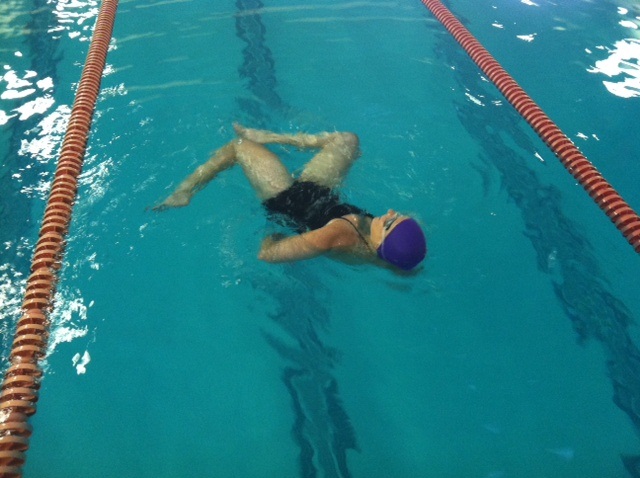
I am sculling underwater to spin myself around like a pinwheel

Svetlana and I started out with the basics: sculls. They are the hand movements synchronized swimmers use to propel them in different directions in the water. It’s all wrist action, tiny paddles under the water and the direction in which you move your hands dictates which direction you will float in. I did a layback (exactly what it sounds like, laying on your back at the surface of the water) and sculled in different directions. We then added a back somersault under the water. Svetlana explained this as if it was the next natural (and easy) step. For me, it was not. I could not get myself around. Svetlana said I could use my arms to power me around in a circle. That advice resulted in a wild flailing of my arms attempting to turn underwater.  I ended up floating to the surface, usually butt first. Despite my roly-poly nature in the water, Svetlana said I was a fast learner. Obviously, she was being very, very kind. I have to admit, despite appearances, my nose plug made things so much easier! I could struggle to somersault under water with relative respirational ease without water flooding my sinuses. I may buy one just to have.

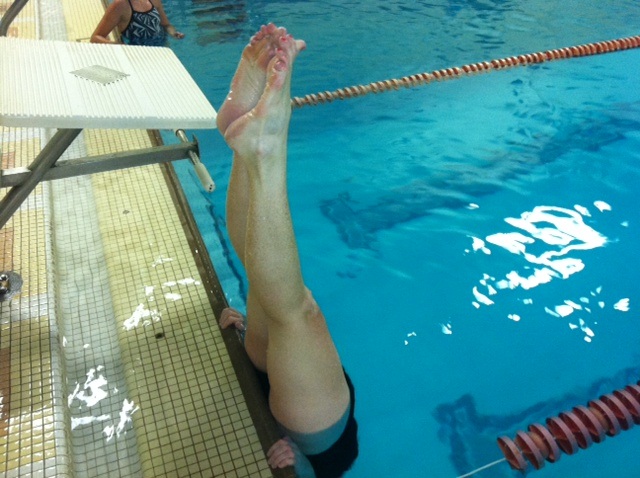
We moved on to head stands up against the pool wall and some “cranes” (extending one leg straight in the air while in a back

Practicing headstands against the wall of the pool

layout position). Getting into this position was tough enough…but then you have to scull to move your body around in a circle or in a specific direction. It never occurred to me how much physics is involved with successful synchronized swimming. As Svetlana explained to me, our lungs, being filled with oxygen, are our natural flotation device.  For women especially, it’s the weight of our hips that make us sink. In order to have control and stay, for example, upside down in the water, perpendicular with the surface of the water, your hips and lungs must be right on top of each other on the same line, meaning you have to keep your body rigidly straight.

Graphic courtesy of isport.com

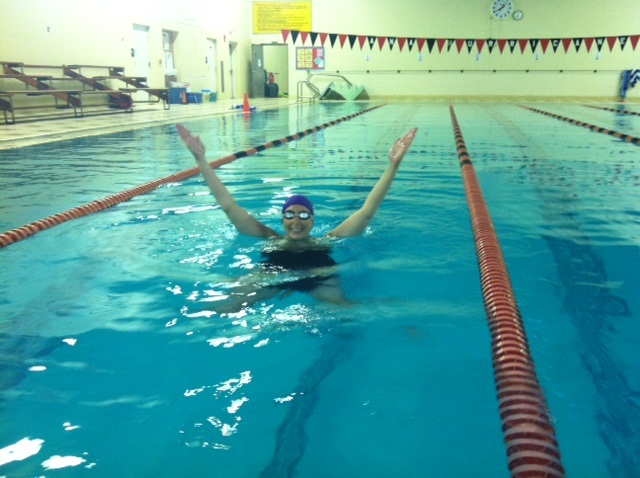
Next I learned one of the most important moves in synchronized swimming: the eggbeater, which is similar to treading water in that it keeps your head above the water, but you are not using your arms – they are forming elegant circles above the water.  During eggbeaters each leg is rotating around in a circle from the knee down, but each leg goes in a different direction, hence the name. As I struggled, the little girls on the synchro team were doing eggbeaters around me – this move is now second nature for them, but as a novice, it made me feel totally uncoordinated. It’s similar to trying to tap your head with one hand and rub your tummy with the other. I just couldn’t get the rotation right without concentrating really hard…but then I forgot to smile, which is very important in the sport. I could get my hands up in a V, but then I would slowly sink because my eggbeaters were not quite strong enough to keep me afloat. As my head slowly slipped into the water despite the thrashings of my lower body, both Svetlana and I started to giggle. Yes, a grown adult barely keeping her head above water – both literally and metaphorically – during a synchronized swimming lesson is a funny sight. I even caught some of the little experts trying to contain their laughter as they continued with their laps.

Before I tried Synchronized Swimming it seemed to be one of those sports that tends to be the butt of jokes, not to mention SNL skits. In some ways I chose to try it because I thought it would make for a ridiculously funny post. But the joke was on me. Not only is it quite difficult, I actually really enjoyed it. I even asked Svetlana if there was a program for adults. Sadly, there is not one in Andover, but she said Worcester has a “masters” program for adults…while I am far from being a master (I didn’t even get to point of synchronizing my new moves in time with another swimmer), I may be one day.

One thing Svetlana said really resonated with me. As I writhed under the water trying to do a backflip, and came up for air with a smile on my face, she remarked that she was surprised that I seemed to be having such a good time. I wasn’t getting outwardly frustrated, and usually adults struggle with wanting to be too good too fast. I told her that I used to be like that (and boy was I). I wanted and expected to be good at something right away, despite never trying it before. Now I can see that it’s rather arrogant to think that way. But trying all these new things for this blog, week after week, seems to have made me unafraid of being terrible at things.  I am more open to the unknown now, happily ready to try new things for the experience of it, not necessarily to excel them. My inhibitions have disappeared and where this Type-A girl once stood, amazingly, a fearless young woman now stands…or floats as the case may be.

eggbeating…and sinking…but still smiling

I can’t thank Svetlana Malinovskaya enough for taking time out of her buys day to spend a few hours in the pool with me. The Andover/North Andover has a great synchronized swimming program, and I encourage anyone with little girls to check it out. I was not compensated in any way for this post.

Olympic Endeavors – Taekwondo

I love the Olympics. I mean I really love the Olympics. I get goose bumps during the opening and closing ceremonies and I cry at the end of the produced pieces on the athletes’ background.  They have inevitably overcome some obstacle to reach the Olympics, and that inevitably cues the waterworks. To celebrate the 30th Olympiad I am launching several weeks of “Olympic Endeavors.”  I will challenge myself by trying different Olympic events. This week, the Korean martial art of Taekwondo.

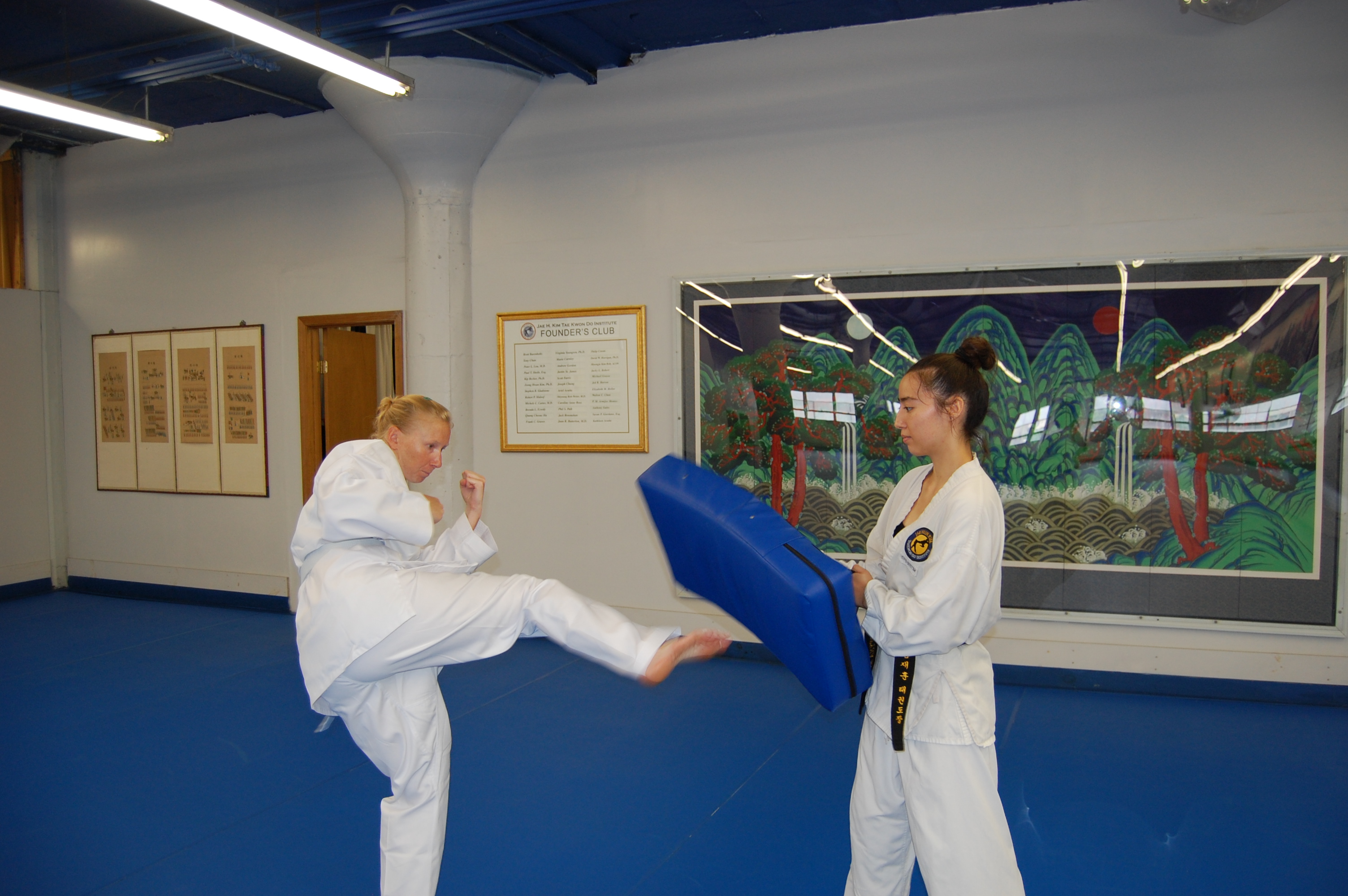
“Have you taken martial arts before?” my instructor Peter asked me as we stepped onto the mat. I said no, still tugging on my uniform which I thought made me look like the Stay Puft Marshmallow Man. I had walked into Jae Hun Kim Taekwon-do Institute right across the street from Fenway with absolutely no experience, and at that moment I thought maybe I had made a mistake. But Peter quickly made me feel at ease. We warmed up with some stretches, with Peter counting in Korean. Then we started with some basic forms (punches and kicks).

Practicing my roundhouse kick

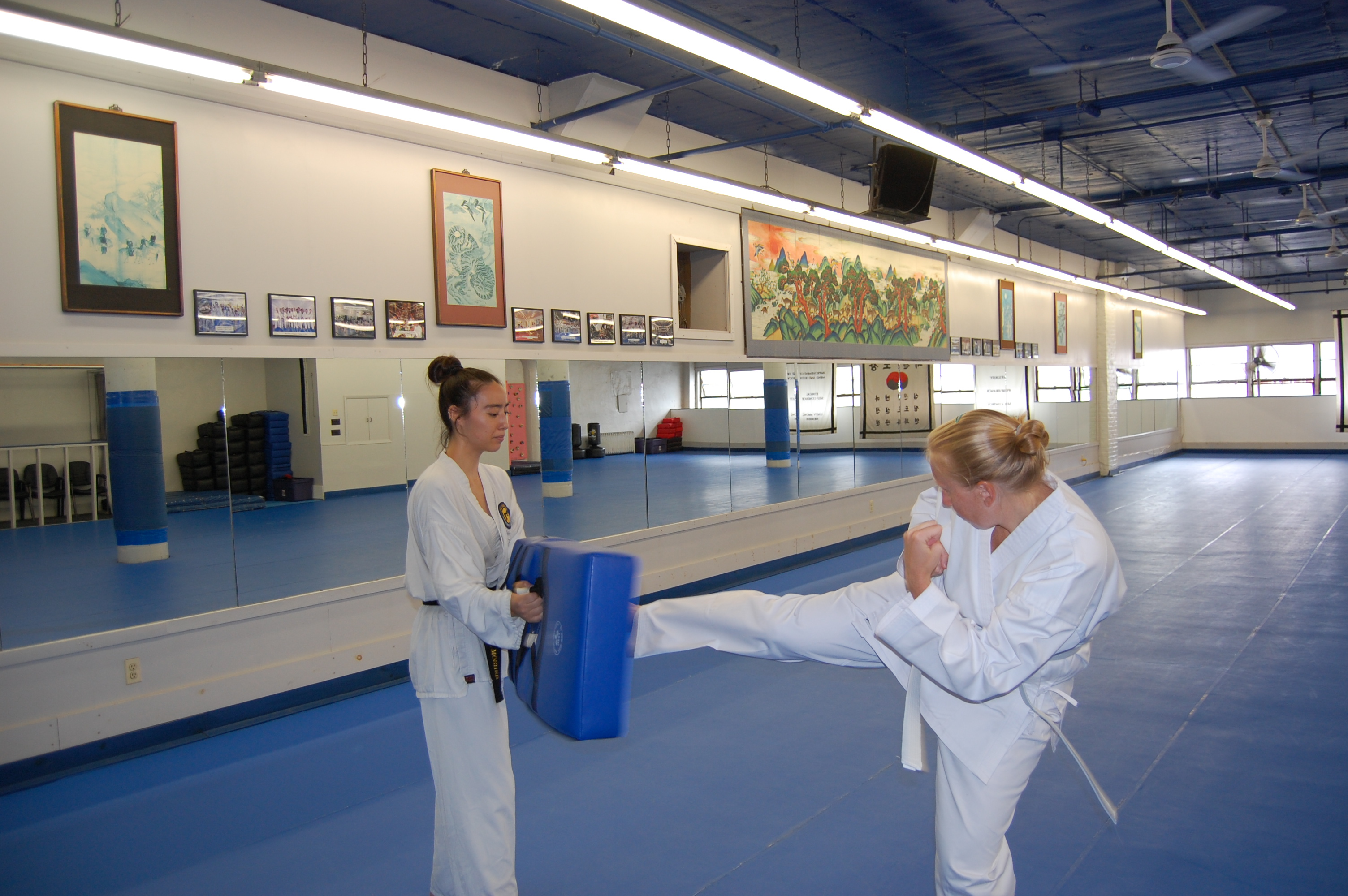
I think Peter could quickly tell that I was very inexperienced, and obviously had never been in a playground fist fight, because he had to tell me over and over again to keep my thumb outside my fist when I punch. We started with front kicks and jabs in the air, moved on to roundhouse kicks and blocks and eventually Peter grabbed some pads and I actually had to aim my limbs at something. I started kicking and punching, very worried that I would hurt Peter. Why did I think my newbie kicks would injure a black belt? I also managed to lose my balance several times mid-kick which left me flailing various arms or legs in the air.

Grand Master Jae Kim, who founded the institute 38 years ago, came over to give me a few pointers. Both he and Peter picked up on the fact that I was holding my breath while going through the series of kicks and punches. They both told me to relax. Was it that obvious, I wondered, that I am an up-tight perfectionist? I guess so. I took some deep breaths and just tried to absorb all the lessons being presented. Like so many of my past “adventures,” as soon as I stopped trying to be good at Taekwondo, I actually became good at Taekwondo! While I wasn’t getting nearly as much extension, speed or impact as Peter, my kicks and punches weren’t too shabby if I do say so myself.

Almost more interesting than actually doing Taekwondo is the history of the sport, its lightning fast trajectory on to the international stage and the fact that Jae Hun Kim Taekwon-do Institute is a destination for people from across the globe who know – and want to know — Taekwondo.

Taekwondo is relatively new as sports go. It was created in 1955, but is based on martial art traditions that go back centuries. According to Mr. Kim, the sport spread around the world after soldiers who fought in the Korean War noticed how “tough” the Korean soldiers were and realized that Taekwon-do was an important part of their physical fitness routine. Taekwondo became an Olympic sport in 2000; meaning it only took the martial art 45 years to go from its infancy to biggest international sporting stage there is. Twelve years later, 128 athletes will compete in eight weight classifications (four for men, four for women) in these London games.

…It took a lot of practice

In addition to learning “forms” or “patterns” (the individual moves that I learned with Peter), The Jae Hun Kim Taekwon-do Institute offers instruction in the full spectrum of sparring (when you use those forms against an opponent). There are several sparring styles — all with different rules – including the type featured in the Olympics. There is also so-called “Full Range Sparring” which utilizes striking as well as grappling techniques. This type of sparring has become so popular that when my instructor, Peter, visited Korea last year everyone wanted him to teach them what they referred to as “Boston Style Sparring.” This anything-goes style originated at Mr. Kim’s studio in Fenway and helped it earn the honor of being named the top Taekwondo center in the world in 2009. Mr. Kim now has 15 centers all across the globe, and he teaches classes daily at the Boston location.

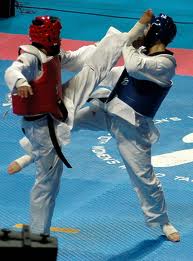
After going through the forms with Peter I watched other students in their classes and even got to watch some Olympic style sparring. It is intense. I could recognize some of the kicks and punches I learned in their movements, but barely. I really enjoyed my day of Taekwondo, but I had even more fun learning about the sport itself, its origins and how far it has come in such a short time. I think I may even go back for some group classes.

Photo courtesy of NBC Sports

While I did receive a complementary introductory lesson, I was not compensated in any other way for this post. Many thanks to Mr. Kim, Mr. Smith, Peter, Christine and Jen at Jae Hun Kim Taekwon-do Institute. Fellow Bostonians, we have a really amazing martial arts resource nestled right next to Fenway. If you are at all interested in Taekwondo I highly recommend you check it out. Olympic Taekwondo competitions start on August 8th, tune in. I will be!