The Big Cheese

One of the best things about this blog is the seemingly endless stream of fascinating people I meet on my adventures. This week’s post, the third installment of my so-called Foodie Fables, may just take the cake (sorry, I’ve got food on the brain).

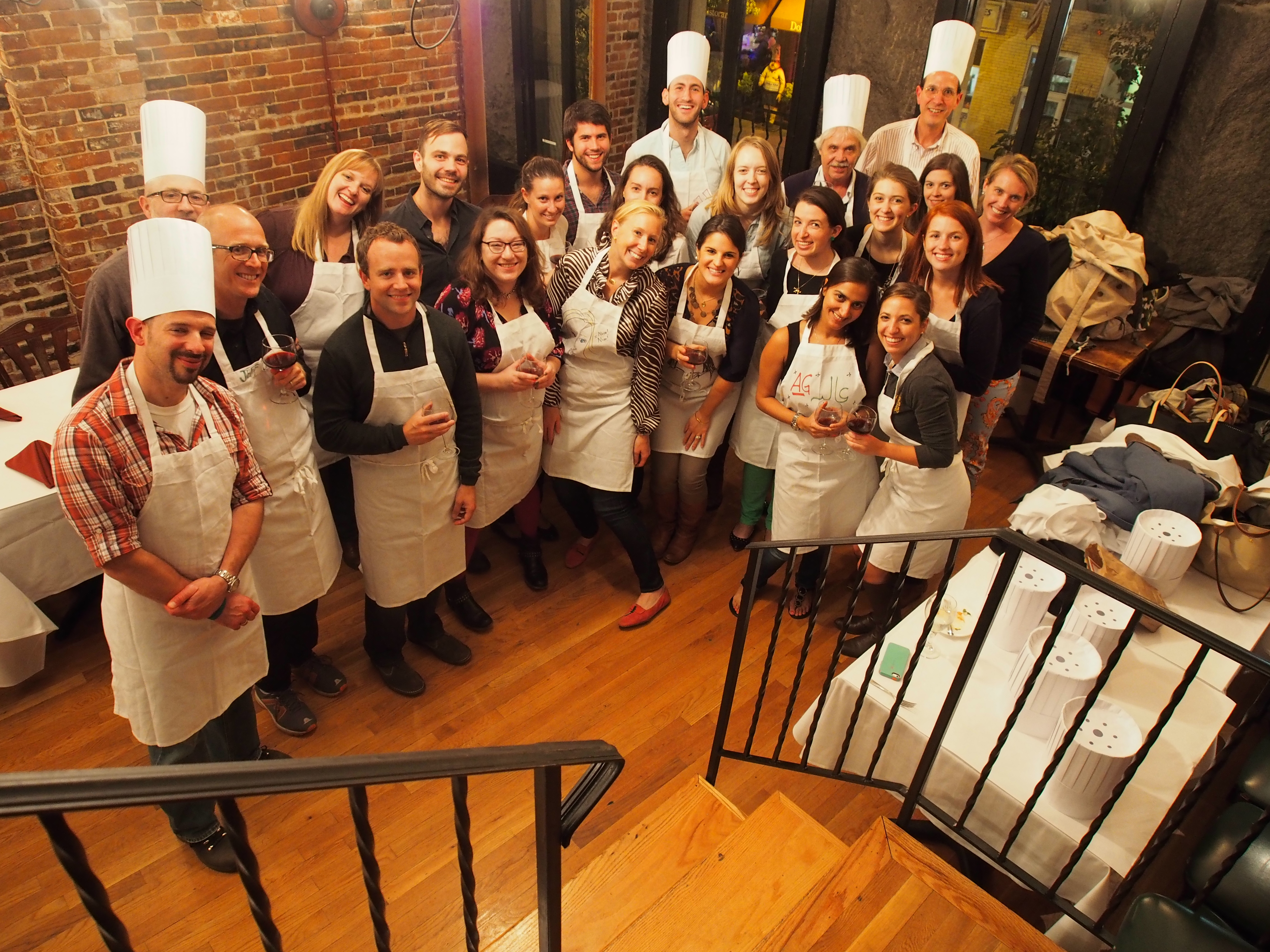
This story actually begins a few weeks ago, during a team-building outing with some of my talented co-workers. We took a group cooking class at Taranta in Boston’s historic North End. It’s here where you’ll find the best Italian food this city has to offer. We broke up into groups and prepared our meal, course by course. There was a tomato and mozzarella salad, meat (chicken and pork) pasta, and desert. I was in the meat group, but as many of you know I already have some experience with meat.
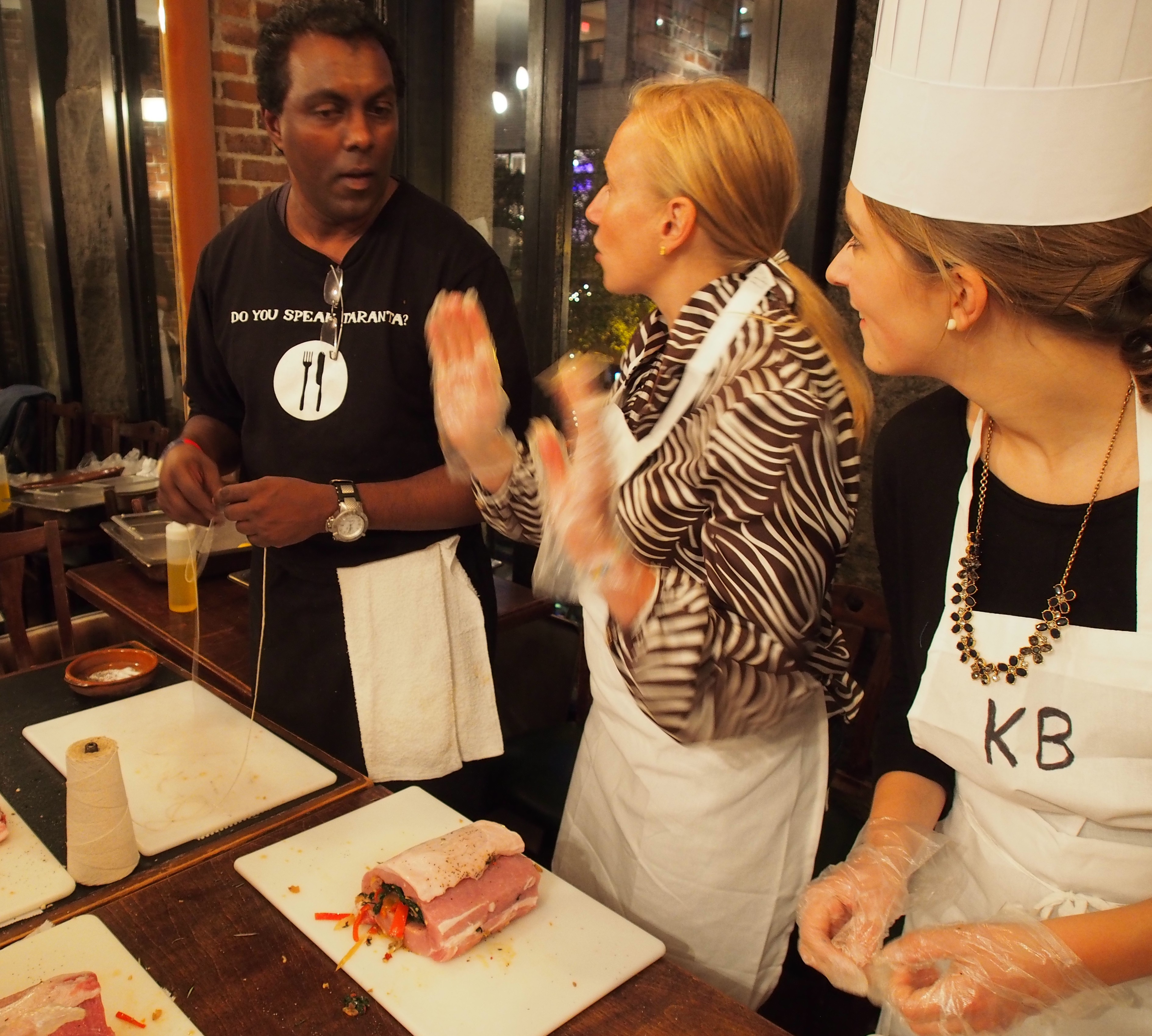
I appear to be arguing with the lamb direction I was being getting. Go figure.

I appear to be arguing with the pork direction I was being given. Go figure.
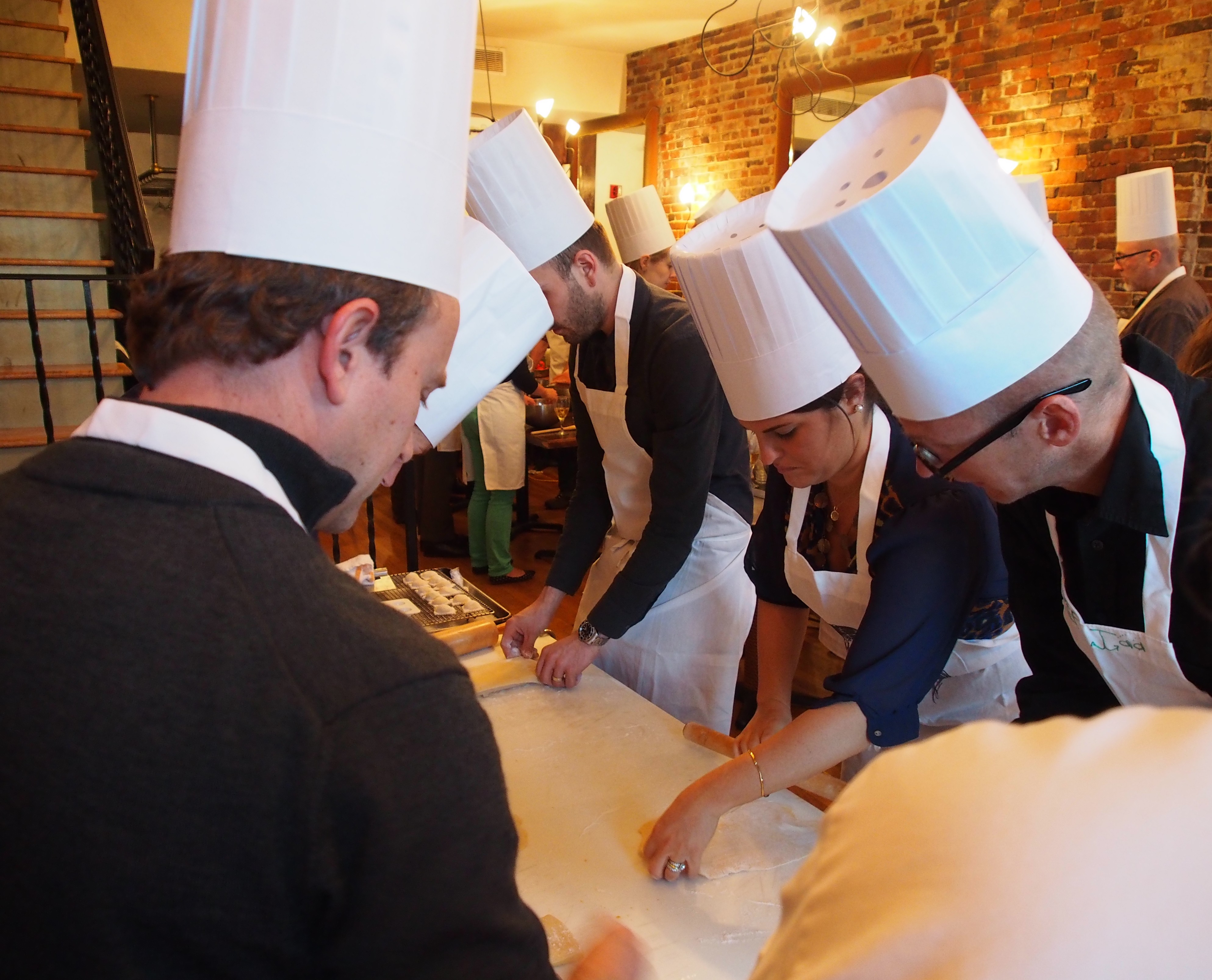
My colleagues at the pasta station

My colleagues at the pasta station

The lucky mozzarella group

The lucky mozzarella group

What I was fascinated with, and a little jealous of, was the mozzarella group. They were making mozzarella. I never really thought about the fact that you have to make cheese, but at that moment (actually the moment it was topped with truffle salt) I knew I had to try it.

So after our amazing night at Taranta, I asked if I could come back to learn how to make mozzarella. What I got was a private cooking session with Taranta’s chef and owner, Jose Duarte. While making our cheese was really cool, not to mention tasty, our conversation was totally fascinating.

Jose is from Peru, but is a master of Italian cuisine. He opened Taranta 14 years ago, and has been innovating ever since, in and out of the kitchen. Jose is a thought leader in the culinary world when it comes to sustainability and accountability. Taranta has been composting for six years. Jose developed an edible QR code that diners can scan to find out exactly where their fish was caught and when. He leads his employees on trips to Tuscany so they can better understand–and explain to their customers–where their wine comes from and the story behind it. Jose is a strong believer in “going to the source.” He has even traveled to Florida to investigate the sometimes unfair labor practices surround the tomato industry. He needs to feel good about what he is serving, and will go to great lengths to get that validation.

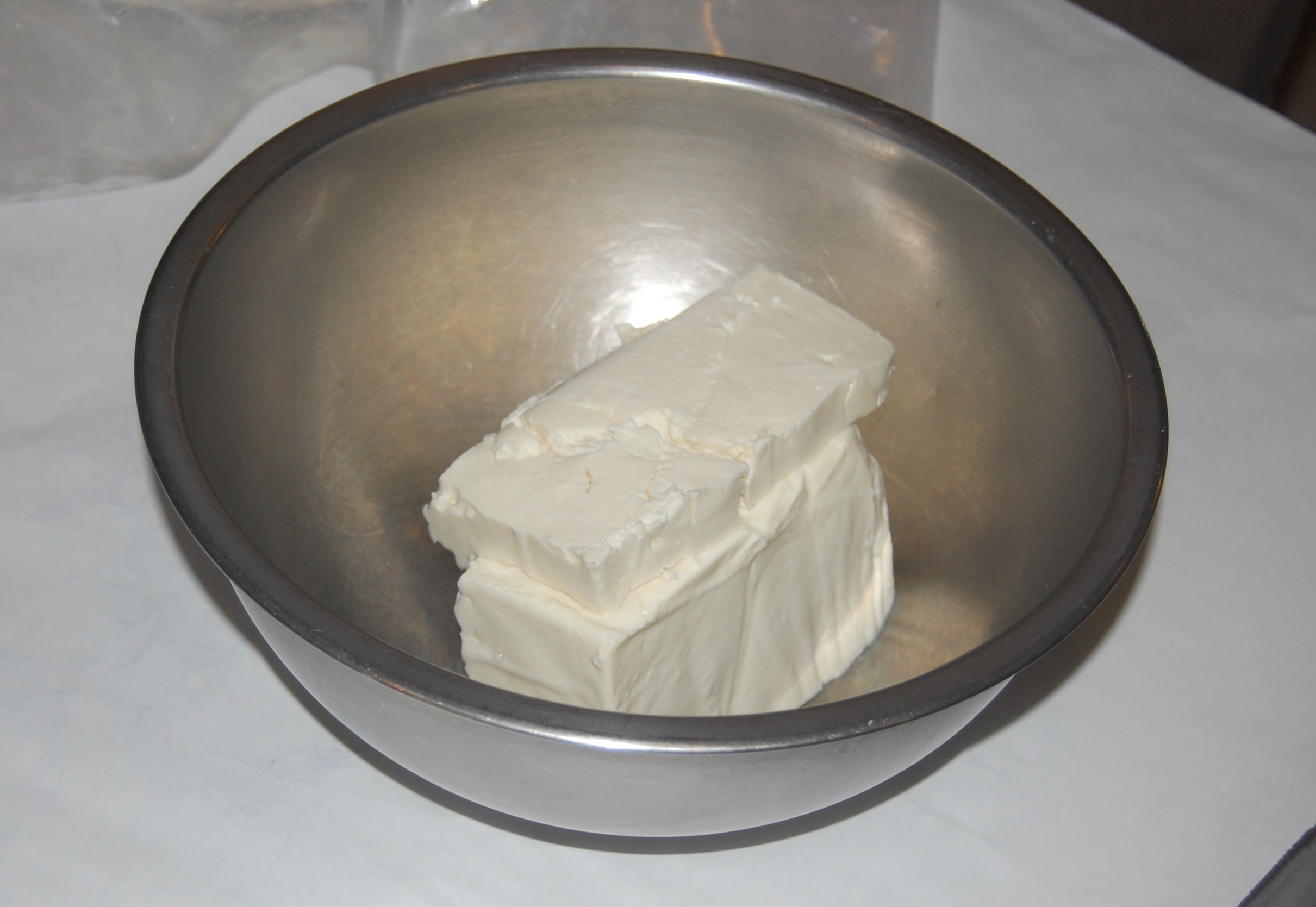
After learning all this, I was not surprised at all to learn that most restaurants buy their mozzarella in its table-ready form, but Taranta makes theirs. Obviously I came to the right place to learn about making cheese. Jose told me that “every cheese has a story behind it,” and then proceeded to tell me mozzarella’s tale. Mozzarella was first created in southern Italy where the landscape was perfect for buffalo. Buffalos don’t produce great milk for drinking, but it’s very “cheesable” as Jose described it. Mozzarella is technically a pasta filata cheese, which comes from the Latin work for “stretch” (after six years of middle and high school Latin, I can’t tell you how overjoyed I am to actually use this knowledge). And that describes exactly how it’s made:
DSC_0002

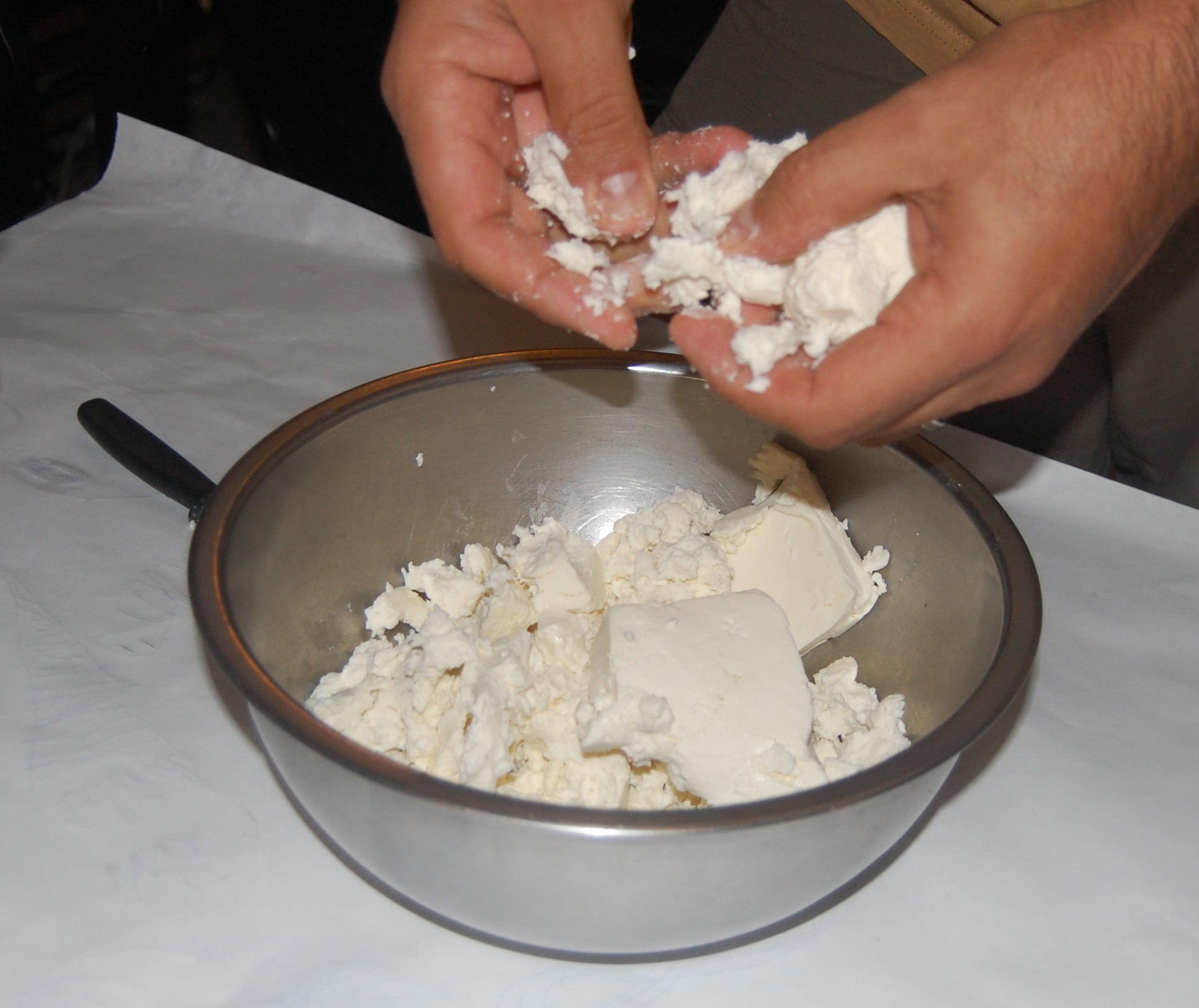
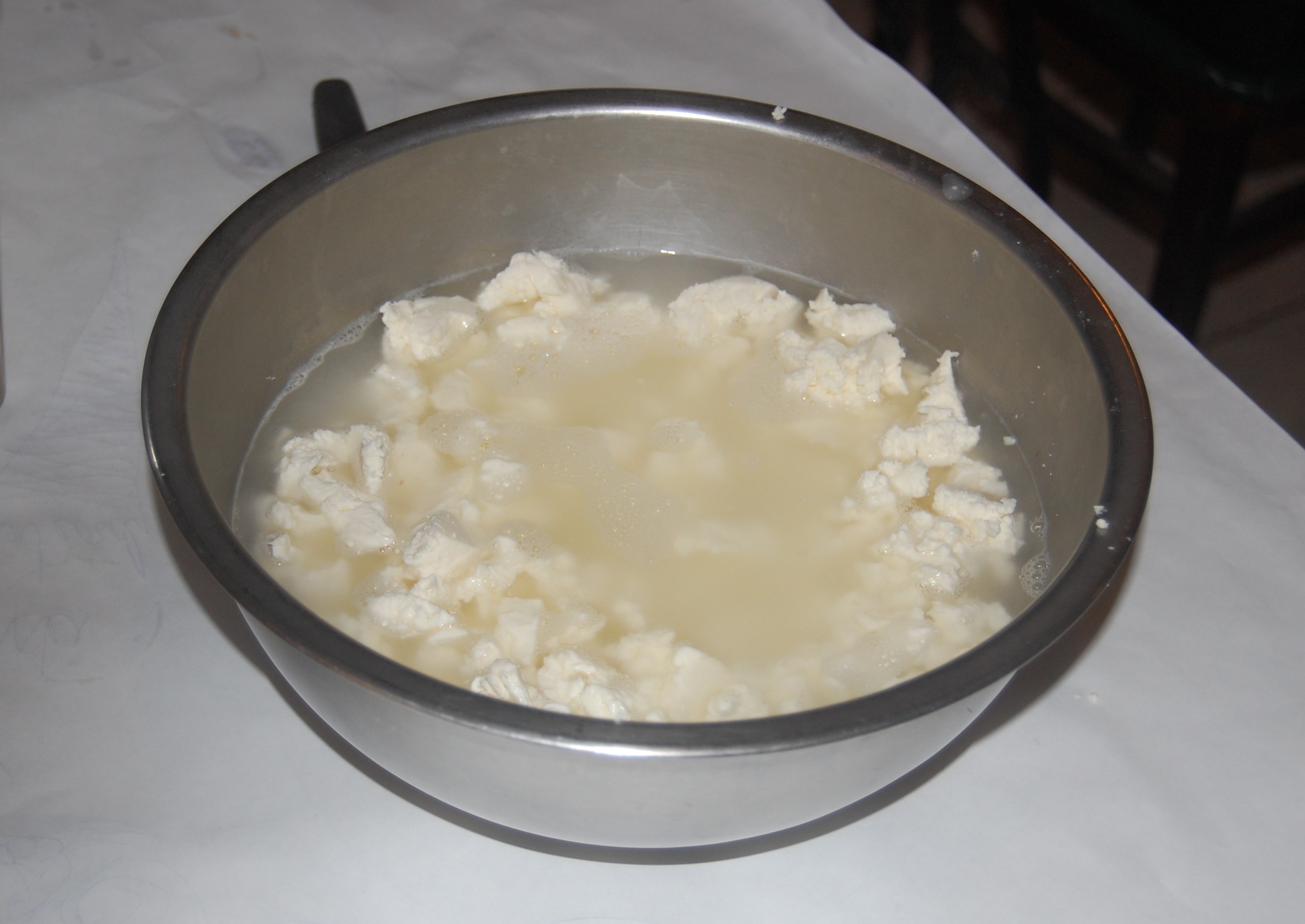
First we took mozzarella curd (which comes in large bricks), and broke it up in to small pieces.
DSC_0006

Then we poured hot water into the bowl. Jose, obviously an expert, didn’t need to test the water’s temperature, but if you are trying this at home it should be between 160-165 degrees.
DSC_0007

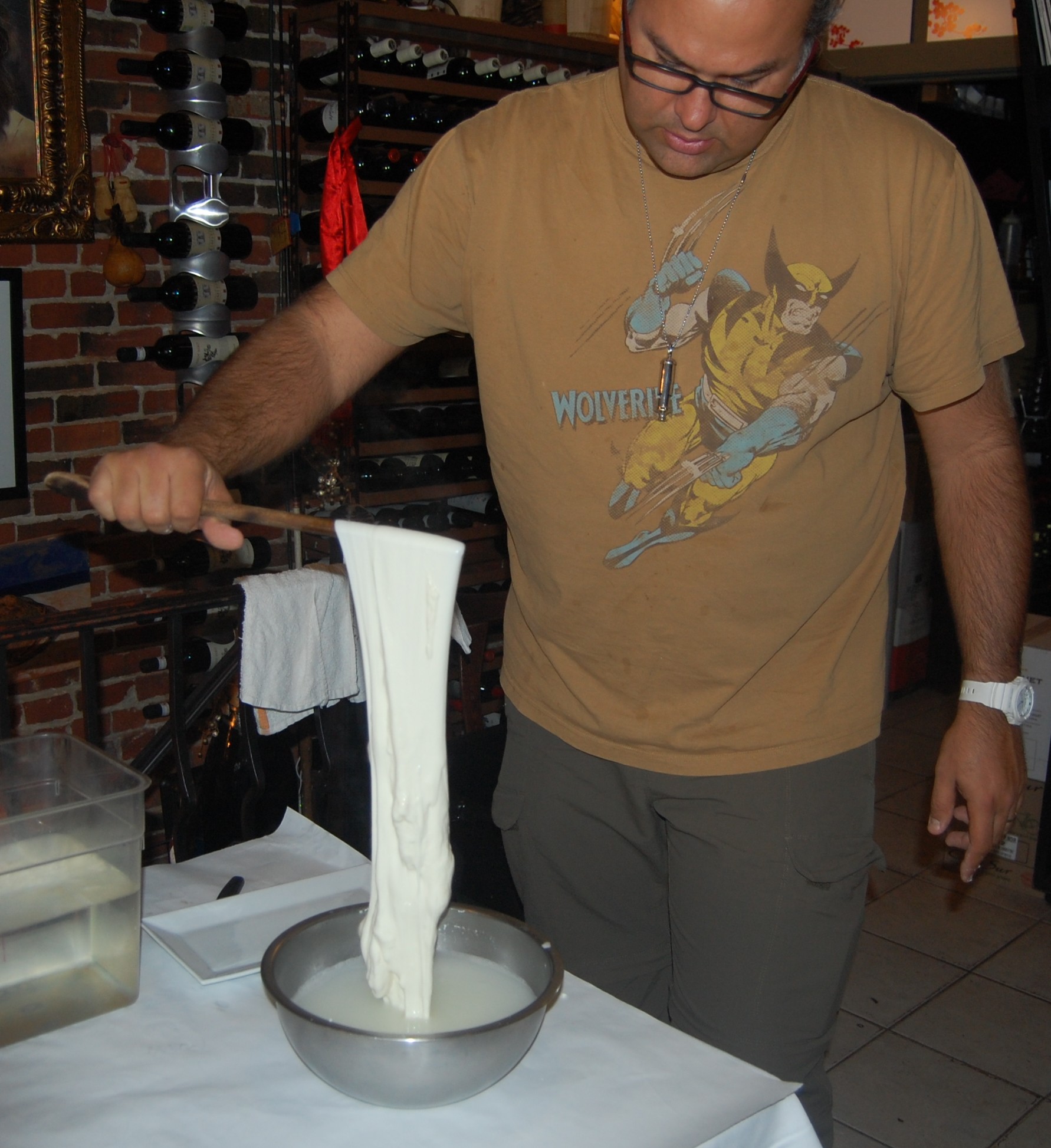
Next I got to see how mozzarella earned its name. We used the handle of a wooden soon to stretch the cheese. It became silky looking, almost like taffy.
DSC_0014

Next we gently formed a large ball with the cheese, and pinched off balls of various sizes into a bowl of cool water, where it sits until it is ready to serve.

DSC_0019

DSC_0028

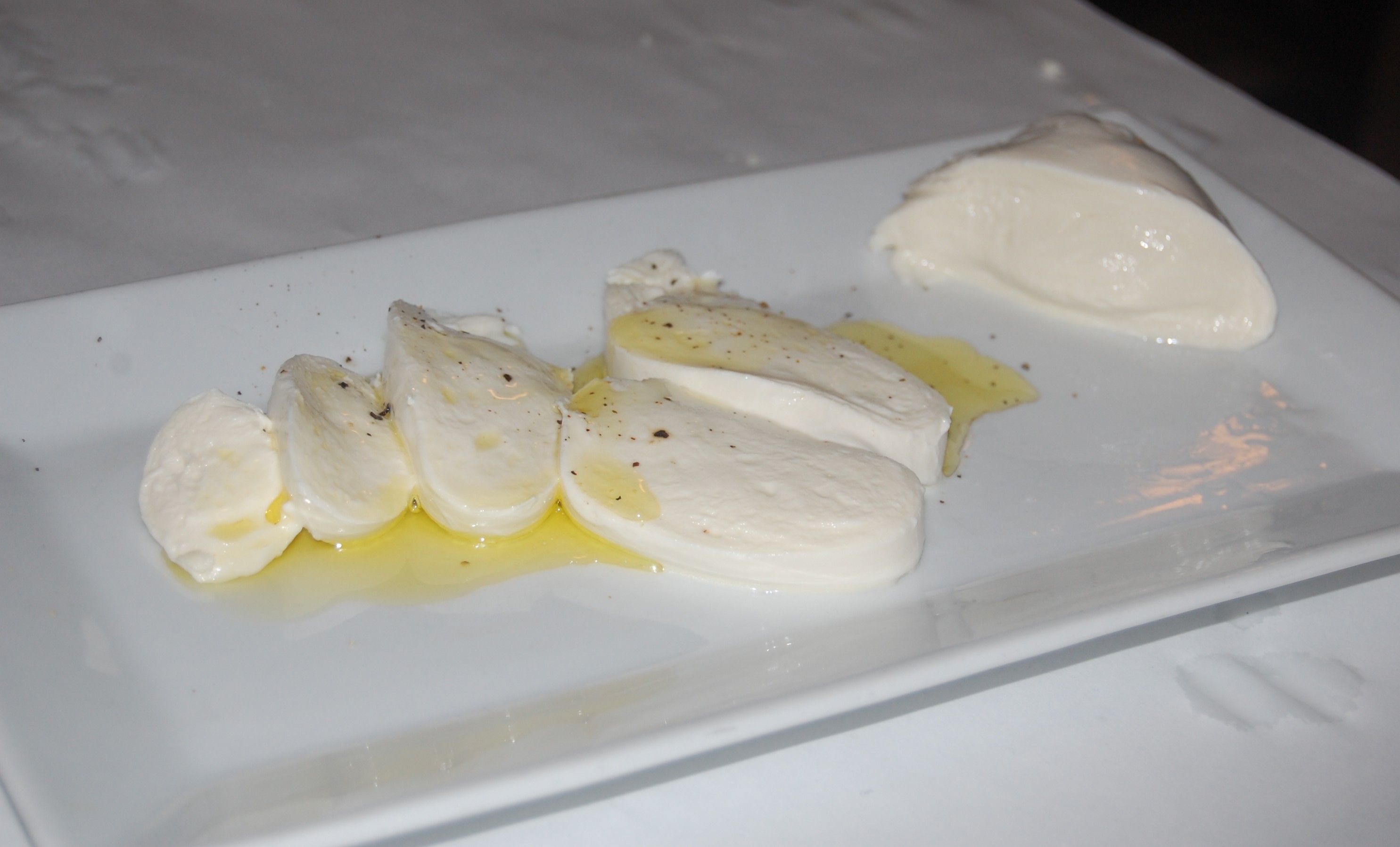
And thankfully we served it right away…with a little pepper and olive oil. It was so delicious, and still warm inside. A-MAZ-ZING.
DSC_0032

Jose sent me home not only with the mozzarella I had helped him make, but also with some cheese curd so that I could try it from scratch myself. That is my weekend activity. It’s such an interesting process, that I was not surprised when Jose told me that legend has it that mozzarella was first made by accident when some cheese curd fell into a pot of boiling water. This may be the most serendipitous spill in the history of food.

As I gorged myself on mozzarella, I asked Jose what was his favorite part of being a chef. He told me that it was a combination of the process of experimenting as well as the wonder behind it. That wonder and the desire to keep learning is obvious in how Jose has expanded his business (cooking classes) and how he conducts business (investing in the education of his staff). And I think that’s why he so readily agreed to teach little ‘ol me. He said that I “asked a big question.” Many people wonder, but few people ask, and when people ask he wants to give them the answer.

I am so glad Jose wanted to give me this answer. And I will take this as a sign that I should keep on asking questions…of others and myself.

I really can’t thank Jose Duarte enough for being so generous with his time and his cheese curd. If you are in Boston, and want some amazing food that you can also feel good about, head over to Taranta. And consider taking one of their group cooking classes, my colleagues and I had a great time. I was not compensated in any way for this post.
Mullen's amazing DoD account and creative teams

Mullen’s amazing DoD account and creative teams
The Sweet Smell of Success

First off, an apology. My day job has been keeping me uber busy the last two weeks, so I have not been able to carve out time to devote to the blog the way I usually can. This caused a lot of guilt on my part. Especially when I was asked (online and off) about my absence. Thanks for all of you who were concerned. I am just fine, just a little overextended.  Enough about my pesky day job, let’s get to the good stuff!

In the second installment of my “Foodie Fable” series I focus on two trends very hot in Boston right now: food trucks and cupcakes. While food tucks were only legalized by the City of Boston in 2011, the cupcake craze dates back to 2000. By my calculations, that trend hit its tipping point when Carrie and Miranda sat in front of Magnolia Bakery in New York’s West Village scarfing down cupcakes with a heaping dose of Pepto-Bismol pink frosting on top during the third season of “Sex and the City.” That scene made cake’s little brother cool for adults to eat and not just at kids’ birthday parties.

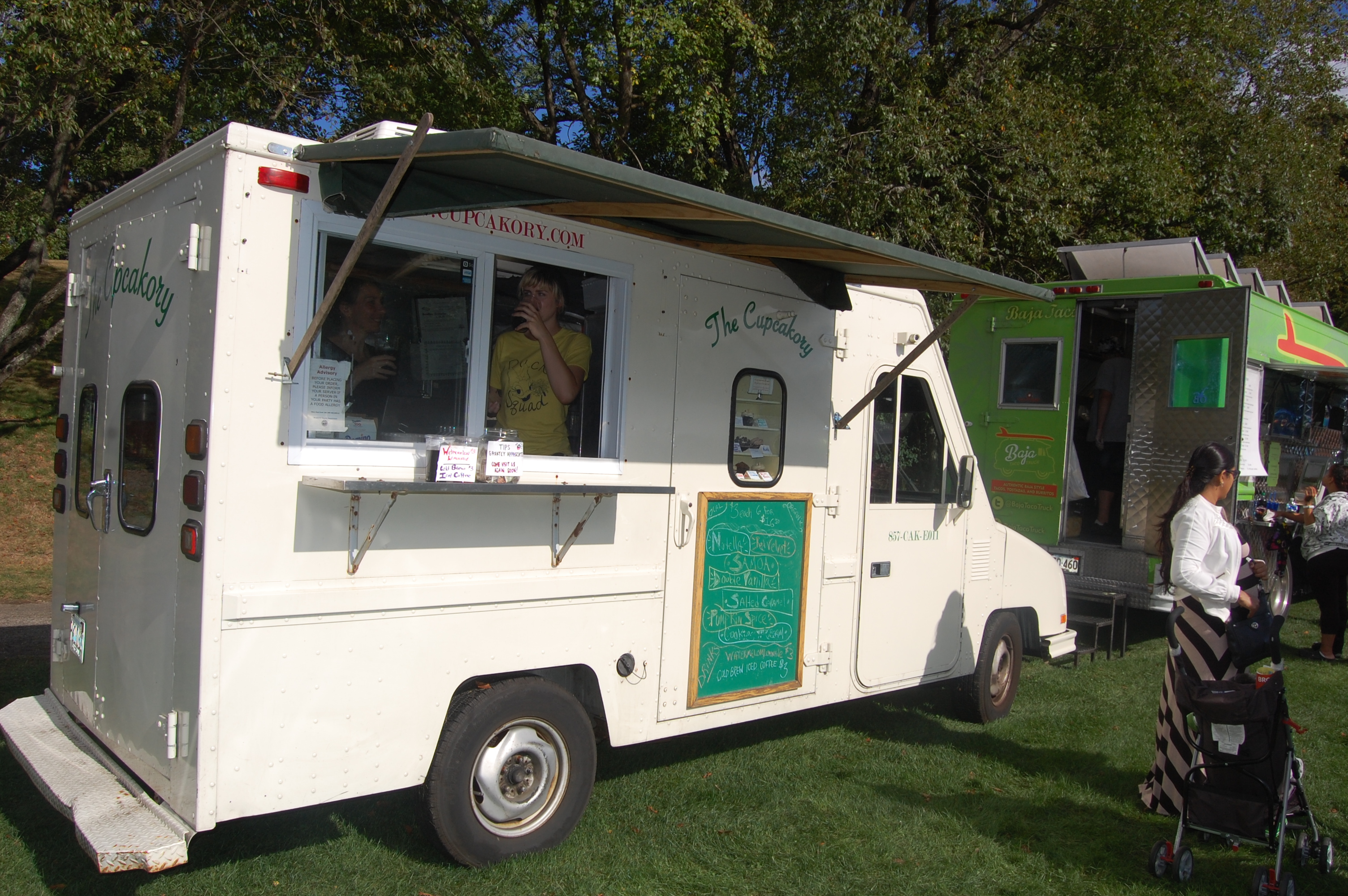
While it was not my initial goal to kill both of these trendy culinary birds with the same stone, this twofer came in the form of Diana DeMarco, the owner of The Cupcakory, a charming little food truck, perfect for the old fashioned look and taste of her products.

The Cupcakory's rotating menu includes cookies & cream, red velvet, slated caramel and a Samoa, a tribute to the Girl Scout Cookie

The Cupcakory’s rotating menu includes cookies & cream, red velvet, slated caramel and a Samoa, a tribute to the Girl Scout Cookie

Diane jumped on the food truck bandwagon after a twenty-year career in publishing came to an end when the economy hit the skids four years ago. She had always loved baking, and at that point neither the food truck craze nor the cupcake trend had hit Boston yet. Actually food trucks were not even allowed on the streets of Boston. So after a year of testing recipes and retro-fitted a truck she found on Craigslist, Diane took to the streets of Brookline selling her cupcakes.

DSC_0046

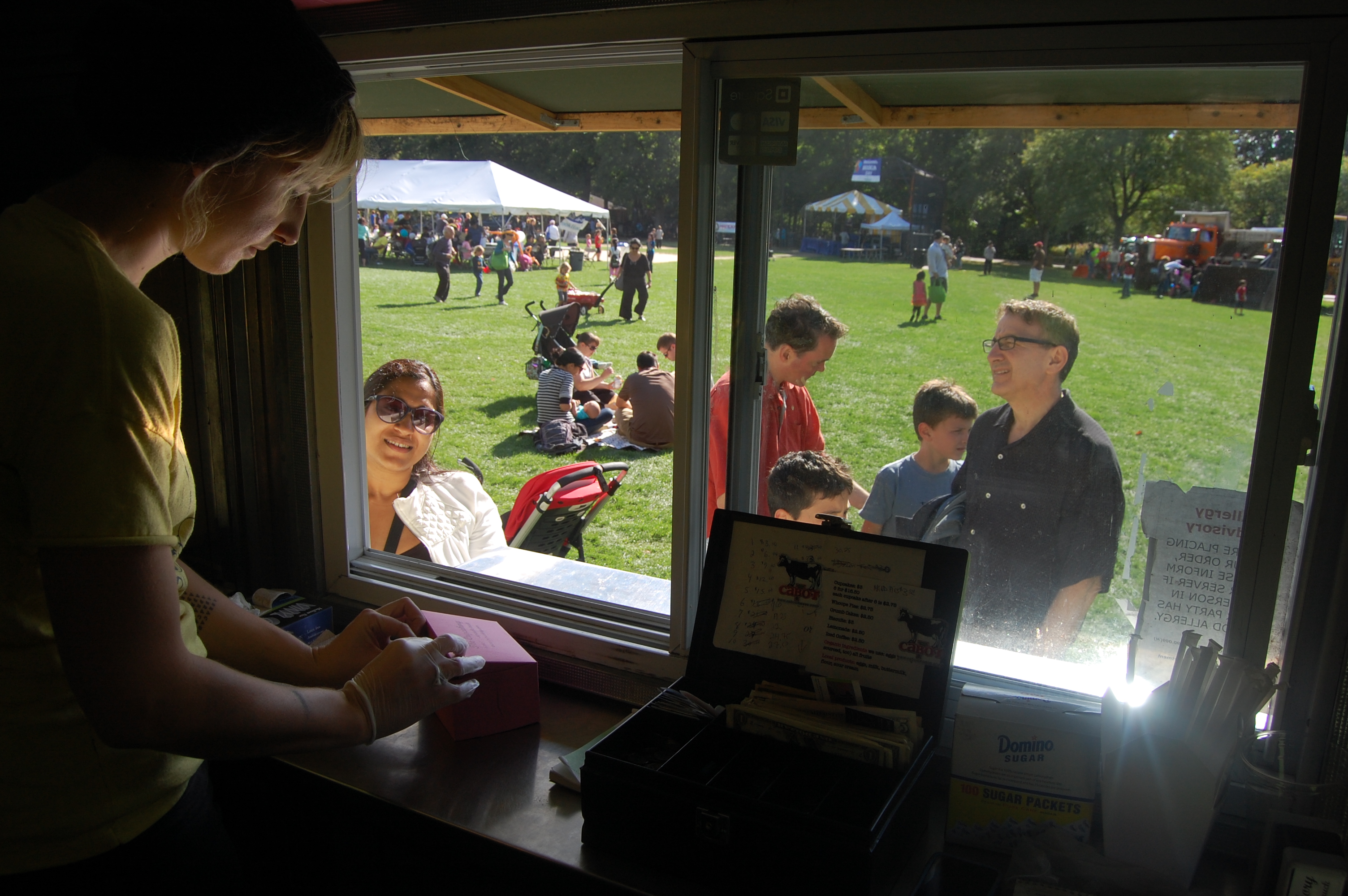
Zoe about to make another customer very happy

“I just wanted to do something that would make people smile,” Diane told me as we chatted in the relatively close quarters of The Cupcakory truck, which is smaller than your standard food truck, and has a retro-vibe to it. “No one can walk up to this truck and not smile at something.” Her menu is a cut-out in the side of the truck where her daily offerings are listed and showed off, so you know exactly what you are getting. In the summer she frequently has potted plants outside, and a little awning to provide momentary shade for customers as they order.

DSC_0055

The adorable Cupcakory truck

Today Diane and Cupcakory can be found rotating between  Jamaica Plain, Roslindale and yes, still in Brookline. That’s where I caught up with her on a recent Sunday afternoon. She was on hand selling cupcakes at Brookline Day in Larz Anderson Park. As she does every night before she heads out in her truck, she determined her menu for the next day and she baked all the cupcakes she estimated that she would need. She tries to use as many organic and locally sourced ingredients as possible. She also prepares the corresponding frostings for her cupcakes, but the magic really happens inside the truck when Diane and her wing woman Zoë ice the cupcakes (and in some cases cover them in sprinkles, coconut, cookie crumbs or caramel) when they are ordered.

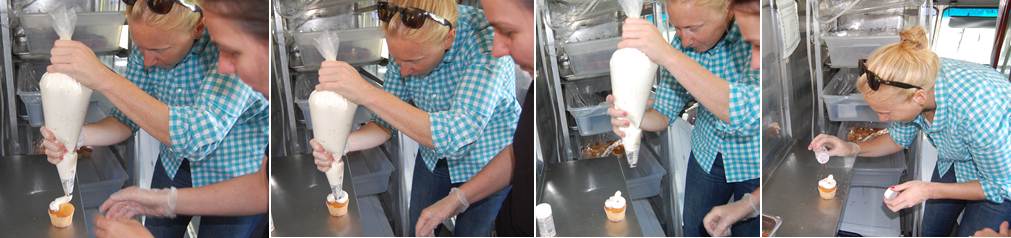
Many customers, accustomed to the instant gratification of today’s food service industry had to wait a few minutes while their cakes were frosted before their eyes. Inevitably this delay left a smile on their faces as they watched their tasty treat get topped. I heard a lot of “Oh, you frost them right here?” Yes, they do. And while I may not have found my next passion in life in the back of a food truck, I certainly got a good sense of what goes on in there. My attempts to frost cupcakes started out rough. I found that its a real skill to be able to squeeze out frosting in a way that produces an appetizing, non-phallic, dollop of icing. Chilled frosting can be a little stiff, making it difficult  to squeeze out of the frosting bag in a smooth, elegant way, but with some practice I hit my confectionary stride. I don’t mean to brag, but while frosting may not be a strength of mine, sprinkling sprinkles certainly is. I mean I was really good.

icing the cupcake

While I may not be good at frosting, I am a fantastic sprinkler

While there are things I have wondered about food trucks (such as can they wash their hands? Yes!), there are some aspects of being the proprietor of a food truck that never occurred to me. One of these is the idea of competition. When a brick and mortar restaurant opens it knows what its neighbors (i.e. competition) are. If you were opening a cupcake shop, you would likely not lease a space next to two other desert shops. But in the world of food trucks your competition changes each day and if your cupcake truck is parked with an ice cream truck on one side and a cookie truck on the other, you may have a less than busy day. This is the risk that Diane, and every other food truck operator, runs every day. Bad weather is another detriment to business. It never really occurred to me all the small variables that can impact business when said business has a set of wheels.

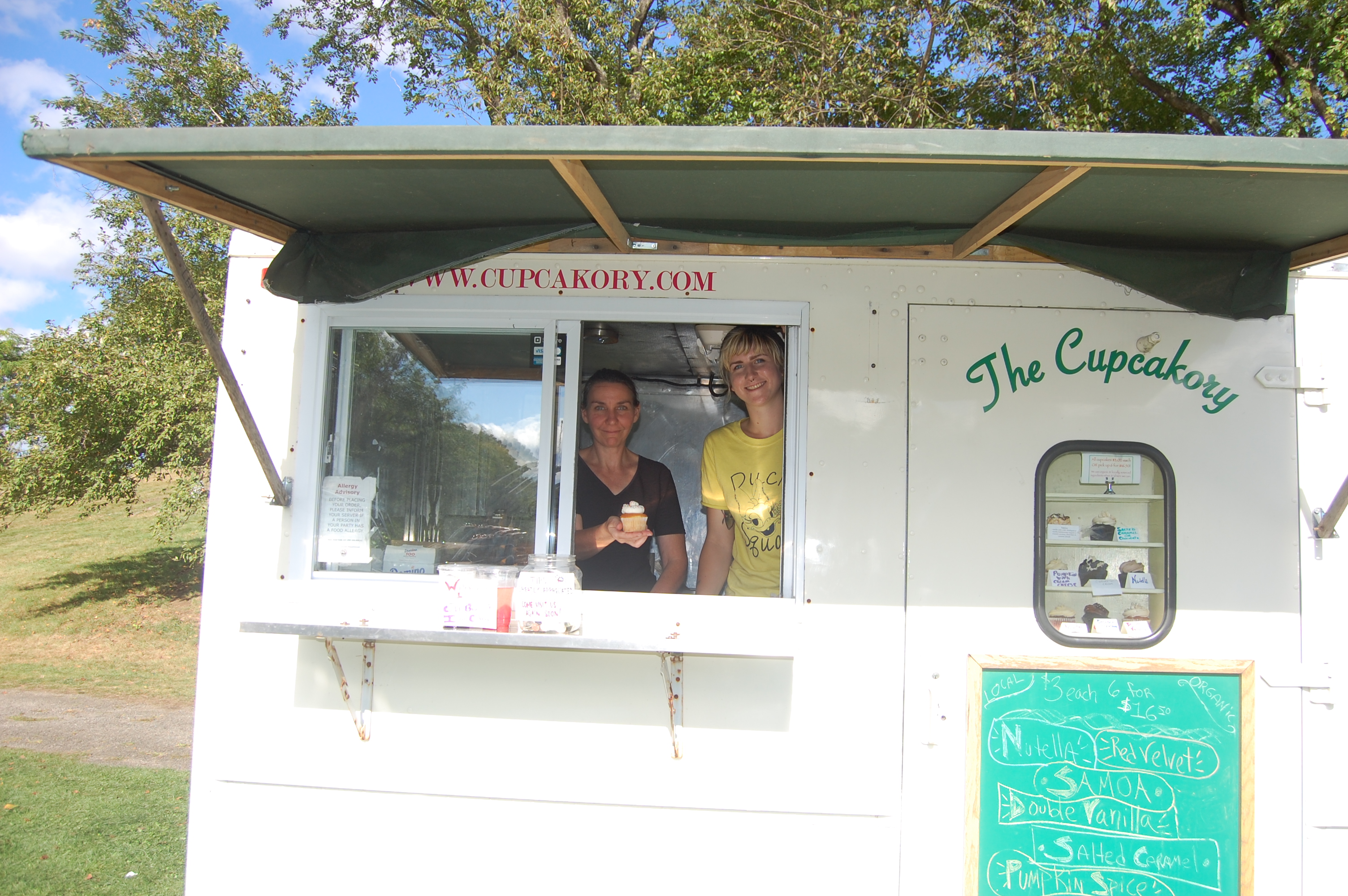
Diane says that even now, Cupcakory is still a work in progress. Originally, she thought by this point she would have a traditional brick and mortar shop, not just a food truck. “This whole thing didn’t happen exactly the way I thought it would,” Diane mused to me. “But I’m enjoying the ride.”

DSC_0050

Diane (left) and Zoe, the ladies of The Cupcakory

I can certainly say the same thing about myself, and maybe you can as well. We’re all works in progress, aren’t we? But being able to enjoy our own individual rides on this strange, exhilarating, sometimes frustrating, always fascinating road we call life is a recipe for happiness. So I’m going to stop relying so heavily on my preconceived GPS (pardon me while I push this metaphor to its limits), and just enjoy the trip.

Many thanks to Diane DeMarco and Zoe for letting me climb inside their food truck for the day. You can check out their schedule and find them here. I was not compensated for this post in any way.

DSC_0056

Under the Table and Dreaming

Starting this week, I’m embarking on another string of themed posts. As you may have read (and if you didn’t, and want a laugh, you should) during the London Olympics I challenged myself to learn (or at least attempt) various olympic events. And this post marks the beginning of what I’m calling my “Foodie Fables,” except there won’t really be a moral to any of these posts, and the only animals involved will be those you eat, but I like alliteration too much to let details get in the way.

I think every foodie has daydreamed of opening their own restaurant or bar, but very few ever do. This week I was lucky enough to hang out with a couple as their dream came true: the opening of their first bar and grill. Warehouse, on Broad Street in the Financial District of Boston, officially opened a few days ago, but it was years in the making for Cliff Dever and his wife, Toni. But like most of the people I meet writing this blog, they followed their passion…away from secure corporate jobs, into the volatile restaurant world.

“Every guy wants to own a bar,” Cliff told me last weekend the afternoon after his first customers celebrated their soft opening. There had been about 150 people in the night before, many of them investors and friends. It had been two full years since they took their first steps towards opening Warehouse—the Dave Matthews Band fans named their place after one of the band’s songs—and as he looked around at his dream coming true, he told me he started to tear up. “Get your shit together,” Toni told him.

warehouse 3

Cliff and Toni had very different day jobs when they first hatched the idea of opening their own place. He was in biotech, she was at Morgan Stanley, but both moonlighted as bartenders.  In August of 2011 Bakey’s, the Financial District institution closed, and the space on the corner of Broad and Water Streets became available. The Devers quickly got investors lined up and secured the space. Cliff and his Dad started demolishing the interior to make way for Warehouse. Six months later, with the discovery that the building was old and in worse shape than initially thought, Warehouse found itself without a home.

Lucky for the couple, a larger space became available right across the street. They transferred their liquor license to 40 Broad Street and started planning for this new incarnation of Warehouse. In the Bakey’s location Warehouse was to come to life in an old school way, with exposed brick walls. But in the more modern space across the street, Warehouse would take on a more industrial look and feel.

DSC_0001

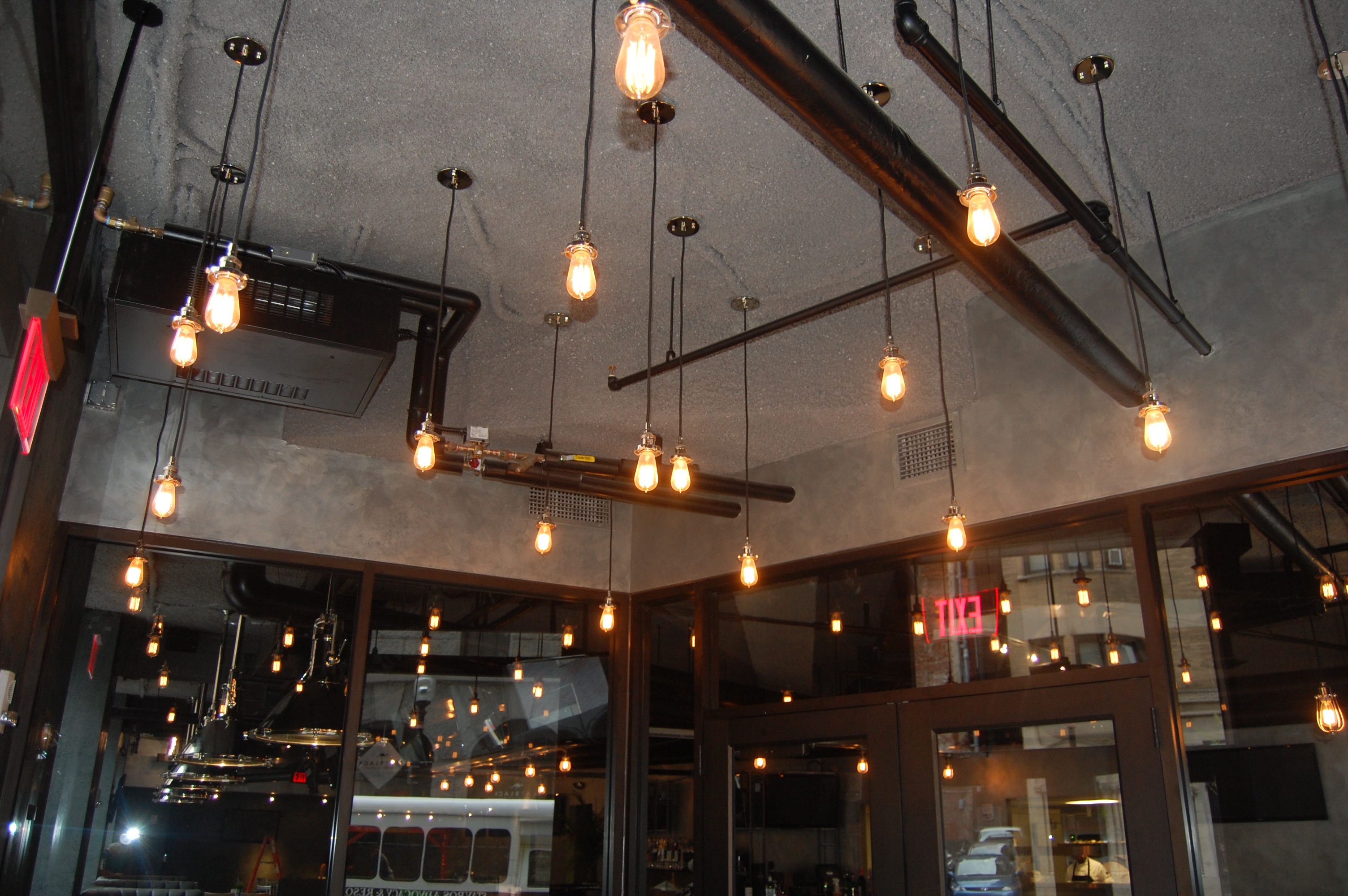
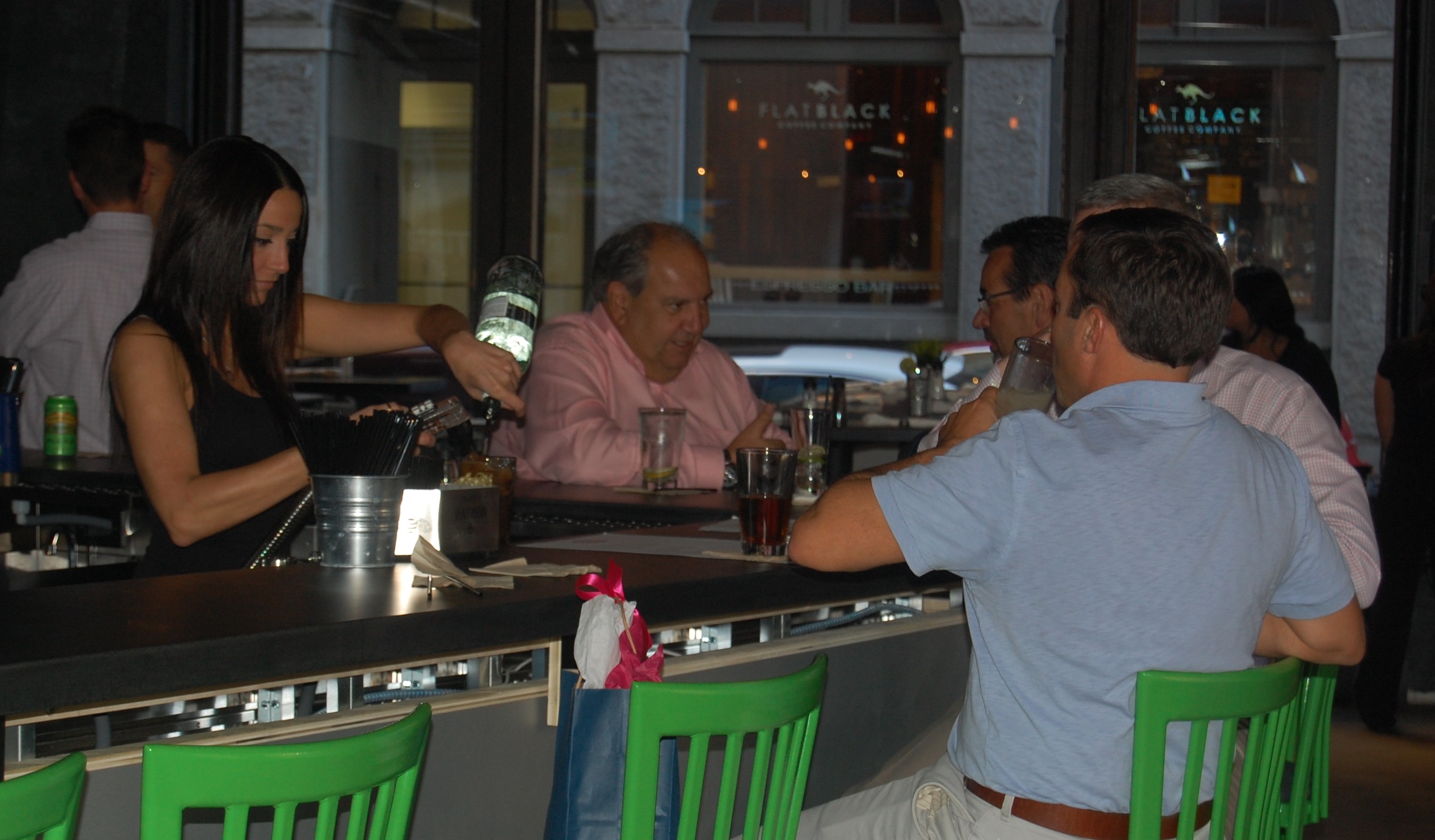
It was a raw space when they signed the lease, so in addition to being a bar owner, Cliff said he had to become an architect and engineer as well. The couple eased into two distinct roles: Toni had interior design ideas, and Cliff would do research and bring her ideas to life. They really had to start from scratch with HVAC systems, kitchen electrical work and the aesthetics. Warehouse has industrial concrete floors, stainless steel-looking walls, grey leather booths, a splash of bright green in the form of bar stools, a poured concrete bar and gorgeous polished nickel light fixtures from Restoration Hardware.

DSC_0011

An even bigger challenge than the décor was finding the right chef. Toni, a foodie, had created a menu that I can only describe as new twists on reliable sports bar fare. Her aim was to appeal to both the business lunch crowd, as well as the football-watching crowd. They just needed someone to bring their ideas to life…on a plate. Cliff said he interviewed 30 chefs before they met Nathaniel Durost an alum of Stephanie’s on Newbury. Nathaniel loved the menu Toni created and built recipes for selections that range from game-time apps, perfect for sharing (baked kale and artichoke dip), healthy and unique salads (grapefruit and arugula), new takes on comfort food (a grilled mac and cheese sandwich) to entrees that will make you look twice (Cajun gumbo with gator meat).

Warehouse also has a robust drink selection that includes a collection of cocktails (like the establishment itself, all named after Dave Matthews songs), plus beer and wine on tap  Yes, wine on tap. Eight to be exact. The wines are stored in steel barrels which allow them to remain peak freshness, plus it cuts down on waste, and is better for the environment.

Warehouse's beer...and wine on tap

Warehouse’s beer…and wine on tap

Toni hard at work last night

Toni hard at work last night

I visited Cliff and Toni again last night to see how the first few days had gone. From behind the bar, with a bustling happy hour crowd in front of her, Toni reported they had to stop letting people in on Saturday night, Warehouse was at capacity. Surveying the scene, Cliff said the last few days had been gratifying and humbling at the same time. When I asked him what the best parts of the last few days had been, he took a moment before responding. “Seeing people here enjoying what we brought to life,” he said. “And the smile on Toni’s face.”

Cliff and Toni, happy bar owners

Cliff and Toni, happy bar owners

While opening a restaurant is a little too complex for me to try myself, I did get a CliffsNotes version (literally from Cliff himself) of all the elements–big and small–that go into such a huge endeavour. And once again, I was able to get a front row seat to see and hear how someone followed their heart, and gut, to pursue what they are truly passionate about. Well look, maybe this Foodie Fable has a moral in it after all…

Thanks go out to Cliff and Toni Dever. Warehouse is now open for lunch and dinner at 40 Broad Street in Boston. Check it out!

Who me? a Mentor?

Although I write about pre-meditated adventures each week, our every-day lives are already adventures aren’t they? Tuesday felt like one to me, or maybe metamorphosis is a more accurate word to use. I was asked to be a part of a panel discussion at a meeting of Young Women in Digital, a Boston-based networking organization of…yes, you guessed it, young women who are living or working in the digital space. The panel was focused on how to get to the next level in your career.

I wrote to the organizer asking if she was sure she wanted me? While I do work in the digital realm, I really consider myself a writer. But yes, she was sure that my diverse experience (journalism, digital, PR, blogging) would make me a great panelist. So I said yes, partially because, let’s be honest, I was pretty excited to know that I’m still considered a young woman.

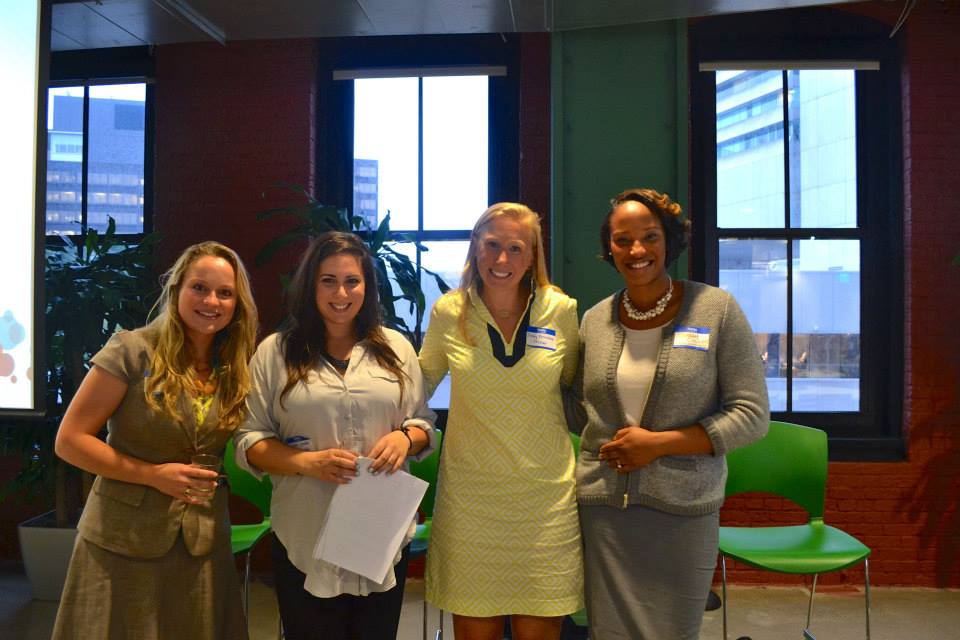
I arrived at Communispace in Boston, and after some initial mingling, and a glass of liquid courage, I took my seat at the front of the room with my fellow panelists: Celie Hart of Hill Holiday, Tamrah Collins of the Intercontinental Hotel and Adri Cowan a Google alum, currently at Springpad. Talk about a great group of ladies representing a very diverse skill set.

Panel

Tuesday night’s panel

Photo Courtesy of Mary Mallard

Photos Courtesy of Mary Mallard and Young Women in Digital

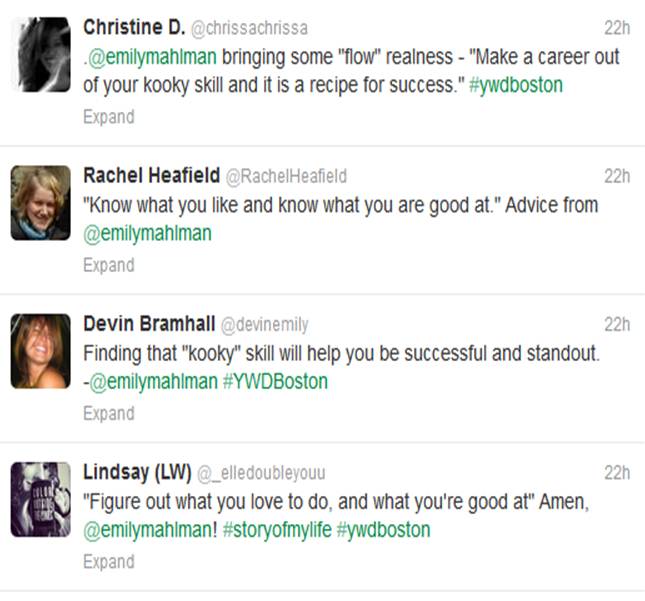
The panel began and we spoke about our experience, our favorite social platforms, and what young women can do to get to the next level in their careers. This was the first time I have been seen as any sort of expert on a stage like this. It felt very adultish. It was particularly interesting to be doling out career advice because the majority of us under, let’s say 40, are all constantly trying to get to the next level in our career no matter what that next level is. Myself included. I didn’t prepare remarks, I spoke from my heart and from my experience, and it turns out I had some very unique words of wisdom (would you expect anything else from me?), judging from the audience members live tweeting during the event. Here’s a sample:

kooky skills

Yes, I advised these lovely ladies to figure out what they love to do, and what they are good at and try to marry those two into a career. That’s pretty good advice if I do say so myself! I went on to tell them to embrace their “kooky skills,” which while I probably could have said that in a slightly more articulate way, I stand behind. Working on this blog (not to mention at my day job) I meet people every day who have done just that and are making it work for them, whether as a career, or in their free time. And doing what they love, no matter how “kooky,” makes them feel fulfilled and happy.

Here are a few more:

Tweet writing and underwearunderwear 2

I also told the crowd that good writing is still important, whether it’s in 140 characters, 140 words or 140 pages. I have to believe that in today’s world of LOL and YOLO, it’s still important to be able to express yourself clearly and, at times, elegantly.  I also told these young ladies to carry themselves in a professional manner, no matter how casual their work environment is. I think this is essential, particularly for women in the workplace. Maybe I should not have told them that co-workers should not be able to see your underwear, but I wanted to give a clear example of what I was talking about.

It struck me that I sound like my mother circa 1996 telling a teenage me that I look like a “ragamuffin” when I would roll my kilt obscenely high, showing off the boxer shorts I was wearing underneath at school (don’t judge, this look was a Springside standard). Or maybe I just sound like a wiser, and only slightly older (but still very young) woman reminiscing on the lessons I learned that helped me get me to this interesting place in my career. I have described my career as a long strange trip (thank you Jerry): I am a former journalist, current blogger, marketer, and it seems some would say a digital professional. I would never have expected my career—not to mention my life—to take so many fascinating twists and turns, but it sure has been fun. And I’m soooo young, so there is tons more fun to come.
Long strange trip

Thank you to Melanie Cohn and Women In Digital. I had a blast sharing my experiences with you, thank you for having me. I think it is essential for women to reach back and help those coming up behind us, so it was a true pleasure to meet so many smart and talented women on Tuesday night. I was not compensated in any way for this post.

Basket Case

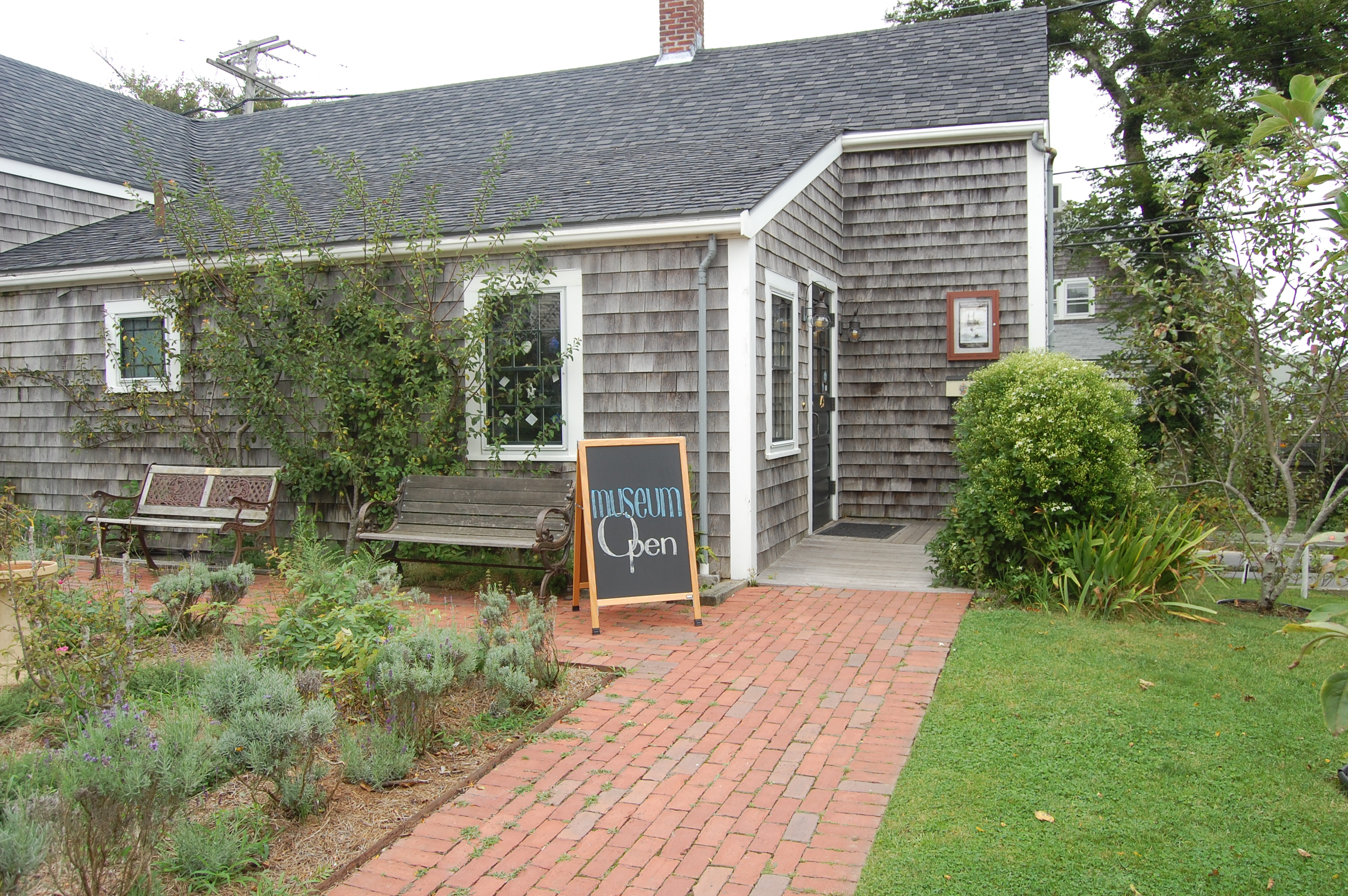
Sorry for my absence from the interwebs last week, I was trying to squeeze the last few drops out of summer on Nantucket. And while I may have been on vacation from posting, I was not on vacation from doing! I made the most of my time “on island” by learning about possibly the most authentic Nantuckety thing there is: the Lightship Basket. Nantucket Lightship Baskets are distinct in their design and materials, but their origin was less well-known to me, so I rode my bike over to the Nantucket Lightship Basket Museum and got a lesson on this island tradition that dates back over a century.

DSC_0030

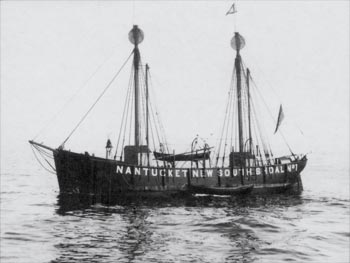
Before we talk about the basket itself, lets talk about the history. Nantucket is a 105 square mile island off the coast of Cape Cod. It has 10,000 year-round residents, but that number swells to over 50,000 during the summer months. Nantucket was a whaling town for much of the early 19th century, and lightship baskets’ circular construction resembles the barrels which were used to hold whale oil. In the second half of the 19th century many former whalers were stationed on lightships off the coast of Nantucket. A lightship is a moored ship that acts as a navigational aid; think of it as a floating lighthouse. These ships would be moored for months and their crews could get pretty bored. To help pass the time they started weaving baskets, using some of the skills they had acquired on the whaling boats.

A Lightship (Photo courtesy of the Nantucket Lightship Basket Museum)

A Lightship (Photo courtesy of the Nantucket Lightship Basket Museum)

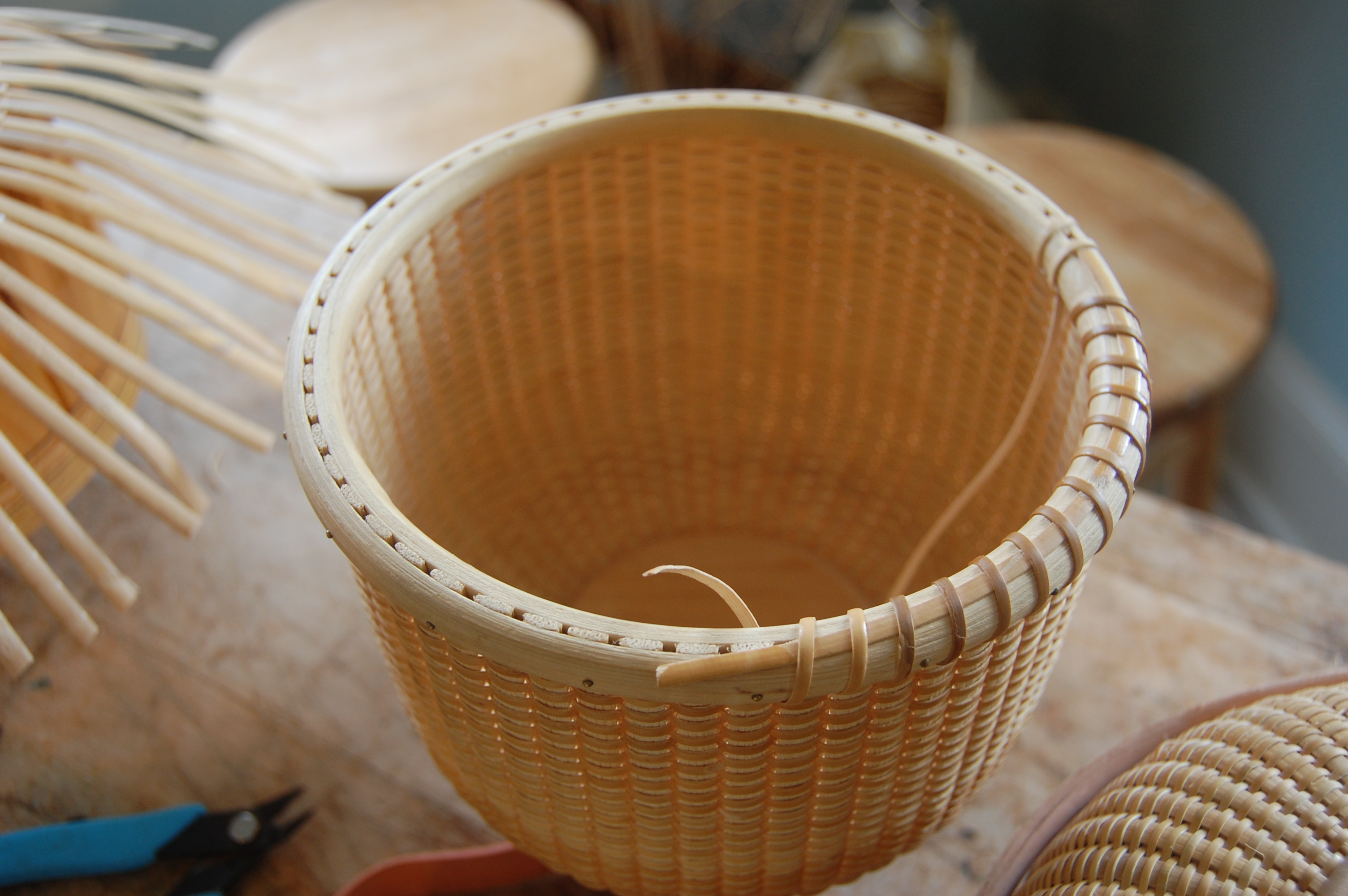
The baskets have a circular wooden base, and before 1860 these baskets were made free-form, meaning they were shaped without using a mold. These days’ rattan staves are wedged into the wooden base and the basket takes its shape based on a mold. The longitudinal staves have to be exactly equidistant all the way around the base and then rattan reeds are woven one row at a time by hand.

A basket on its mold

A basket on its mold

The top of the basket is lined with an inner and outer rim, then escutcheon pins are used to hold it in place. Finally cross lashing secures it all together. The average 6″ round basket takes about 40 hours to construct. After 1900, the baskets stopped being made on the lightships, but they continued to be made on the island and were sold to tourists. Still today you can’t go more than a block in town without seeing a classic basket hanging from a woman’s wrist or in a shop window.

DSC_0019

The inner and outer rim has been put in place and the lashing is being woven in.

In the 1940s a talented weaver named Jose Reyes created the “friendship basket” and turned Lightship Baskets from utilitarian to a fashion statement by creating a loosely fitted lid for the basket and mounting a carved whale on top. Since then local weavers have been pushing the envelope further by using scrimshaws (another old whaling tradition), and by making clutches, bowls and even bracelets using the same rattan weave that has become identifiable on and off Island.

IM000493.JPG

An example of a friendship basket developed by Jose Reyes

Ashlie Emery works at the museum and has been weaving for 20 years. She took me through all the steps of making a Lightship Basket and let me try it myself. It was fun and calming at the same time. You really have to concentrate on weaving the very thin reeds over and under the staves. I was so focused on weaving that I could not think about anything else and I was able to quiet the constant monologue in my mind. And that rarely happens.

Weaving is something anyone can learn (the museum even offers classes for children), but Ashley said it takes time and dedication to become really good. And obviously, those who are really good live on Nantucket. According to the museum staff, there are only 10 professional weavers on Nantucket, meaning they make their living making baskets, and many of them can trace their weaving “lineage,” (meaning those who taught them how to weave) back to the same few early island weavers. There are also tons of hobbyists, who may occasionally sell their baskets. But still to this day most baskets are signed by they artist who made them as they were a hundred years ago.

It struck me that the tradition of these baskets is so much more authentic than one would originally assume. There are tons of objects that are intrinsically linked to their place of origin, but with Nantucket Lightship Baskets the tradition is traced through generations and that tradition continues today with fathers teaching sons. There is also a strong sense of pride associated with the baskets and their history. The Nantucket Lightship Basket Museum opened 14 years ago and has a passionate staff and Board committed to celebrating the heritage and continuing the tradition of this island and its baskets.

Many thanks to Maryann Wasik, Executive Director of the museum, and Ashlie Emery, for taking the time to teach me all about making this truly authentic Nantucket tradition. The museum is open from late April until Columbus Day and it is well worth a visit. I was not compensated in any way for this post.

Facing my Fears (in D Flat)

A few weeks ago I admitted that I had not sung out loud in front of anyone since I was emotionally roughed-up by a 9th grade choir teacher. My friend and loyal reader Chrissy Lamont, brought up the possibility of a vocal adventure over a year ago, and if I am being honest, I didn’t follow up with her as aggressively as I have pursued other bloggy requests. But she didn’t let me off the hook. When she started assembling a fundraising cabaret night to benefit a very worthy cause (a loving couple fighting to retain custody of the adopted daughter whom they have loved and cared for every day of the last three years), I said I would do it! I would face my fears, and sing…out loud…in front of people…who actually paid to hear me (but mostly they paid to hear the accomplished singers who were also set to perform). And just as fast as I agreed to be a part of this special performance, panic set in.

The concert was this past weekend at the Mansfield (Mass) Musical Arts Society. Since my introductory singing lesson with Christine Kasparian, I had practiced “Class”—the duet I would sing with Chrissy—a lot; singing along to the soundtrack of Chicago in the car, and in my apartment (I’m sure my neighbors think I am completely insane…and tone deaf). But I had tucked the reality that I would be singing in front of an audience waaaaaay in the back of my head. It did not seem like reality until I arrived at the theater.

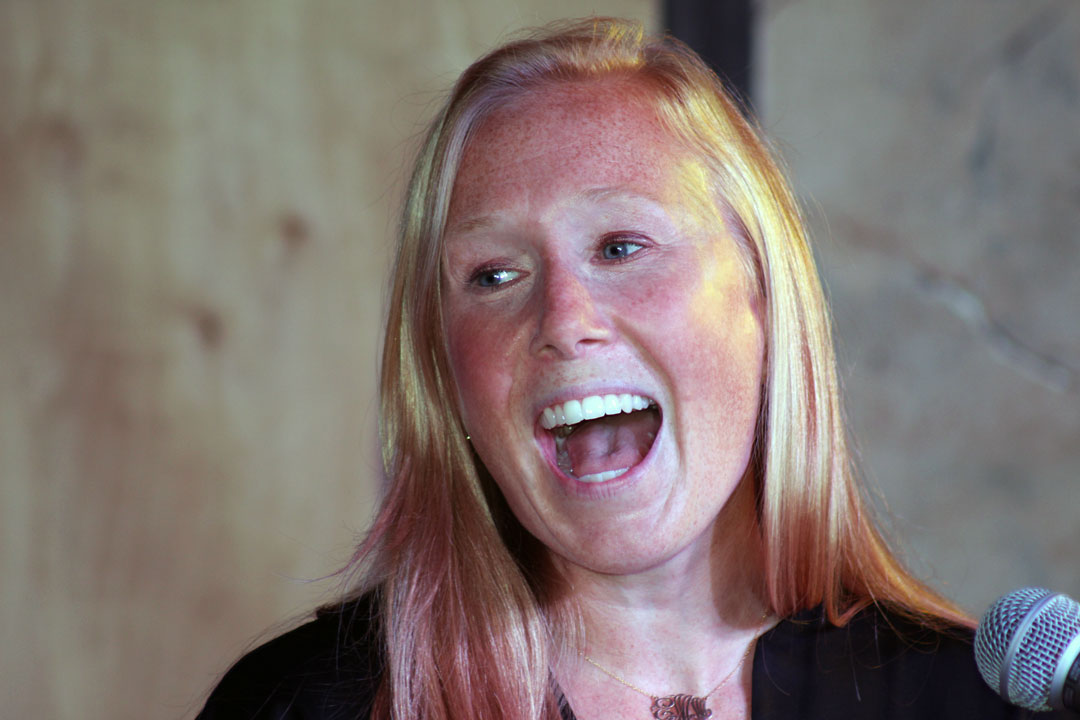
Singing

Photo courtesy of Wim Prest

I really killed it during the sound check. I mean knocked it out of the park. I felt relaxed, I had all the lyrics down cold, and my voice sounded strong. But as we crept through the first act my nerves got the best of me. I suddenly had trouble remembering some of the words as I went through them in my mind, my hands were clammy, and my stomach was in knots.

As the intermission came to an end the night’s master of ceremonies, the very talented and funny Rodney Raftery, opened the second act by introducing me and why I was there (obviously, an introduction was necessary in case I passed out on stage). During Rodney’s introduction a vocal child was politely escorted out of the theater while screaming, “No, no, no” at the top of his lungs. He must have known what was to come.

So why beat around the bush any longer, here is what you all have been waiting for: my singing debut.

So not to go all Type A on myself, but my actual performance wasn’t as good as my rendition during the sound check. I was physically stiff. I messed up some of the lyrics. I rushed it a little bit, meaning I started to sing a little early in a few spots, and then a little late in others.

I must have blacked-out while performing, because my time on stage seemed to pass in the blink of an eye. I barely remember what happened. But you know what, I got through it. After the show ended, members of the audience approached me with complements that included “Bold,” “Not bad at all,” and “Brave.” Yes, in this case all these do count as complements. And I was buoyed by their support.

Those positive feelings dissipated two days later when I finally brought myself to watch the video. I was mortified, and still am. Had I not promised to post it for all of you, I may not have. I sounded much better in my head. I’ve had pangs of regret over the potential embarrassment of having this video live on the Internet forever.

But what have I been saying for the last year and a half on this blog? I am throwing myself into life’s possibilities trying to find what I’m passionate about. In the process, I’m not letting fear, my perfectionist tendencies, or potential embarrassment hold me back. And this singing-phobia had been holding me back for 15 years!

So there it is. And here I am; slightly embarrassed after my most humbling adventure to date, but also proud of myself for getting up there.

Anyone want to make a date for karaoke? I know a song…

 Many thanks to my dear friends Chrissy Lamont and Rodney Raftery, and all the fabulous performers of The Rose Concert. Your support helped me get through this without loosing my mind…or my voice.

Sail Away

Close your eyes.

Come on, just for a second. Thank you. Now picture the most perfect summer seascape you can. Don’t worry, I’ll wait.

What do you see? I’m willing to bet that your mental image, like mine, involves an elegant boat; sails billowing in the wind, golden wood gleaming in the sun. With all this in mind, it seemed only natural that I would learn how boats are built in these waning days before Labor Day.

A few weeks ago I was in Newport, Rhode Island and was lucky enough to spend a good part of a day at the International Yacht Restoration School. IYRS, as it is known, offers career training in three disciplines: composites technology, marine systems, and wooden boatbuilding & restoration in its facility right on the water.

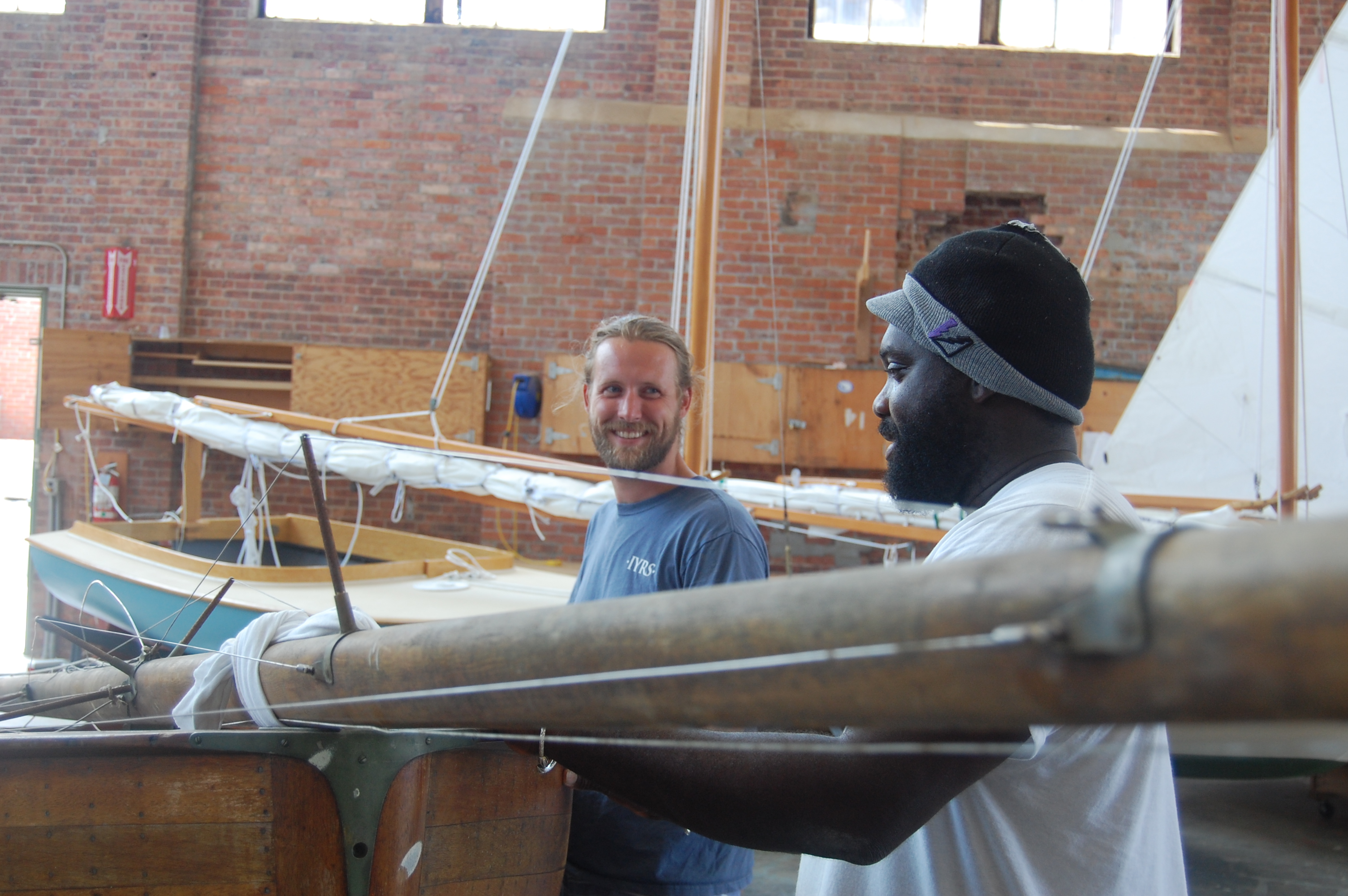
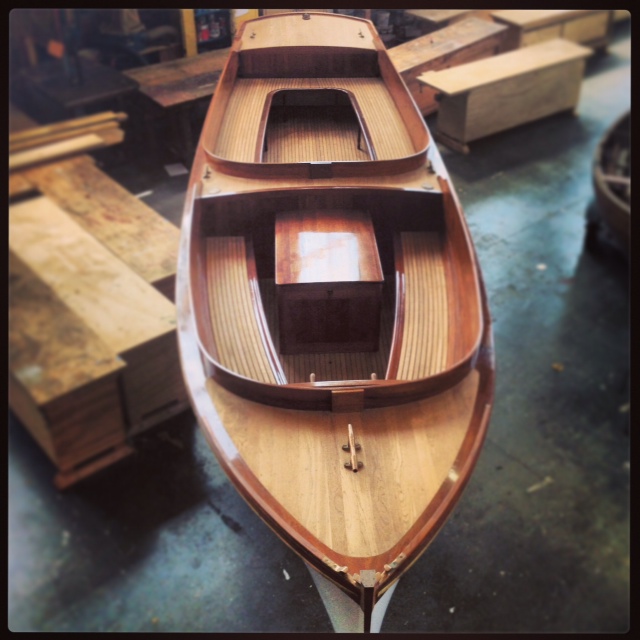
While there were a few students hard at work, classes for IYRS’ two-year boatbuilding program were not in session, so Joel Senger, an IYRS graduate and boatbuilding instructor, served as my seaside sensei, walking and talking me through all the steps involved in restoring a wooden sailboat. While Joel and I discussed me returning in the fall to get my hands dirty, there is so much that goes into hand-building these boats that I think this introduction is just about all I could have handled for the first time out.

Joel (left) loved his experience as a student at IYRS so much he is now an instructor

Joel (left) loved his student experience at IYRS. Now he is an instructor

Here are some of the most interesting aspects of boatbuilding, from my non-boatbuilding perspective:

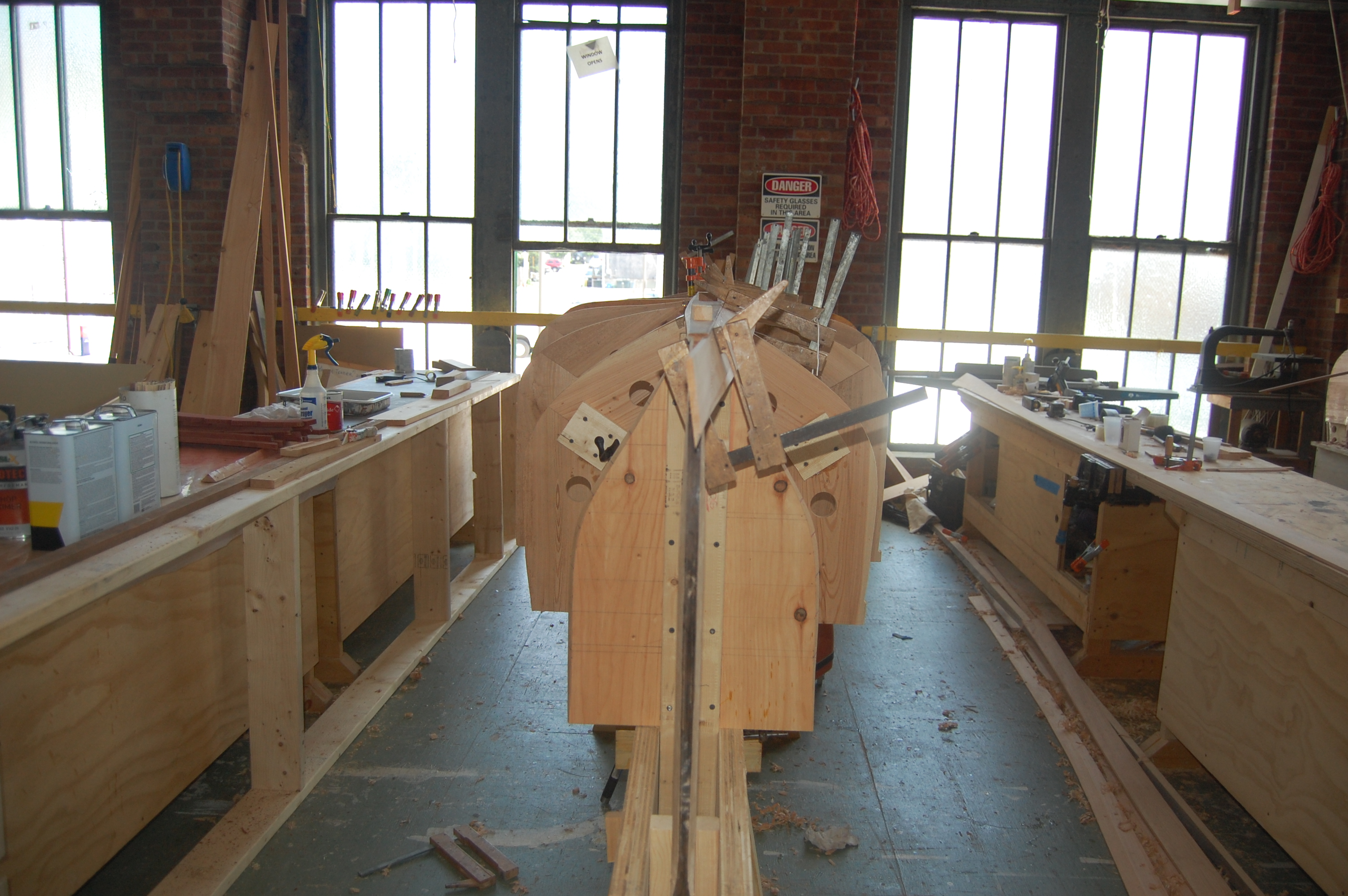
IYRS’ approach is very practical: students learn how to build the vessels by “restoring” them. They take a boat apart first, and that informs how they build it back up. This is the same approach I took while learning to upholster: I had to take the chair down to its frame to understand how it all goes back together. Of course, the homework at IYRS has to be sea-worthy, and my wing chair just has to sit in the corner and look pretty.

DSC_0008

First the ribs of the boat are put in pace. Lots of clamps are used.

First the ribs of the boat are put in pace. Lots of clamps are used.

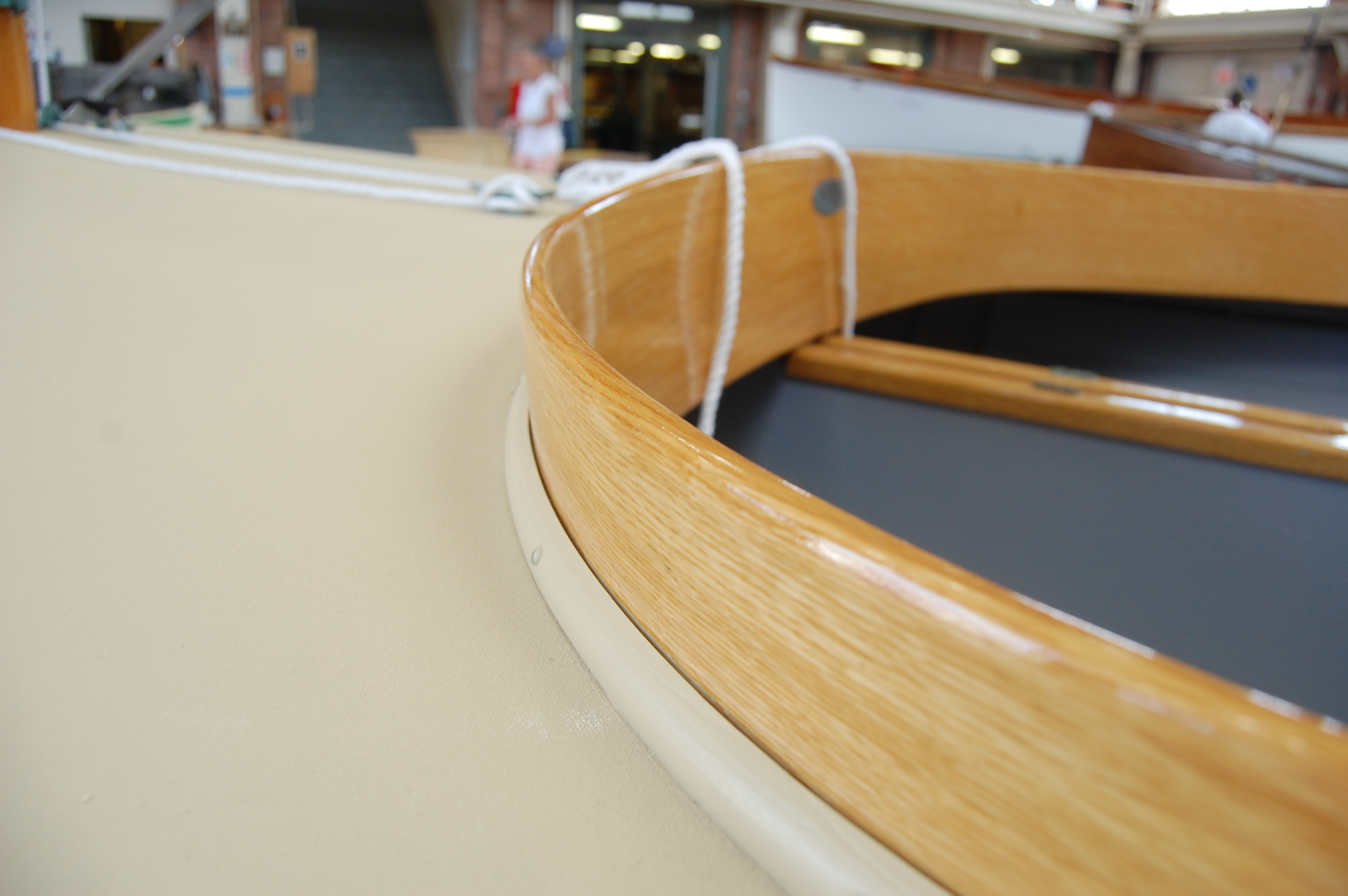
Joel explained that building a boat is simply a matter of “pushing wood to the max.” The wood has to be heated, using steam, to the point that it’s able to be bent. To do this, long pieces of wood are put in steamers, and it takes one hour to properly steam one inch of wood. On top of that, the wood is only warm enough to be manipulated for about ten minutes. I imagined being a new IYRS student must feel like a contestant on “Double Dare” (I’m really dating myself here, aren’t I?). That ten minutes probably flies by and before they know it—but hopefully after they have successfully shaped the wood—it is back to being, well…wood. Imagine the skill it takes to create a beautiful curve like this:

That wood is curved by hand...and steam

That wood is curved by hand…and steam

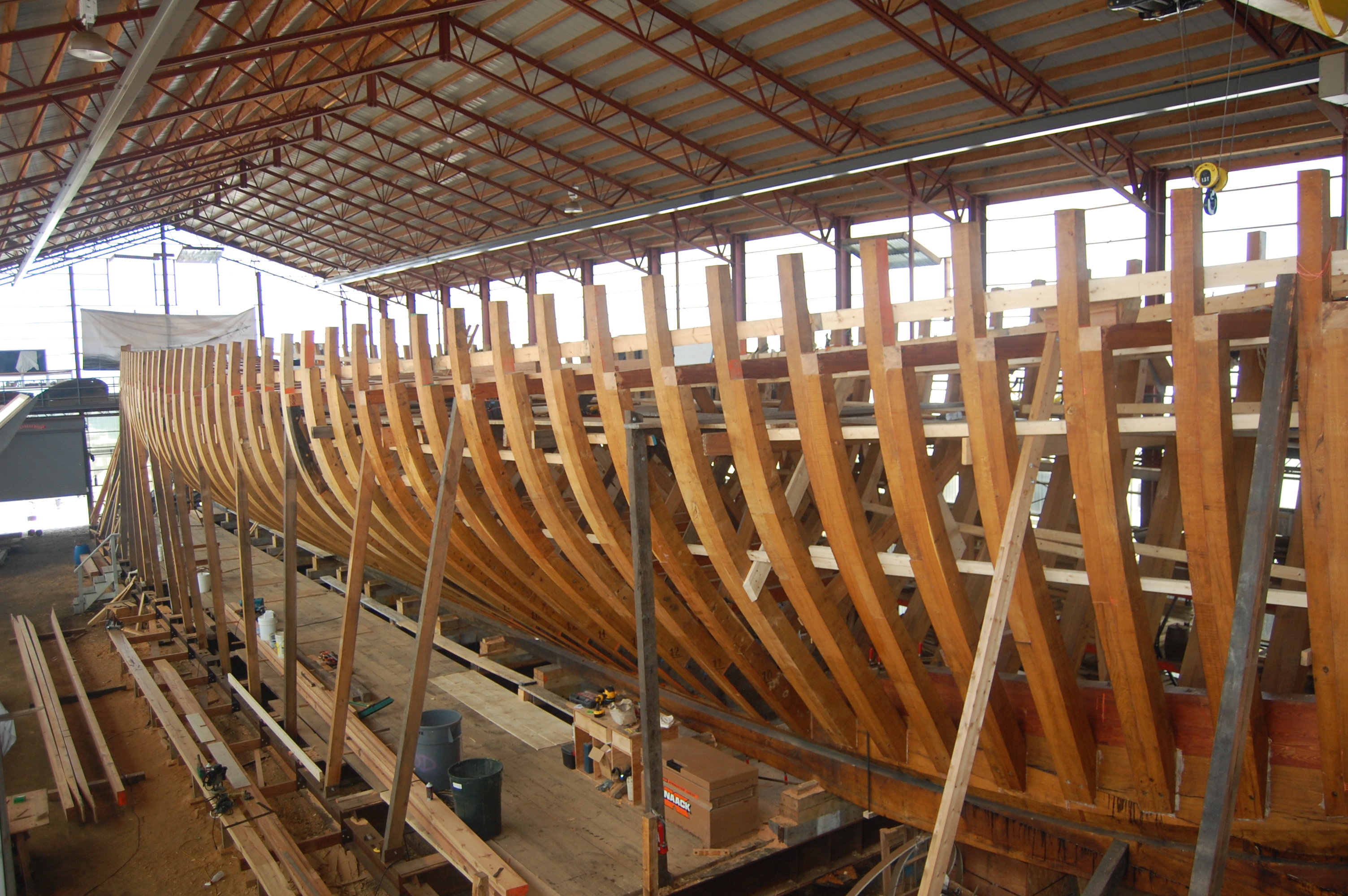
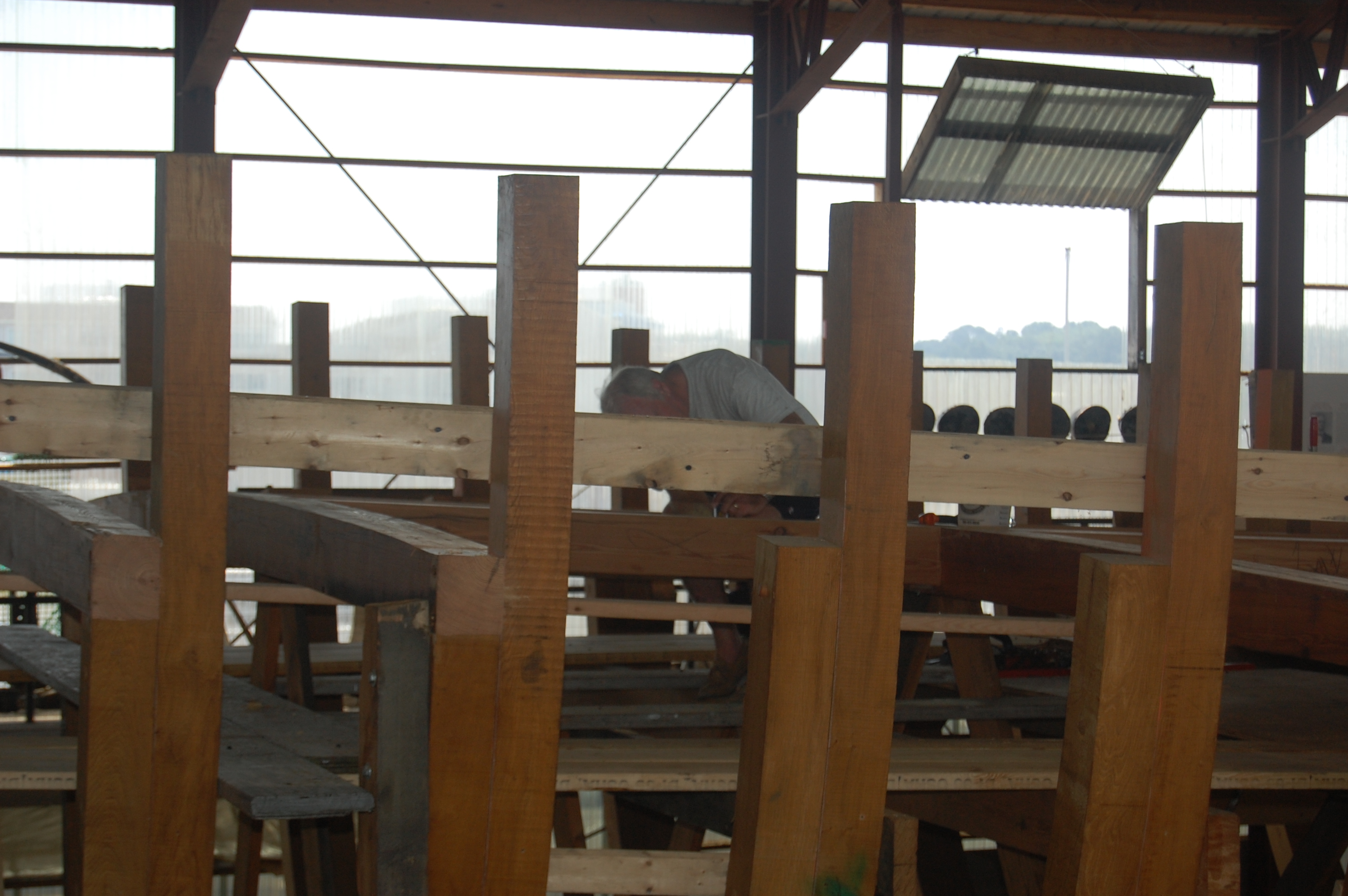
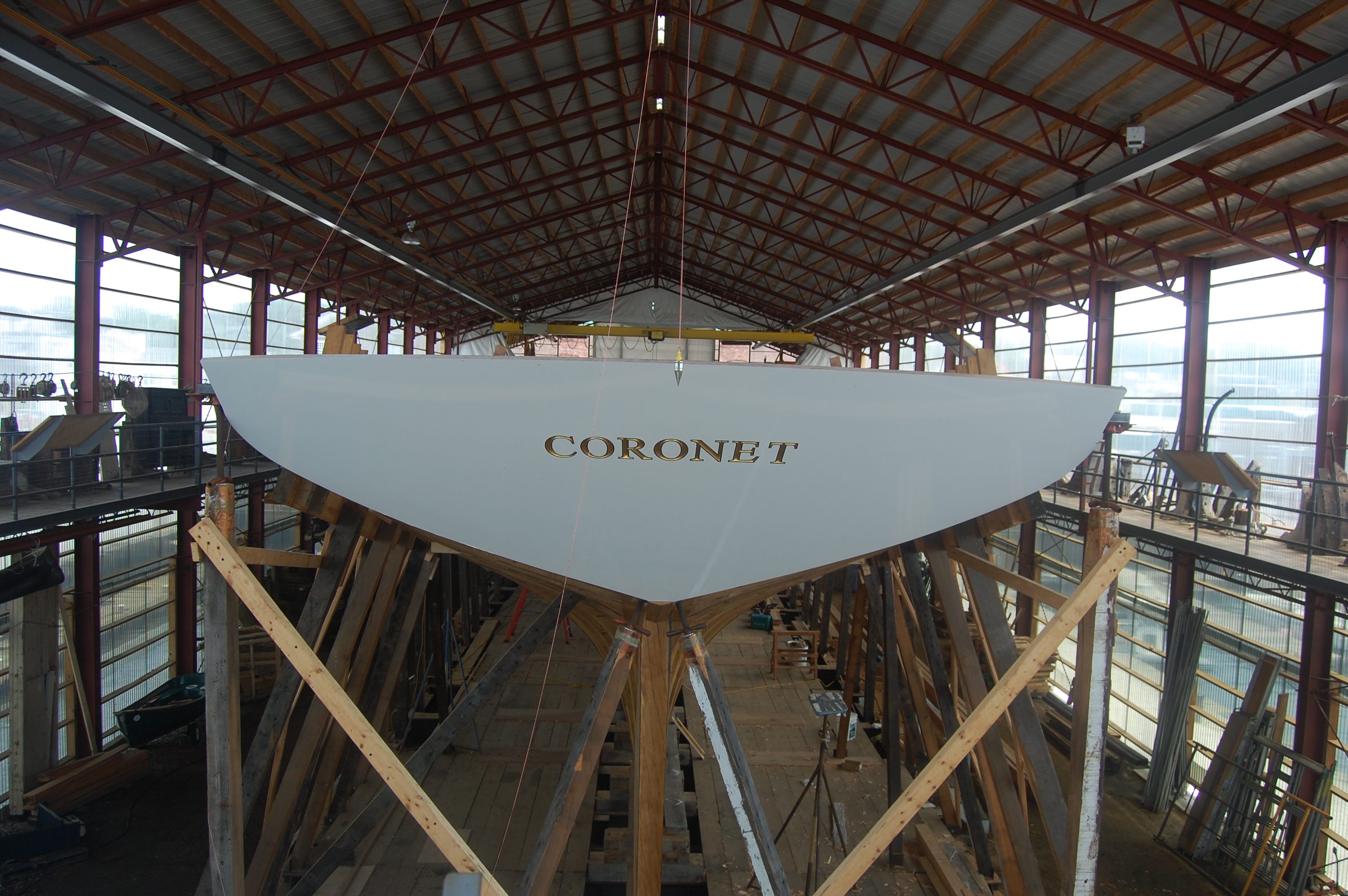
One of the most fascinating aspects of IYRS is out back. It’s the Coronet: a 130-foot long schooner yacht built in the 1880’s and is painstakingly being restored (i.e. re-built) by five people. Its scale is as impressive as its history. When someone pops out of the framework of the boat you get a first-hand look at exactly what went into building it 130 years ago because they are still doing it all by hand.

DSC_0013

The 130-foot Coronet

DSC_0020

All the work is being done by hand. For obvious reasons there is no timeline currently associated with the project

DSC_0015

All the furniture that had been bolted down inside the Coronet, now lines the walkway that surrounds the work area, and that too proved to be a history lesson with the upholstery of some chairs fraying, revealing the horse hair used to cushion the seats (today in addition to springs, raw cotton or foam is used instead).

IYRS is a special place; I could tell that from just spending an afternoon there. Joel is a perfect example; he did not sail before coming to IYRS, and had never lived in Newport. Ten years later he is still here, teaching the boat builders of tomorrow. He says the program changed his life and now he gets to be a part of changing the lives of students ages 17 to 68. Students spend minimal time in the classroom, they learn by doing, and sometimes they just don’t want to go home at the end of the day. That is when you can tell when someone has a real passion for something, when there is nothing else they would rather be doing.

We should all be so lucky.

boat

Thanks to Joel Senger for sharing his knowledge and time with me, and giving me a great introduction to boatbuilding and IYRS. I was not compensated for this post in any way.

IYRS

Too Late to Back Out Now

We are T-minus five days away from my stage debut. As some of you read, I worked with the amazing voice coach Christine Kasparian in preparation to sing in public for the first time since freshman year of high school. If you have no idea what I’m talking about you can get up to speed here.

What? You can’t wait until next week to hear how I did?

Well then, you are in luck, because you can attend the concert!

It’s this Saturday, August 17th at 7:00pm. It will be held at the black box theater at the Mansfield Musical Arts Society in Mansfield, MA. Don’t worry, I’m not the main attraction. Some accomplished performers who will be singing pop songs as well as Broadway hits. Tickets are $22 and you can purchase them here.

All the amazing singers (that would be everyone in the show except for me) are donating their time and all the proceeds from ticket sales are going to help a wonderful Massachusetts couple in their adoption battle for the little girl they’ve loved for three and a half years.

If you come, look for me in a corner of the lobby doing a shot for courage!

Posted in Art

Day Hike, Shmay Hike

Sometimes I set out to find adventure, and sometimes adventure just finds me. That’s what happened this past weekend when I headed to New Hampshire to go hiking with some friends. I had been hiking before—or at least I thought I had—so I didn’t think anything eventful enough would happen to warrant a blog post. That changed even before we arrived.

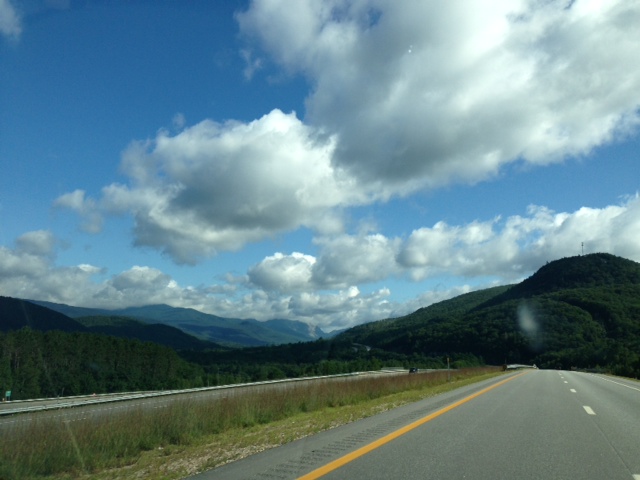
Sunday morning started with an early wake-up call and we were on the road speeding toward the White Mountains before 7:00 a.m. Speeding turned out to be the operative word. We were pulled over by a New Hampshire state trooper, who calmly asked my friend behind the wheel, “Do you know how fast you were going?” at which point I nearly laughed out loud because I thought cops only said those sort of things in movies.

You see, I had never been in a car while it was being pulled over before. This is less a testament to my strong driving skills (in fact I can count on two hands the number of people who claim they nearly lost their lives with me behind the wheel), than an ode to my seven years as a New Yorker who’s preferred mode of transportation was, and continues to be, her own two feet. So seeing the lights flashing behind us set the tone for the rest of the day: we did not have luck on our side.

Speeding towards the White Mountains

Speeding towards the White Mountains

We got back on the road and met Corey Fitzgerald at the base of Little Haystack Mountain. Corey runs Northeast Mountaineering, and you may remember him from my rock climbing adventure earlier this summer. At that time, my friend Eleanor and I had so much fun we swore we had to return to New Hampshire soon, and Corey was the obvious choice to accompany us.

I didn’t think much about this hike until a few days beforehand when Corey gave us a list of what we should wear, bring and pack. Then I realized I was ill prepared for this day hike. I couldn’t find my hiking boots, which I swear I had owned at some point in my life, the only backpack I had barely fit my camera and the only thing I had to wear on the lower part of my body was yoga pants. It turns out I am more “Troop Beverly Hills” than Outward Bound. I remedied the gear situation with a little help from Facebook, Hannah Moore and Lulu Lemon.

The weather forecast took a last-minute turn and at the summit of the mountains it was predicted to be between 35 and 50 degrees with rain, thunderstorms, and wind gusts of 40 miles per hour. Corey had sent us an email detailing our journey and said that we would have 11 hours of daylight to complete our hike. This elicited the following email response from me: “WE ARE GOING ON AN 11 HOUR HIKE???”

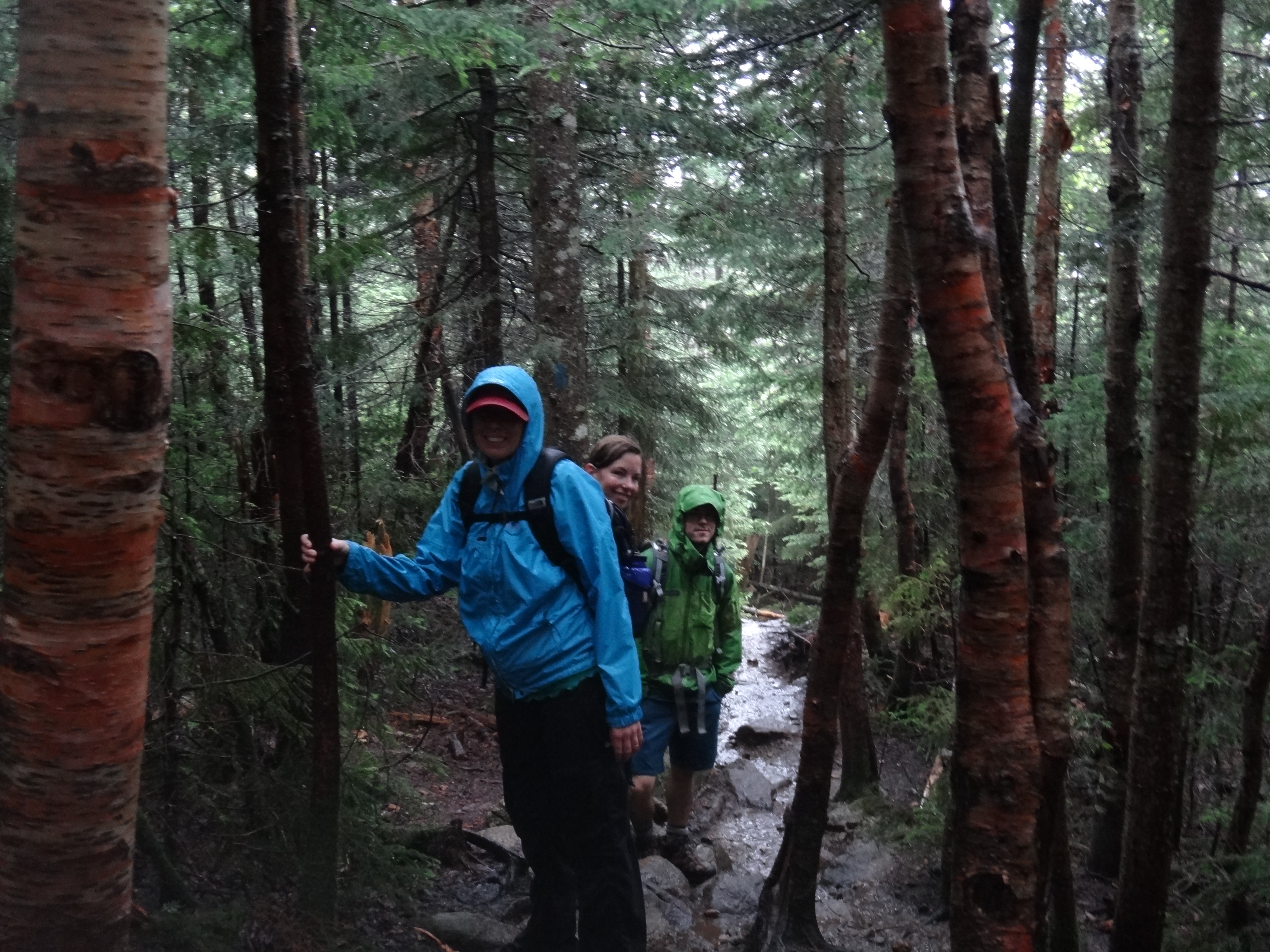
This was the first clue that my idea of a “hike” and Corey’s idea of a hike may be two very different things. My second clue came when we started up the mountain, and it was very steep and rocky. That was when I realized that “hiking” to me is more like a scenic stroll…on a slight incline. Don’t get me wrong, my friends and I kept up with Corey (for the most part) although the pace he was setting was likely that of a snail compared to his normal clip (his hands were in his pockets and he was whistling while we were huffing and puffing). We stopped about ever hour to have a snack. We had some amazing views on the way up, and then a storm rolled in. As the rain came down, we continued to climb up, but our determination wavered.

Photo courtesy of Corey Fitzgerald

Photo courtesy of Corey Fitzgerald

“This has already been a great day,” may have come out of one of our mouths after just two hours on the trail.

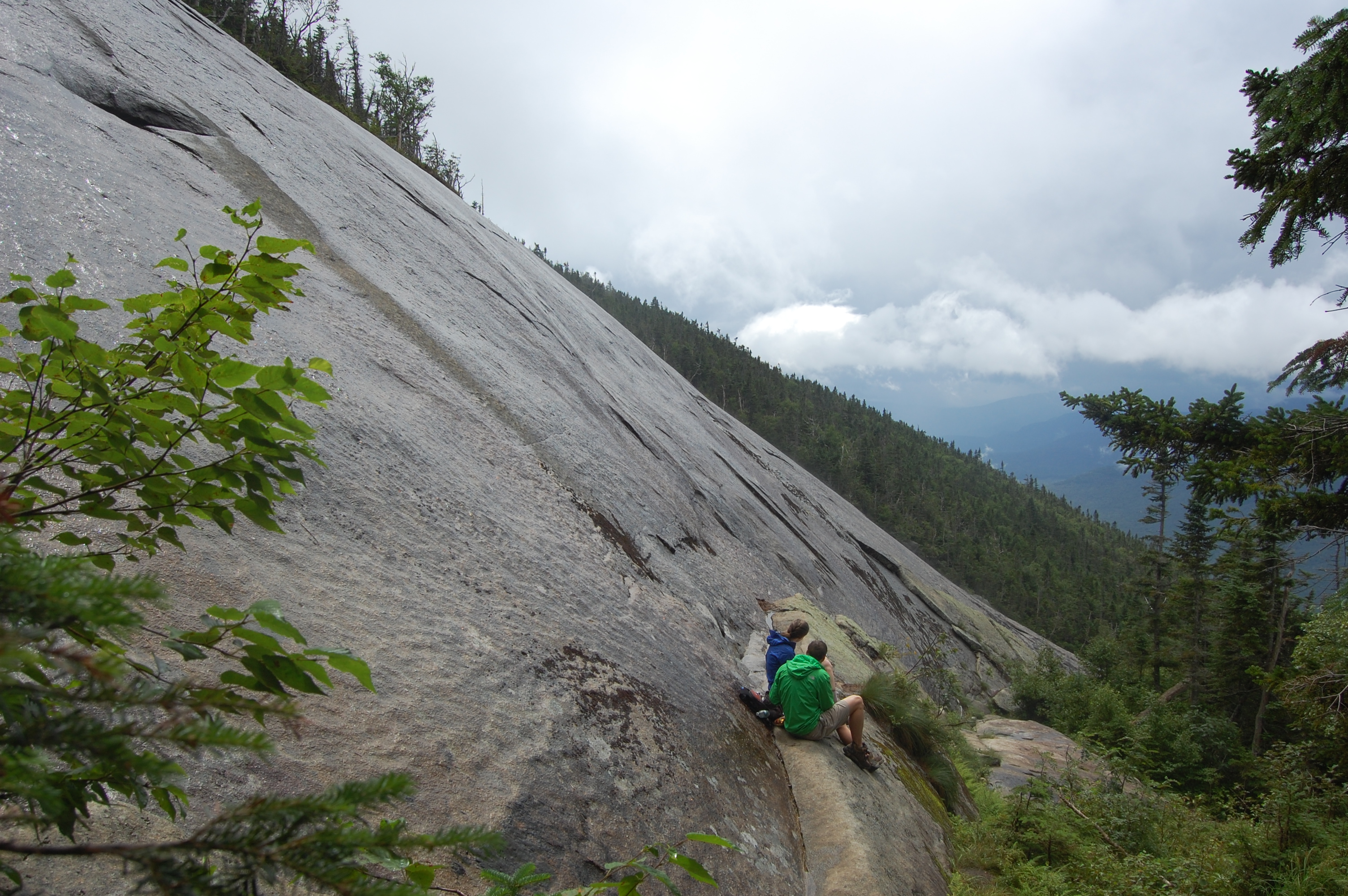
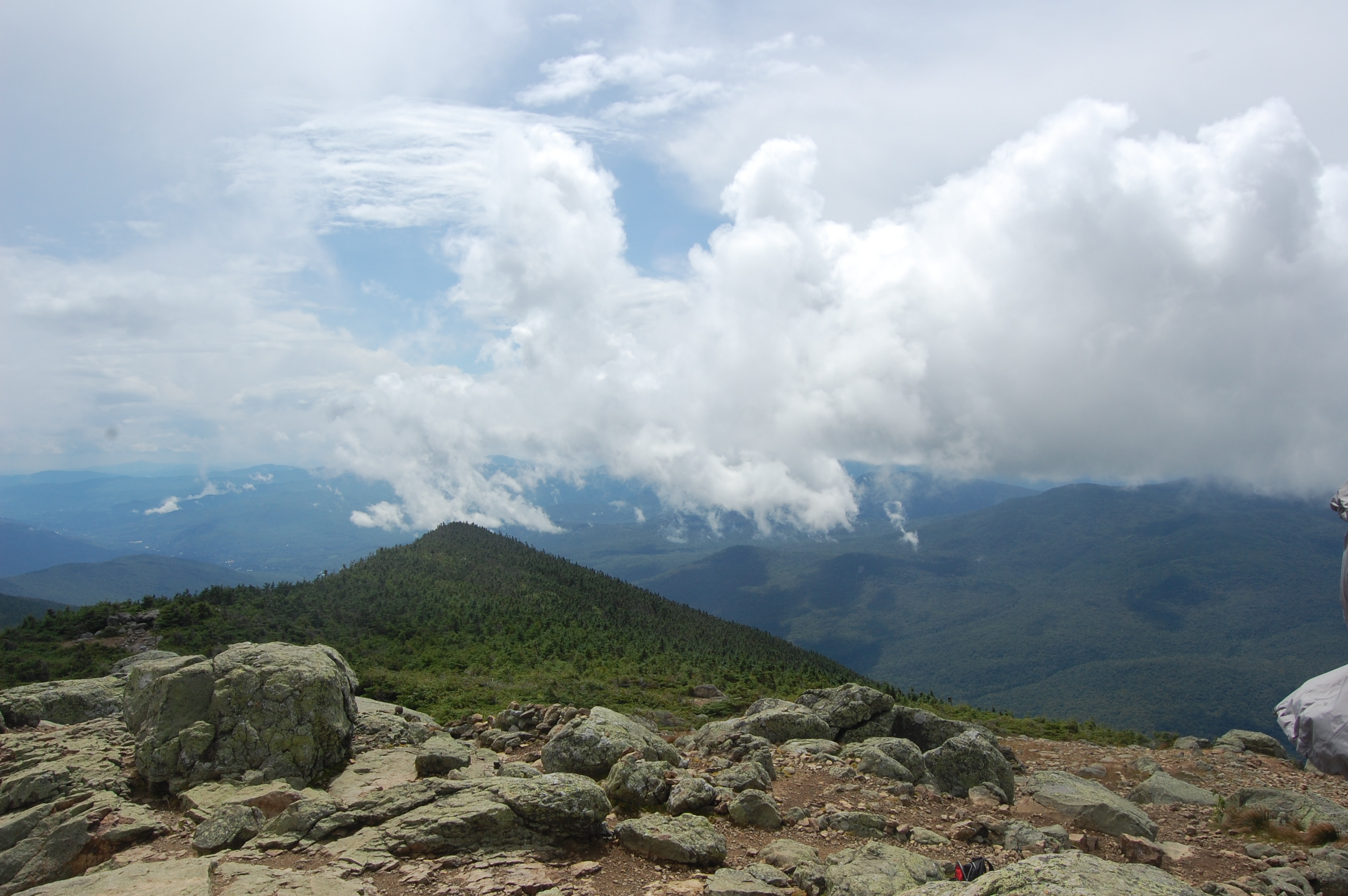
But Corey verbally whipped us back into hiking shape with “We have to summit something.” Did we…really? But summit we did. We “tagged the top” (even if I’m not outfitted like a hiker at least I can use their lexicon) of Little Haystack after more than three hours. The panoramic views of the White Mountains were amazing, and watching the rain fall on different parts of the terrain was really cool.

Taking in the view from the top of Little Haystack

Taking in the view from the top of Little Haystack

Photo courtesy of Nicole Richards

Photo courtesy of Nicole Richards

Corey had planned for us to travel an hour and a half along a ridge and summit a few more peaks before heading back down, but with rain moving in, we decided to go back the way we came.

DSC_0022

The weather quickly changes from this…

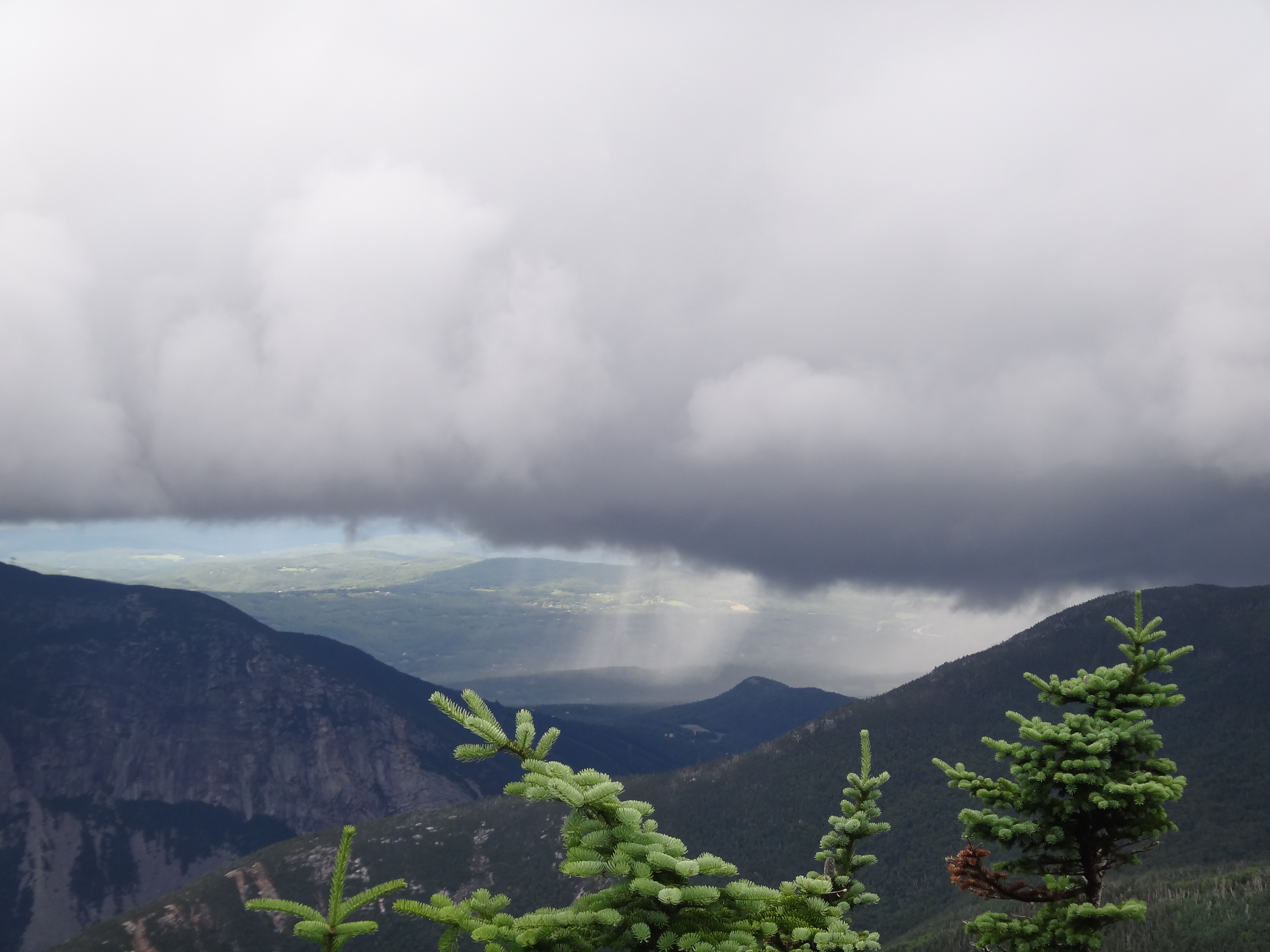
That rain was heading towards us.

…to this and that rain was heading towards us.

And that’s when the rain really started coming down. And then there was thunder. And lightning. We hiked down in the rain for more than two hours. During which time one of my hiking buddies became terrified that we would be struck by lightning, Corey kept whistling, and I realized that my raincoat was “water resistant,” not “waterproof.” Every layer of clothing I was wearing was sopping wet. Needless to say we were much less talkative on the way down; although I nearly broke into chants of “Beverly Hills, what a thrill…” with the hopes of injecting some comic relief into our sullen march down the mountain.

After a least an hour of rain. Photo courtesy of Nicole Richards.

After a least an hour of rain. Photo courtesy of Nicole Richards.

I was freezing by the time we got back to our car, and drew stairs when I ordered hot tea at a bar in Woodstock while wearing a puffy down jacket…in August. Lesson learned: I am a city mouse, and I may just have to accept that. Or at the very least invest in the appropriate gear before my next outdoor adventure…which is actually coming up next month! I will be foraging, yes foraging. I will be living off the land for a weekend…gathering nuts and berries, hopefully catching a fish or two…all because one of my readers suggested I try it, thank you June in Chicago!

So this hiking trip was probably a blessing in disguise. I now know I am woefully unprepared (both mentally and materialistically) for a night in the wilderness; I have a month to get ready. And hopefully my quads will be working by then, because the day after this hike I could barely walk.

The view from half way up

The view from half way up

Thanks to Corey Fitzgerald of Northeast Mountaineering, for another amazing adventure. Thanks also to Eleanor Crow and Nicole Richards for letting me include them in this post. And a big thank you to Shelley Long for providing the perfect analogy for my outdoorsiness, or lack thereof.

The World is Your…

I love oysters, especially sweet oysters. That simple, yet significant fact was my sole motivation for asking the fine folks at Island Creek Oysters if they would let me come and hang out on their farm. I thought I would slide into a pair of waders, get a little dirty, maybe eat an oyster or two and write one of my typical witty posts.

Some of those things did indeed happen, but what also happened was that my mind was TOTALLY BLOWN by all that goes into oyster farming. I had only pictured the end product: big, beautiful, three-inch oysters (it is a Mass. law that oysters have to be 3″ to be sold here) being plucked from the sand to make their way to a plate near me. What I got was a lesson in marine biology, genetics, passion and hard work…all before eating lunch…yes,a lunch of oysters.Island-Creek-Oyster-Festival-2011-500

Skip Bennett started Island Creek Oysters in 1992, and it’s now synonymous with Duxbury Bay, which is ironic seeing that oysters are not native to the bay. That didn’t stop the Duxbury native. He joined forces with Christian Horne, an oyster farmer from Maine, and started harvesting oysters. More than two decades later they sell over 100,000 oysters a week across the country, and have an eponymous oyster bar on Comm. Ave in Boston.

I arrived at Island Creek with my friend Anne-Marie, a fellow oyster lover, and were greeting by the adorable Annie McNamara who wears many hats at the company. She started our tour by taking us through the hatchery. This is when I realized that oyster farming is not as simple as just harvesting oysters from their beds, at least not at Island Creek. Skip and company have it down to a science…literally. There is so much technology and biology involved with breeding and growing great oysters I almost wished I could take a refresher bio course. Despite taking copious notes, I cannot even begin to explain all the steps and stages, but you can get a great, in-depth over view of the Island Creek process here.

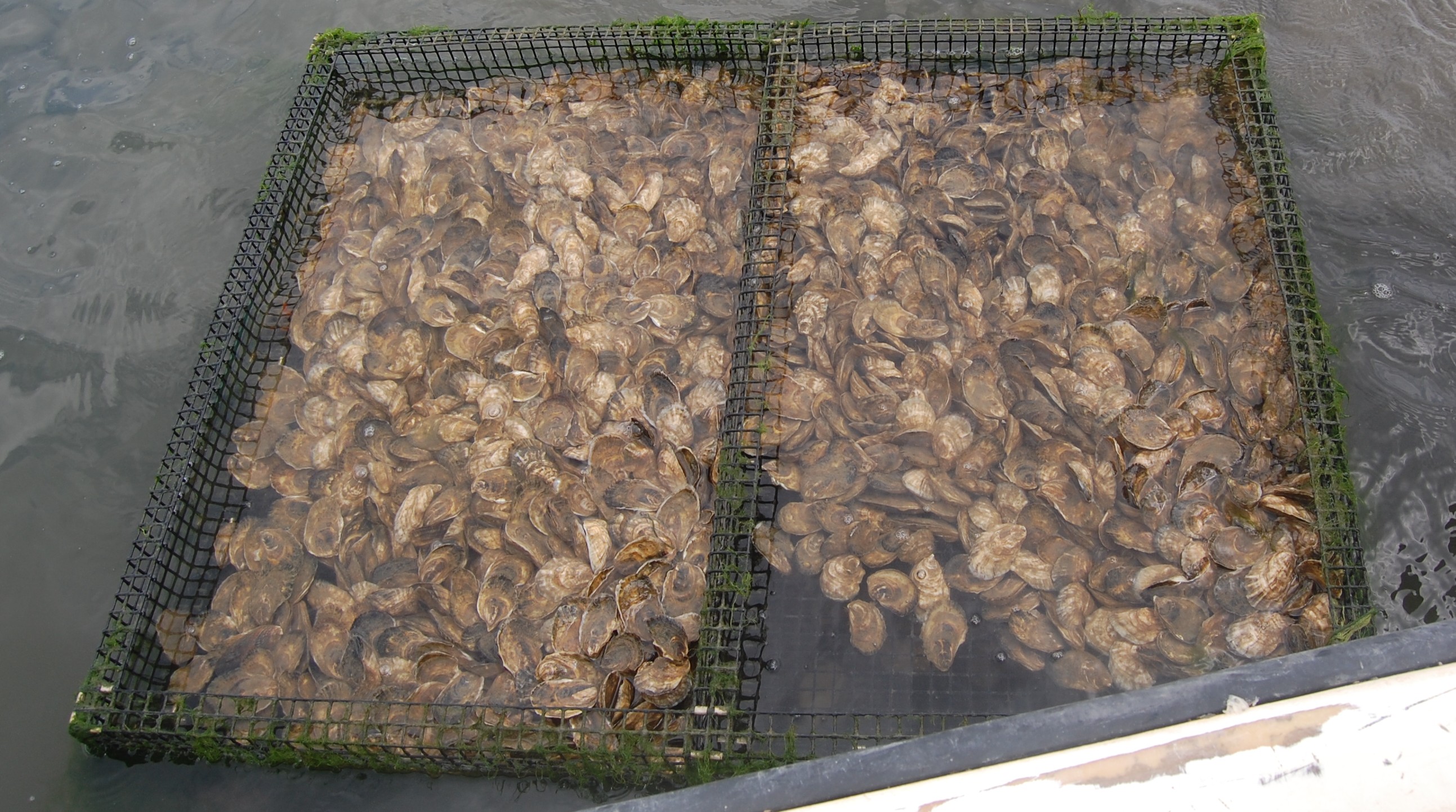
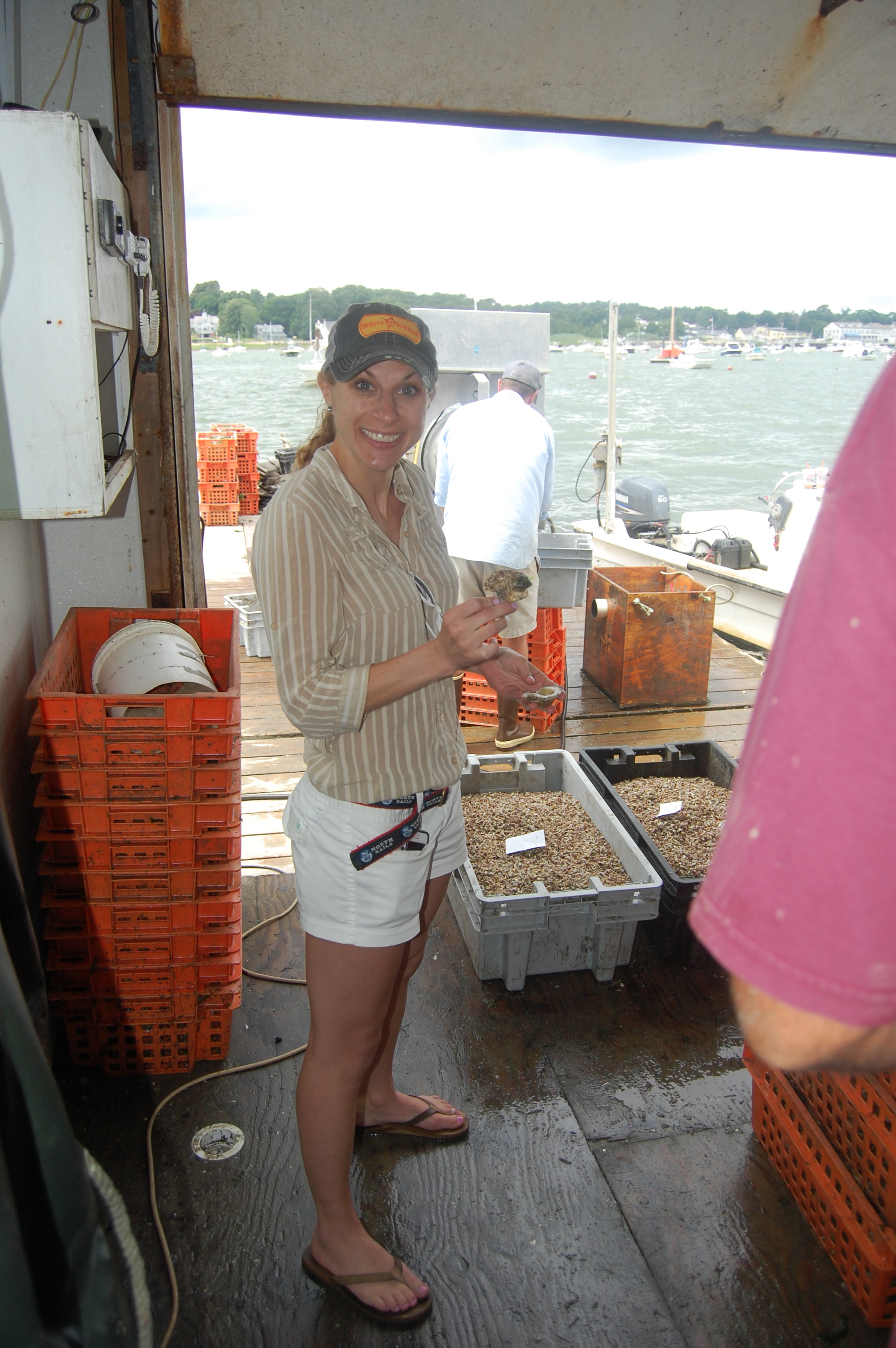
more mature oysters in their crates

more mature oysters in their crates

Here is my analogy-filled cliff notes version: Island Creek has a “broodstock,” a group of genetically gifted specimens that can grow to become their sweet oysters when they mature. Think of this broodstock as the Tom and Gisele of oysters. There are tons of these power couples, and they are swingers to boot; oysters are sequential hermaphrodites so they can change gender, although it’s tougher to become a female than a male (I’m sure some of their human counterparts would agree). The hatchery is the equivalent of an oyster fertility clinic where they spawn and where new generations of Island Creek oysters start their lives. It’s also where the oysters’ human patrons grow super algae to feed the them. There’s a colorful collection of algae from across the Caribbean that is mixed together, but kept very pure, and becomes almost like a powerful multi-vitamin for the growing oysters. The hatchery is filled with large drums, beakers of varying size, and large-scale equipment that I never associated with oyster farming.

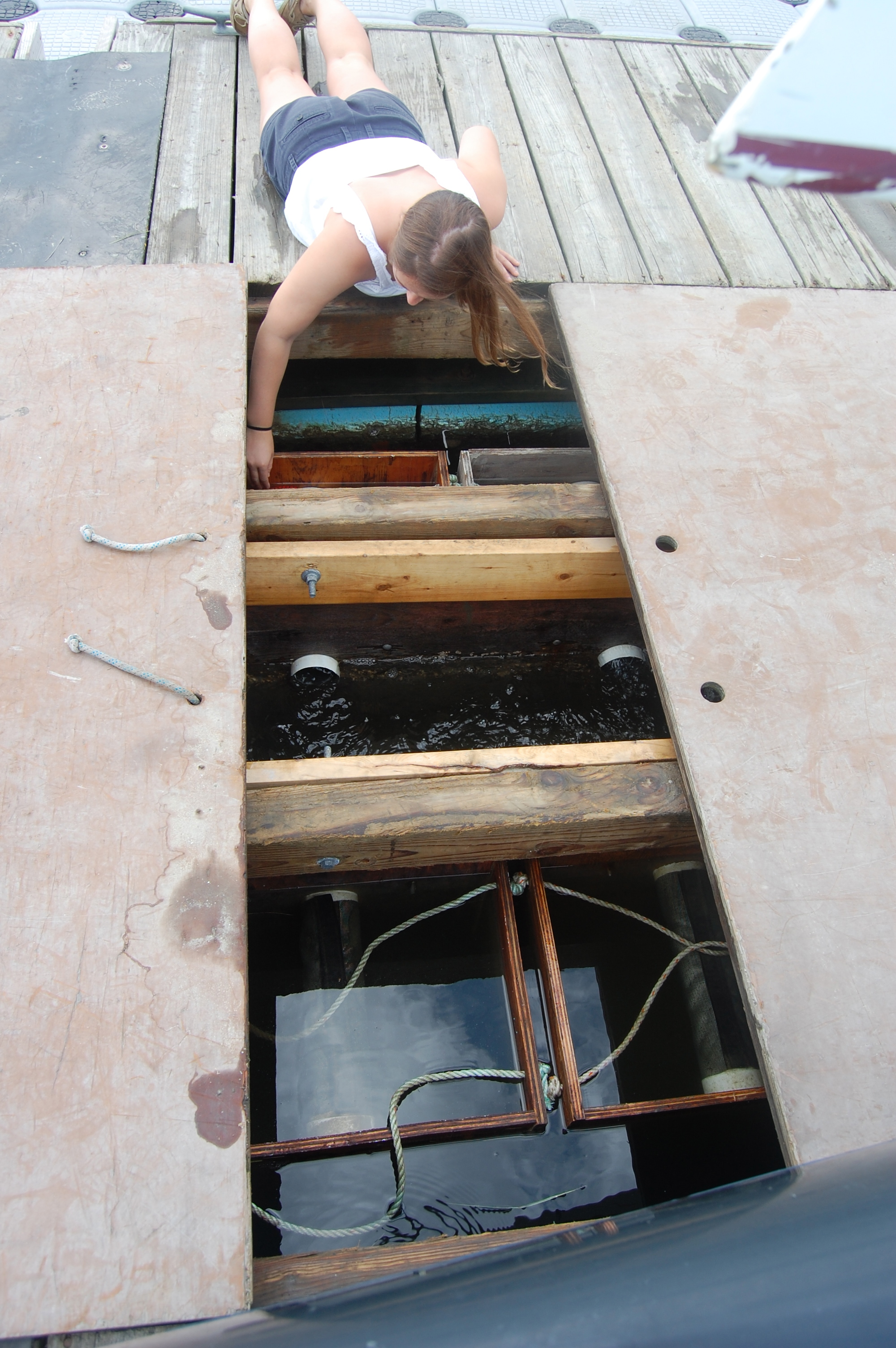
Annie opening up the upwellers under the dock

Annie opening up the upwellers under the dock

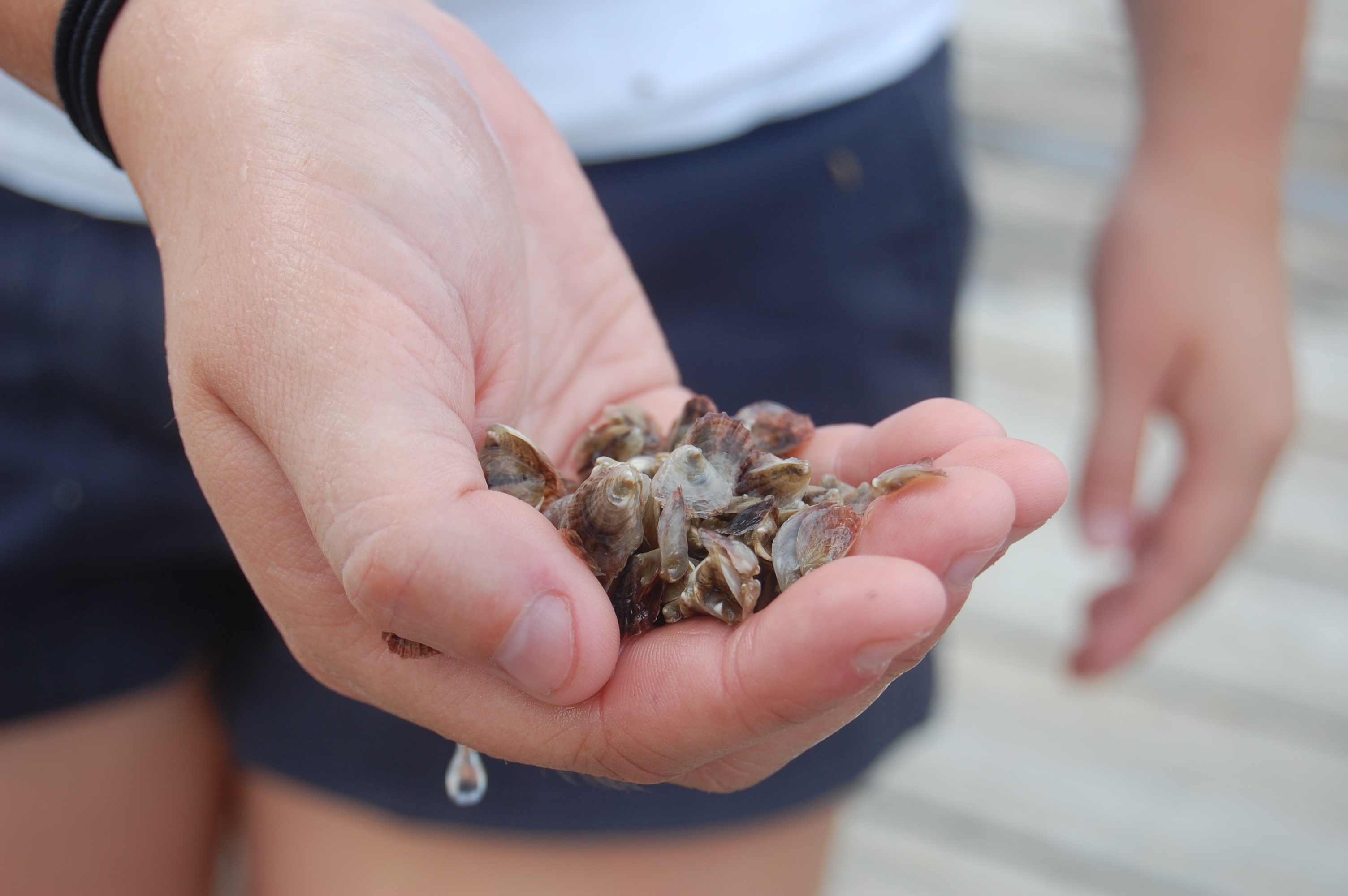
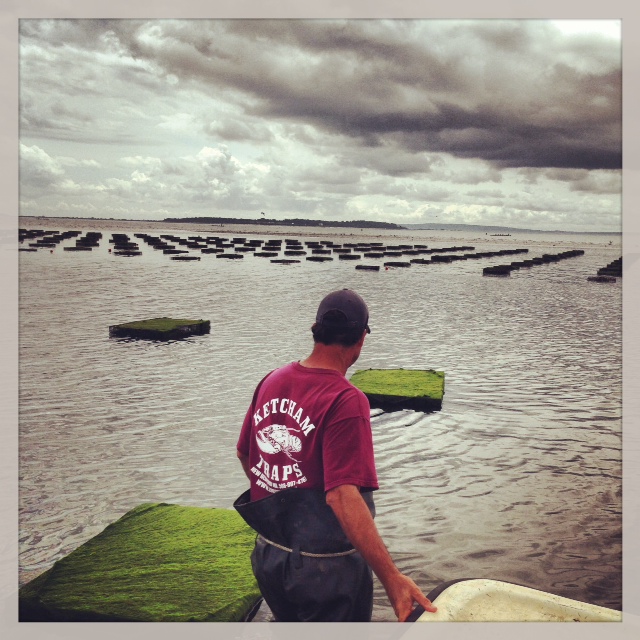
I was left dumfounded by the hatchery…and then we made our way out to the dock, under which young oysters are growing in upweller boxes made by hand. This was another aspect of oyster farming that I was completely oblivious to. Oysters participate in an 18-month game of musical chairs. The farm crew of Island Creek moves the oysters from location to location around the bay as they grow to keep them in the ideal conditions for that stage of development. The baby oysters are stored in mesh bags within the upwellers under the dock. The mesh is fine enough that the babies won’t fall out. After several 3-4 weeks they are sorted, or “graded.” They are separated by size and all the smaller ones are put together, this allows them to grow and catch up to the big ones.

baby oysters that grow 1 mm per day

baby oysters that grow 1 mm per day

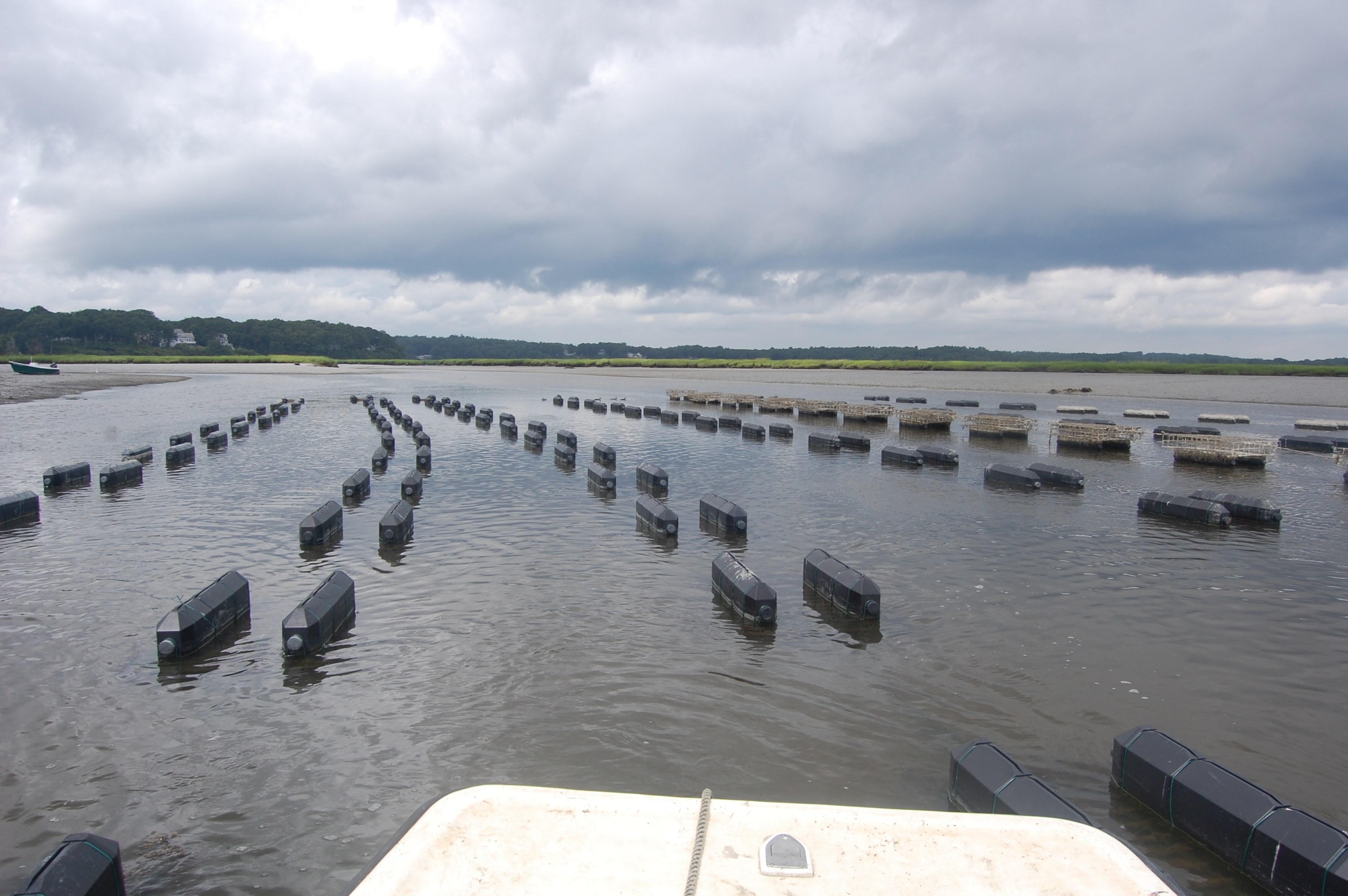
As we finished marveling at the tiny oysters, we were picked up by boat by Skip himself and headed out into the Bay to learn more about the farming operation. First, we visited the nursery, or “the river,” where 5.5 million (yes, five and a half million) growing oysters are stored in mesh bags similar to those under the dock, and placed inside crates. This is the next stop for the oysters after spending weeks in the upwellers under the dock.

The nursery, there are 5.5 million oysters in those crates

The nursery, there are 5.5 million oysters in those crates

Oysters grow quickly. Skip amazed us when he said they grow one millimeter each day or a quarter of an inch each week, except in the winter. In the colder months oysters are dormant, meaning they do not grow or eat. Island Creek has to account for this because they harvest all year round to satisfy they customers who include chefs at fine restaurants across the country including Per Se and French Laundry.

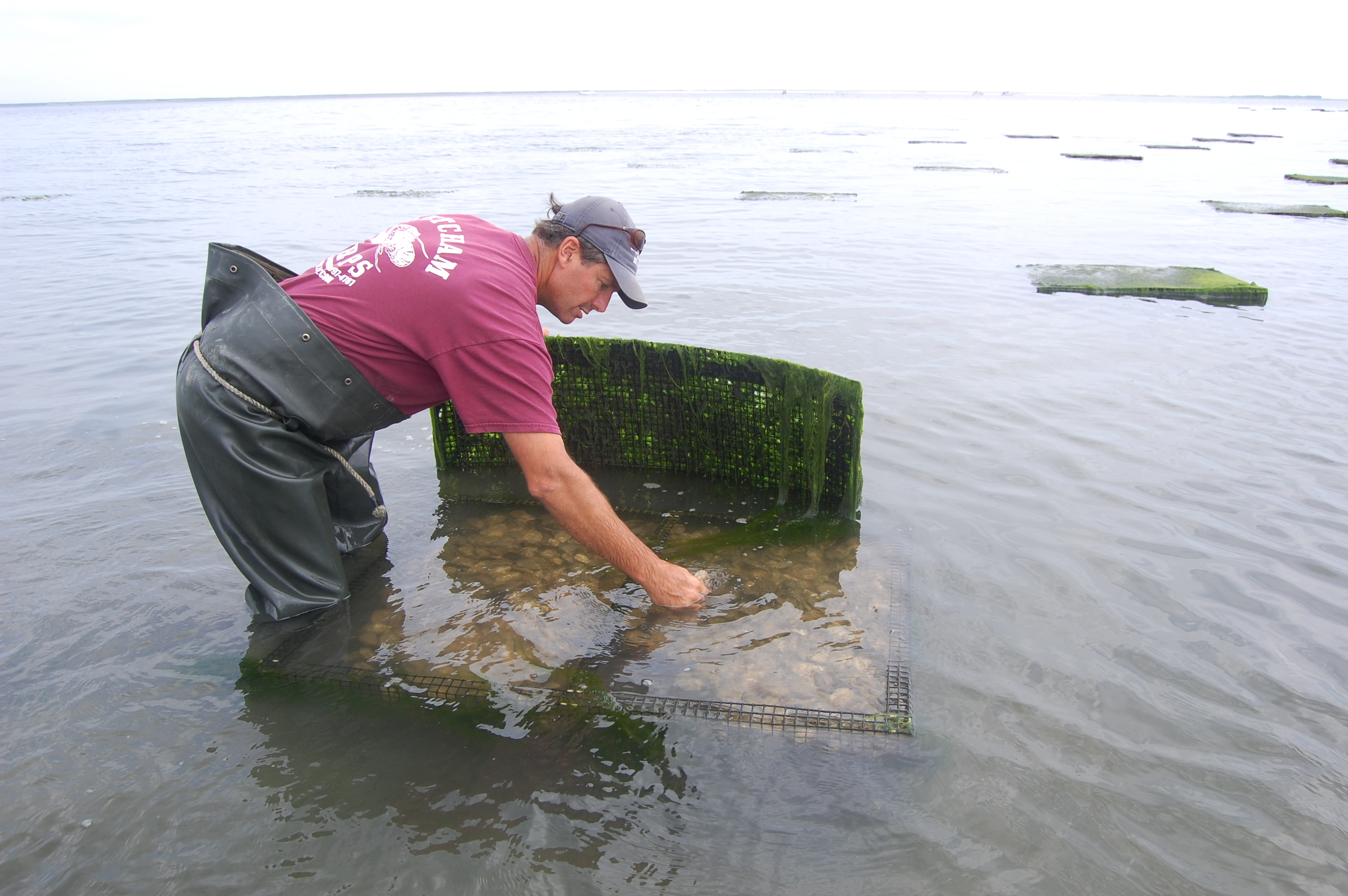
Skip checking on his oysters

Skip checking on his oysters

I can’t fully explain all the biology and technical steps of oyster farming, not because I fear it will bore you. On the contrary, it was fascinating to learn about all that goes in to producing the Island Creek’s oysters, but it was so complex that I’m not sure if I fully understand it myself.

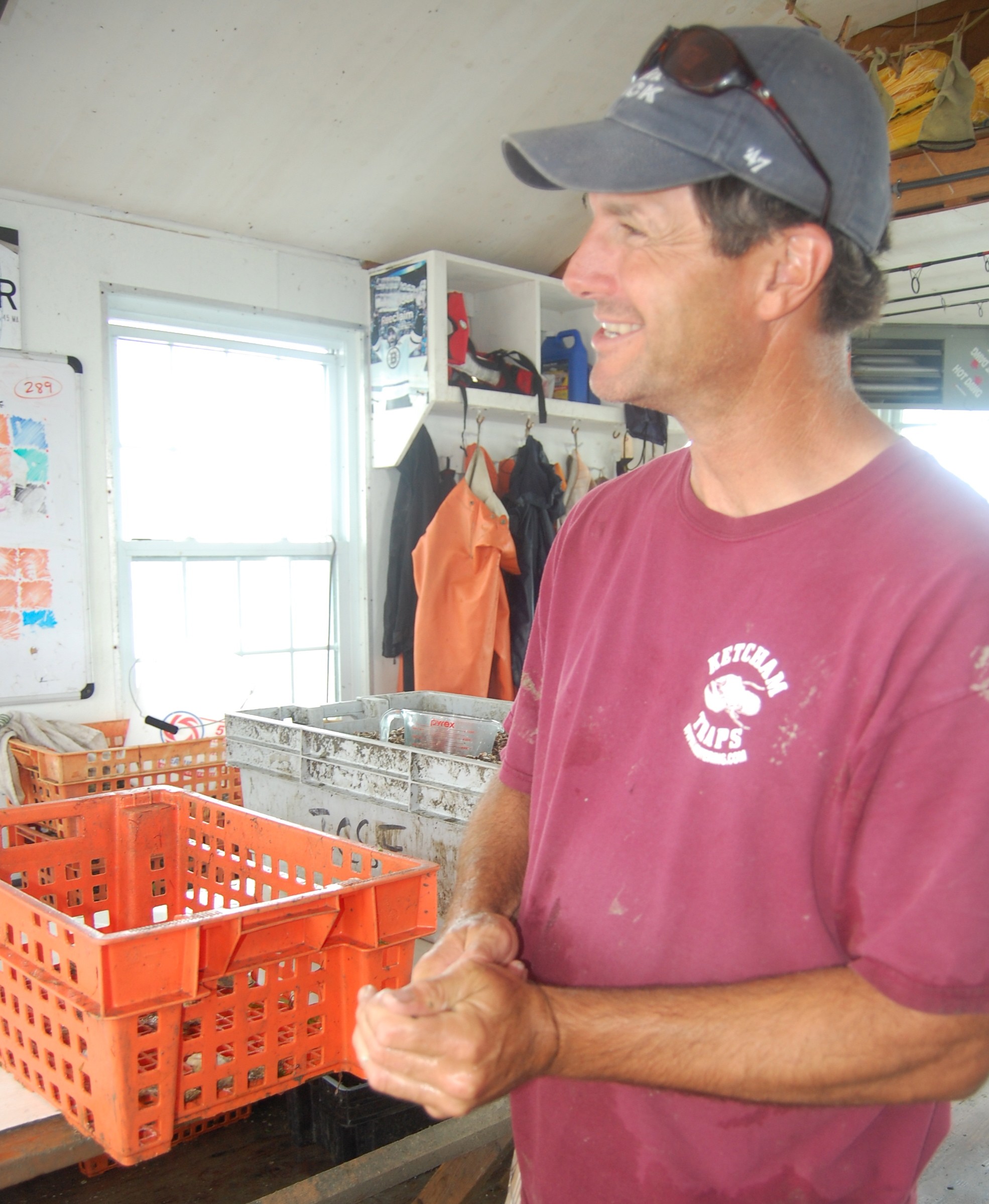
What I did understand—and admire—was Skip’s passion for, and devotion to, his craft. He has been doing this for 25 years and is constantly trying to improve his oysters and the process of growing them. To that end, he’s still innovating (the hatchery is a notable example), tweaking and striving to do better. And he talks about his passion for shellfish in a way that is contagious and effecting.

Skip escorting us through the farm

Skip escorting us through the farm

Like all the folks I meet on these bloggy adventures of mine, Skip loves what he does and loves to share his passion with others. When I first came aboard his boat I asked him what his favorite part of the job is. He said he would have to think about it.

After a few hours of taking us around the bay with Anne-Marie and I oohing, and ahhing and peppering him with questions I asked Skip again. “Giving tours,” he said emphatically without even seeming to give it much thought. I suspect our amazed reaction (“Five and a half million?”) to literally everything that came out of his mouth may have helped inspire this response. But Skip inspired us as well. This is my favorite part of my job as well: getting to meet amazing people who take time out of their busy days to share their passion with me. While sometimes these adventures test me, they always teach me something new and unexpected, and they always inspire me.

Before we headed back to dry land, we had to have some oysters of course. Skip shucked Anne-Marie and I a half-dozen each, fresh from the water. They were delicious. The perfect way to end a fabulous day in Duxbury Bay.

Skip shucking our lunch

Skip shucking our lunch

Anne-Marie enjoying the spoils of our day on the Bay

Anne-Marie enjoying the spoils of our day on the Bay

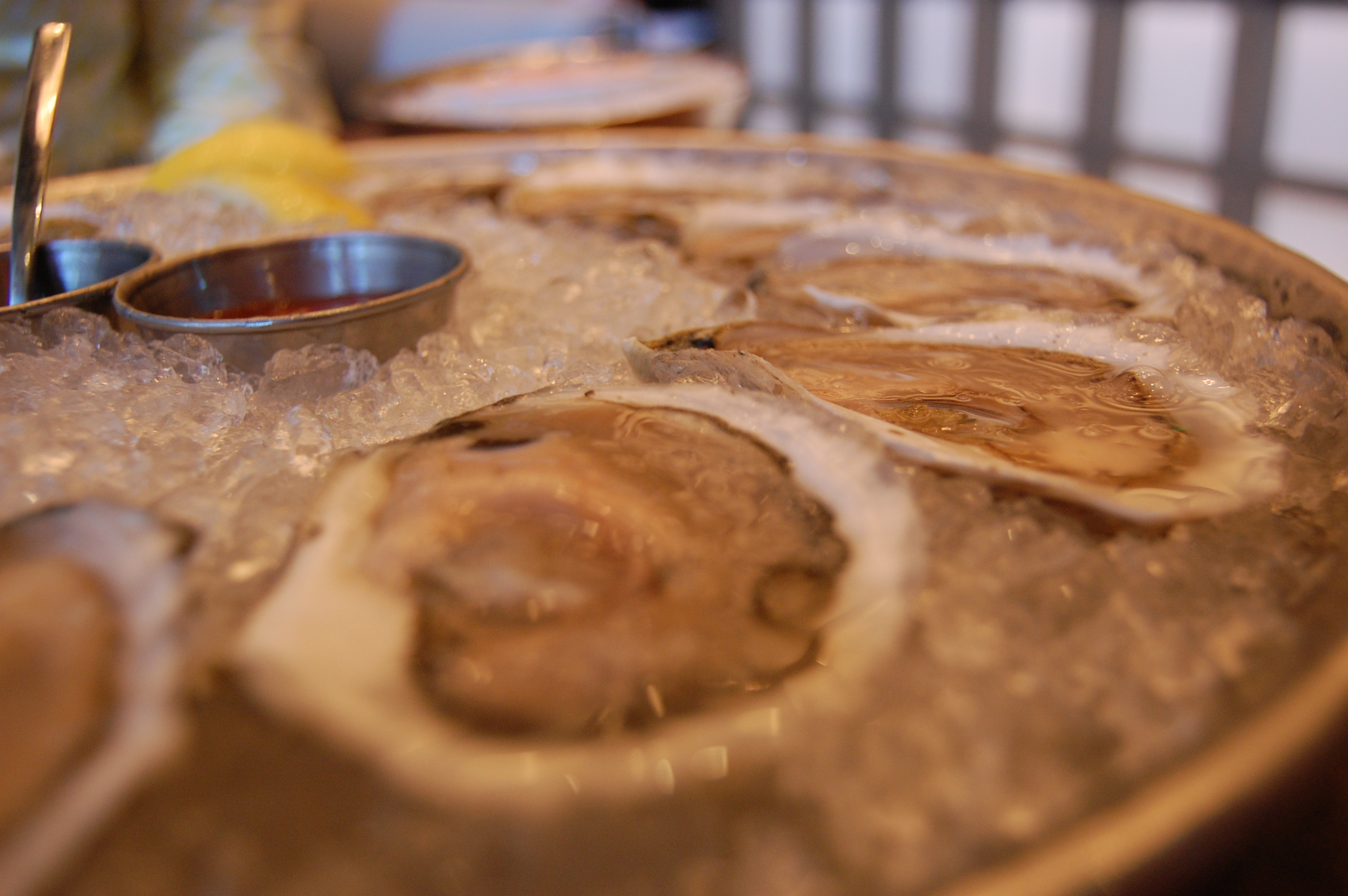
I left the farm thinking that I would never look at an oyster the same way again. And to prove that theory, I visited Island Creek Oyster Bar in Kenmore Square last night. When our fabulous waiter Josh placed a dozen oysters in front of me on their cool bed of ice, I looked down at my delicious dinner with a whole new appreciation for all the hard work, innovation and ingenuity that went in to getting them to my plate. My favorite of the bunch were the Row 34s, an Island Creek Oyster that I had discussed with Skip just a few days ago. I shared the story of how these oysters earned their name (based on the rows of cages on the farm) with my dinner companion. “You are an oyster expert,” she remarked.

“Nah…I’m not,” I said. But now I know a few…

DSC_0008

Many thanks to Skip, Shore, Chris, Tom, Josh, Annie and all the great people at Island Creek for an amazing day on the farm. Island Creeks are my favorite oysters, and if you’ve been living under a rock (or dock) and have not tried them yet, please remedy that situation as soon as possible. I was not compensated for this post (except the oysters Skip shucked for me on the water, and they were delicious).

A dozen of Island Creek Oyster Bar's best

A dozen of Island Creek Oyster Bar’s best