Up For Anything (How Did That Happen?)

I apologize for last week’s absence, but I was on vacation. I decided I was not going to push myself into squeezing an adventure into my R&R time. But as this past week proves, I am more open to serendipitous “adventures” since launching this blog. This fact has to be the single biggest and most unexpected benefit of this endeavour.

One of the motives to start this blog was that it would force me (through self-imposed weekly deadlines) to try new things, to live in the moment and find activities that I am passionate about. On a weekly basis this takes a lot of time, work and planning. And so I decide to take a week off from everything – work, the internet (harder than I thought it would be), and this blog.

The first half of my 10 days away were spent in what I know consider one of the most tranquil, lovely spots I have had the pleasure of visiting: Lake Vermillion.  Located approximately 225 miles north of Minneapolis, it is known as “the lake of the red sunset,” which really is the perfect way to describe the lake which stretches 40 miles across Cook, Minnesota.

A beautiful sunset over Lake Vermillion

Not surprisingly, fishing is a popular activity there, and the gentlemen in our party had gone out early one morning before breakfast and caught dinner while the ladies slept. Very civilized. While gobbling up their catch we discussed fishing again, potentially after dinner. Objectively speaking, if someone asked me to choose between sipping wine on a dock with good friends and watching the sun set, or going out on a boat and maybe – or maybe not – catching some fish, I would guess that I would choose the former. But that night I chose to fish!

Full disclosure: I have fished before, but not seriously, and not for a very long time. I have a vague memory of reeling in a few very tiny fish from a local stream as a child. There was also my one and only outing with the Colby Fly Fishing Club freshman year when I nearly “caught” one of my fishing companions. But for all practical purposes I am not a fisherperson.

Additional disclosure: I had a lot of support on this fishing trip. Our wonderful guide John knew all the best spots on the lake, had high-tech equipment to spot fish under the water and even baited the line for me, so this was more like Fishing for Dummies, than Deadliest Catch…but it was fishing nonetheless.

We set out after dinner, with a rod and roadie in hand, and we waited…and waited…and waited. We did not get as much as a nibble. We did, however, get a front-row seat to an amazing sunset. Undeterred, we agreed to get up at 6:30 the next morning to try again (and by “agreed” I mean we looked at each other, shrugged, and mumbled “why not”).
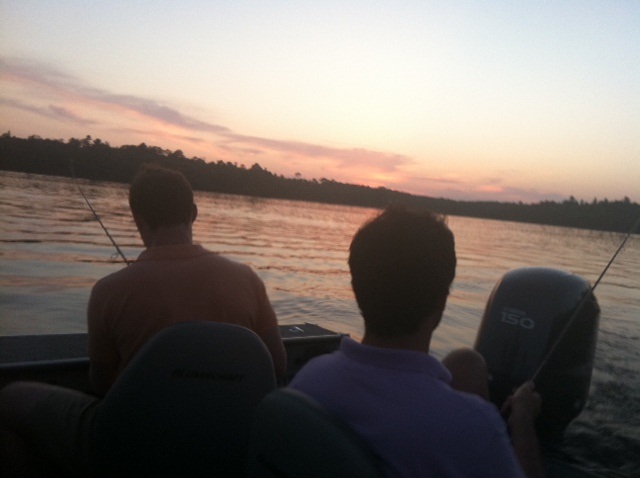
That next morning it struck me that you have to really like your fishing partners. When you are up way too early, and the coffee (or diet coke in my case) has not kicked in yet, you have to be comfortable with the silence of the lake, and the people around you. Again, we waited…and waited.  We did get some nibbles; the walleye (the indigenous fish) seemed to like the worms and leaches we used.  Suddenly, John yelled that he had something, and too quickly for me to even think about protesting, he urged me to come over and reel in whatever was on the end of his line. As soon as I had his rod in my hand I knew whatever was on the other end of it was big. John had to instruct me on how to reel in a fish this large, and it happened so fast that I don’t quite remember how I did it.  Little by little I pulled the fish closer and closer to us and to the surface of the water. He (or she) appeared as a shadow initially, and then we could see his shape, size and scales, and John caught him in a net.

It was a big Walleye!  John measured and he was more than 26 inches long. John held him with one finger in his gills and invited me to grab him. I wasn’t sure if I was ready to stick a finger inside a fish so I took him from John with both my hands wrapped around his belly. After we took a picture, John took my fish, bent over the side of the boat, held him right under the surface of the water to revive him. Once the walleye was moving John released him and he disappeared into the water.
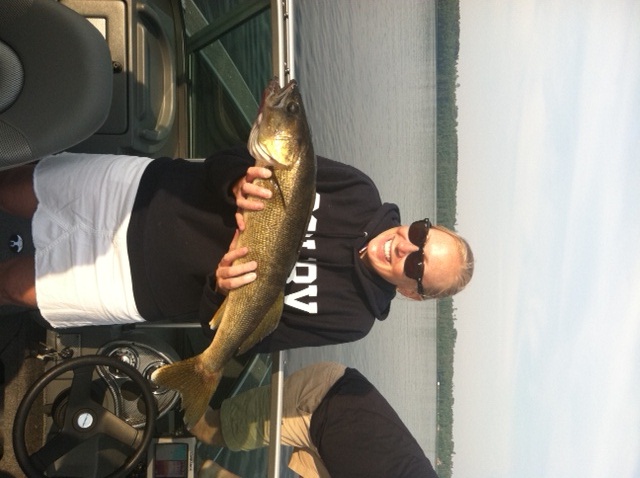
Me and my Walleye

Before I began this blog, I may very well have sat on that dock, or slept in.  And on another day I may well have decided to go with the fishing alternative. But on these two days, while on vacation, I said yes. That is what I do now, for things in  my life big and small…I say yes. That is what this blog inspires, and pushes me to do every week and now, it seems, every day.

I can’t wait to see what I say yes to next!
Nibble on This

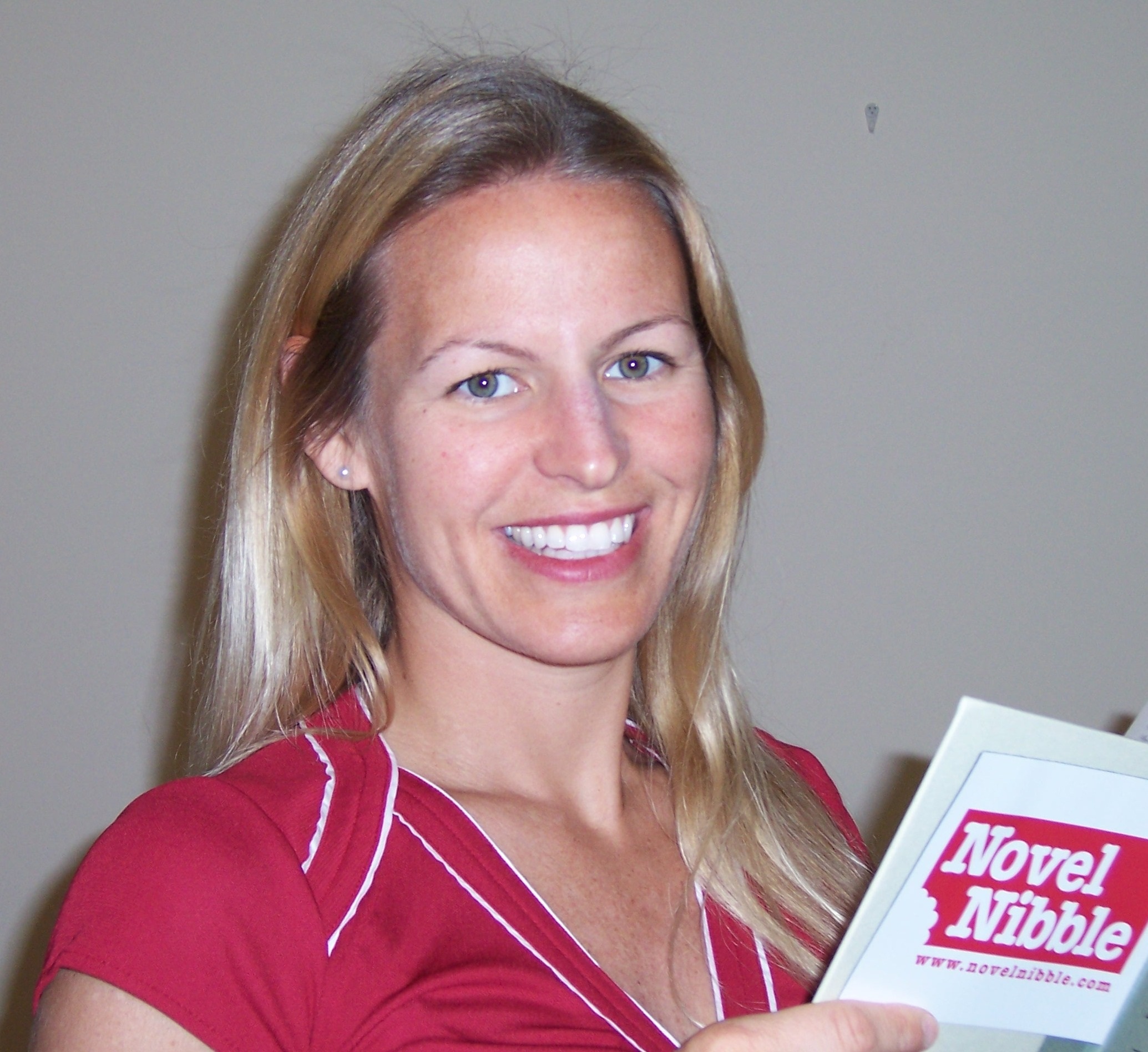
From time to time I tell you about people who inspire me on my search for my next passion.  I choose to write about these people because I hope their stories will be an inspiration to you the way they have inspired me.  Becky Munsterer is just one of those people.

Becky and I became fast friends while attending Colby College. Even then she was a great writer of both analytical essays as well as hysterical top-ten lists that usually included either her romancing an attractive celebrity or The New Kids on the Block. Becky went on to study creative writing and earned a Master’s Degree from Dartmouth.  She and I have many things in common — not the least of which is our love and admiration for Willie Geist. Additionally, neither of us like to write just anything.  We like to write what we like to write.

The novelist Becky Munsterer

What Becky currently likes to write is “The Stonehouse Caper” a novel that she is writing — and releasing via novelnibble.com — one day at a time. Every weekday a new page is posted and we learn a little bit more about Rosie Stonehouse, the book’s heroine who is being led on an epic scavenger hunt by her grandfather. Her adventure is reminiscent of “This is Your Life,” which allows the reader to get to know, and root for,  Rosie quickly.  The concept behind Becky’s literary endeavour is fresh and unexpected, but its origins may surprise you.

Becky developed the idea for Novel Nibble after a colleague complained that her favorite daytime soap opera had been cancelled.  For her, that soap was a daily escape which she had relied on for years. Becky thought that people might enjoy reading a story one page — and day — at a time. It could become their own daily escape while simultaneously inviting readers into an interactive community of literary lovers.

Becky is writing this novel in real-time, one page at a time and you can get involved…literally. She will, at times, extend a scene according to reader feedback (please note: I have already cast my vote for Rosie to end up with her high school sweetheart). Becky has written the book’s ending, but the roads her characters will take to get to their happy (knock on wood) endings evolves page by page, day by day.

As a writer myself, the most impressive part of Becky’s novel is that each page is crafted so that it can stand alone.  Sentences do not run from one page to the next. The first line of each page draws readers in, and the last line keeps them coming back for more. It is quite impressive and certainly unique.

Photo courtesy of Vermont Public Radio

She has more than 2,000 readers each month, and that’s all organic; she doesn’t advertise. She has received great feedback from readers and other writers and she says that feedback keeps her motivated and inspired. She has even earned the attention of Vermont Public Radio.

Like me, Becky is following her literary dream in addition to holding down a full-time job. She expects to be writing “The Stonehouse Caper” for about a year, so you have time to jump on the Novel Nibble bandwagon (as of this writing we are on page 70), and I hope that you do. All of us who are taking risks and following our hearts need to support others in our exclusive club. So click here now and start reading!

I was not compensated in any way for this post

Ready, Aim, Fire

One of the suggestions that have come my way more than once is for me to go hunting and chronicle the experience on the pages of this blog.  I take all the suggestions I get very seriously, but I have never felt ready to go hunting, mostly because I have never in my life held a gun. So this past weekend I took one small step towards being only slightly more prepared to hunt: I learned to shoot.

This blog has never been political, and I don’t intent to wade into those polarizing waters now, but let me back up a bit.  I was raised by progressive parents in Philadelphia, where guns were associated with crime, murders and all around bad stuff. After college I lived in New York City, where again, guns were bad. I have lived in Boston for over two years now, and perhaps it’s the city’s proximity to wilderness, but lots of people here not only have held guns, but shoot them on a somewhat regular basis…for sport. I have softened my formerly firm opinion that nothing good can come from owning a gun. I realize that many law-abiding people have been safely trained to fire weapons and hold licenses to own firearms. I am just not one of them. Do I want everyone who rides my bus in the morning to be carrying a concealed weapon? No.  Do I think people who have a valid license to carry a gun should be able to go out to the middle of nowhere and hunt animals in order to cook it up for dinner? Why not!

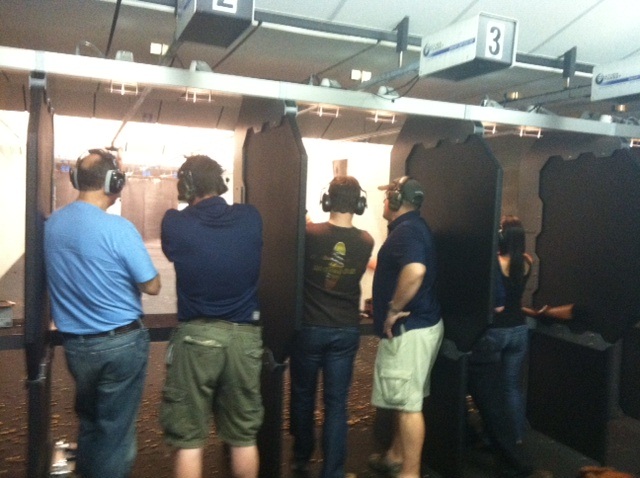
Some of my classmates on the range

I arrived at Mass Firearm School in Holliston, Mass, and as I sat in a classroom with other novices in a “Learn to Shoot” session, I suddenly got a little nervous. Actually a lot nervous.  My instructor was telling us about the NRA’s three rules for safely using a gun (always point the gun in a safe direction, keep your finger off the trigger until you are ready to fire, and something about the ammunition, but because he said he would be handling that  part, I stopped listening and focused on the first two rules) and the gravity of what I was about to do started to sink in in a way that I could almost physically feel the weight. This was serious.  I would be holding this contraption that could hurt someone — possibly myself — if misused. I have not always been good at my new activities at the start, and if I wasn’t good at this I could be dangerous.  Of course, my instructors were there to make sure I didn’t injure any of my classmates…but still.

We went over how to hold and aim a gun using plastic weapons, but even when I held the obviously fake handgun in my hands they started to sweat profusely. This was not a good sign. I started to imagine the gun slipping out of my slippery palms and shooting myself in the leg Plaxico Burress style.

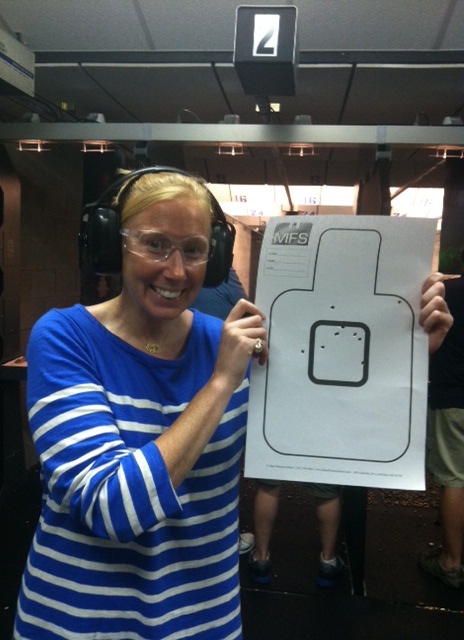
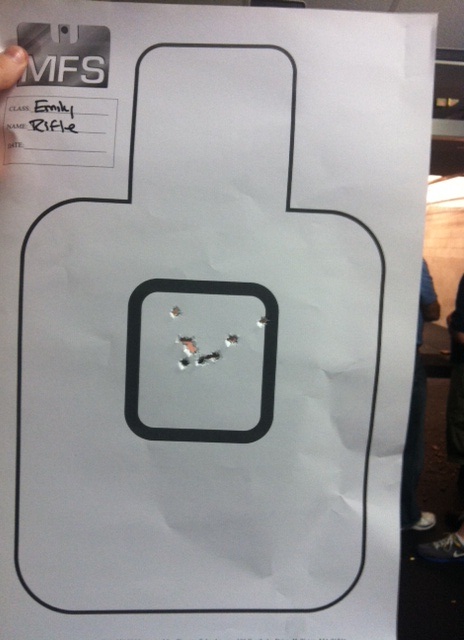
The target from my first try with the .22, not all that good, but I sure look happy!

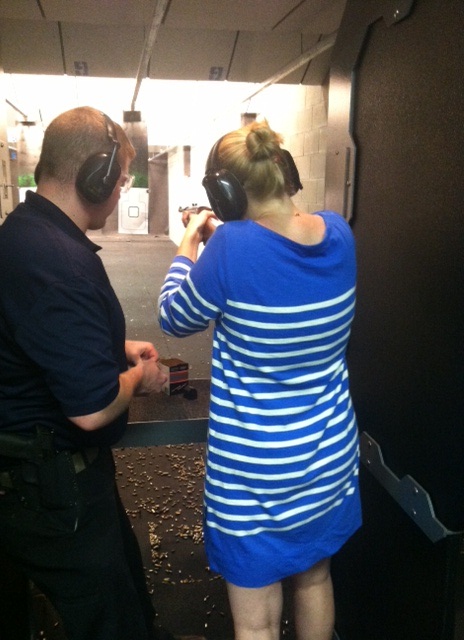
After our classroom review we moved on to the shooting range. One by one, my classmates and I took our turn firing a .22 caliber semi-automatic hand gun, a revolver and a rifle, at targets 16 feet away.  I was surprised how loud guns are. I literally jumped and yelped each time one was fired. By the time I waited my turn to pick up the .22, my palms were really sweating. I aimed it at the target as instructed, with the near sight lined up with the one at the tip of the gun…then…as if in slow motion…I squeezed the trigger. I had expected the backfire to jerk my body in some direction, but I remained steady on my feet in the “athletic stance” that my instructor had suggested. I wasn’t the best shot with the .22, nor with the revolver that I tried next for that matter, and I had an especially hard time following the first rule to always point the gun in a safe direction, much to my instructor’s frustrations. No one’s perfect.

Me with the rifle

When I picked up the rifle it took a little while to get in the right position.  At first I held it with butt of the gun nestled in the crux in my right shoulder, but it turns out I am left eye dominant, so I had to switch around a bit.  Once I got comfortable, I started squeezing the trigger and to my great surprise, I am a phenom with a rifle. I mean really good! I felt a huge sense of satisfaction when my instructor handed me my target with ten bullet wholes all very close together in the center of the silhouette. Who knew this  girl from the not-so-mean streets of Philly would be a good shot?

I found that there is a little emotional detachment that comes from shooting at a firing range. It can seem a little like playing with a toy gun instead of an actual deadly weapon. I realize that firing a gun at a small piece of paper is very different from firing at a living creature and potentially hurting or killing it, but standing there in my lane with the rifle in my hand I could see how it would be easy to forget that fact. Emotionally I am not sure if I am quite ready for actual hunting (my mother may disown me), but I am no longer afraid of guns, and know how now to be dangerous with one, which is a small step in the right direction.

I am a really good shot with a rifle. Who would have guessed!

 I was not compensated in any way for this post.

Busy As A…

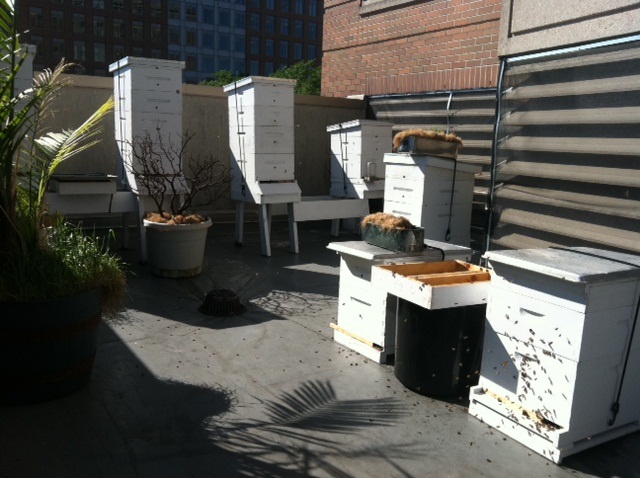
Edwin’s seven hived on the roof of the Seaport Hotel

Fear, anger, anxiety.  Bees can elicit a variety of emotions in people, depending on your experience with them, your allergy status, or your feelings about insects in general. For Edwin Medrano, the Executive Steward at the Boston Seaport Hotel they are one of the best parts of his job. About a year and a half ago, with the desire to green, the Seaport Hotel decided to harvest honey and herbs on-site to shrink the gap from “farm” to table. Edwin was told he would be managing the bees. At first, with English as his second language, he was confused. Did they say bees? In downtown Boston? Yes, they did so Edwin started learning everything he could about bees, hives and honey.

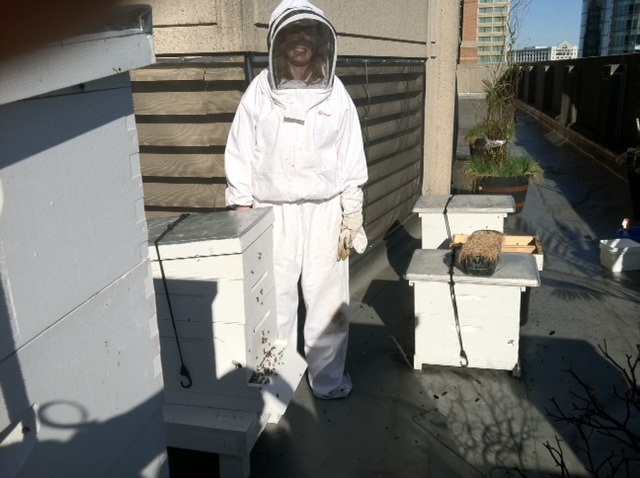
Me in an utterly attractive beekeeping jumpsuit

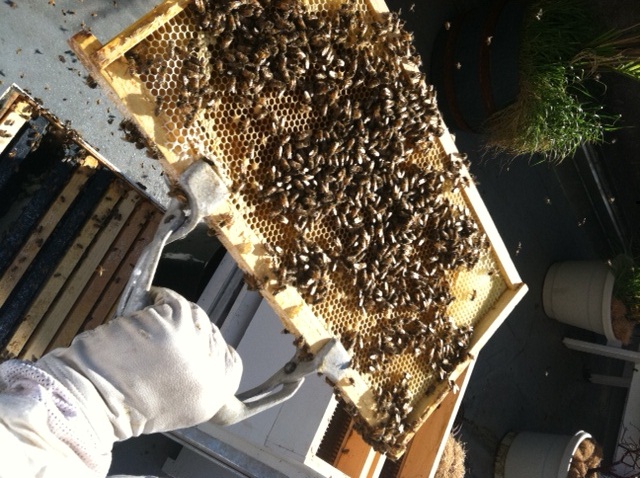
He started out with two hives on the roof of the Seaport Hotel and when I joined him one recent afternoon, that number had grown to seven. Before we met the bees, I had to be outfitted appropriately. I arrived, fresh from work in a sleeveless sun dress; obviously this was not going to work. Edwin helped me step into a pair of white coveralls, then put on a jacket that had a helmet with face net attached to it and finally he helped me wiggle my hands into long gloves. As we walked out on to the roof I was surprised by the volume of the communal buzzzzz that was emanating from the bee’s corner of the rooftop (to hear for yourself watch the video at the bottom of the post). It was as if I walked into a wall of sound that was in some ways hard to ignore, but eventually eased into a type of white noise background sound to my beekeeping lesson.

I wasn’t scared, I was actually very calm, even while I sat just a few feet from hundreds, maybe thousands of bees, listening to Edwin and taking notes. Even before I put the net helmet over my head, I watched the bees swarm around their hives — which resembled a narrow chest of drawers — and me, but I didn’t step back or swat them away. I just wasn’t worried, they seemed to be happily doing their own thing. Edwin explained how he got the hives started and how he cares for the bees, feeds them and how he lets them “fly.” The bees come and go as they please, buzzing to visit nearby trees and flowers, but they always return to the Seaport’s roof and their particular hives. Bees are very loyal creatures and will always return to their home, and their queen.

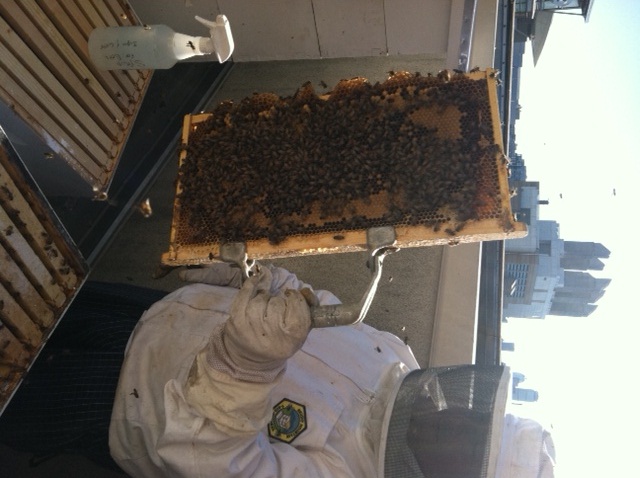
Edwin and his bees

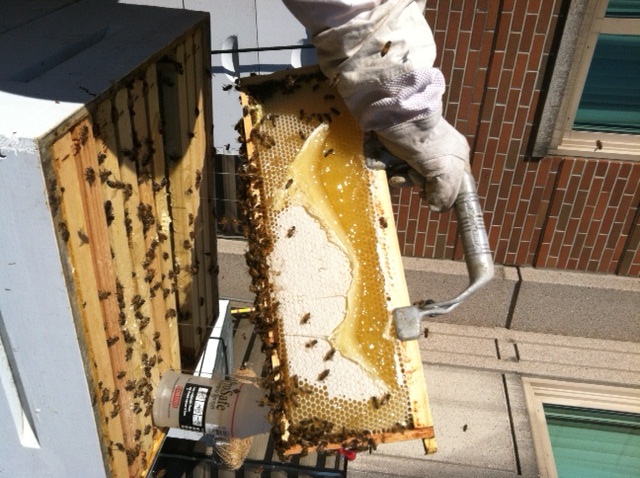
Edwin feeds the bees a sugar solution and checks on them daily. Beekeeping is a lot about maintenance and anticipating what the colonies need to thrive, multiply and produce honey. We opened up each of the hives and Edwin gently pulled out the frames to see what the bees were up to. Each frame serves as staging ground for both larva development and honey production, and it was interesting to see these two different things happened so close together. As the saying goes, these bees are busy. Some of the frames already had honey in them and Edwin let me try some, complete with the honeycomb. Following Edwin’s instructions, I swallowed the very fresh honey and chewed the comb like it was gum. Eventually when the comb lost its flavor I was told to spit it out, which would have been fine had I remembered I was wearing a net over my face.  Needless to say it was a messy moment.

Edwin and I calmly worked our way around the bee’s corner of the roof, checking each hive, looking for their queens, with the constant buzz of the bees as the soundtrack to our afternoon.

Busy as a…you know what

If you can stay calm while bees crawl all over you, beekeeping can be a very serene activity. Watching how busy the bees are made me slow my normally exhaustive pace, and forced me to just be there in that moment, watching them, feeling the sun on my oh-so flattering jumpsuit. Maybe I stayed calm and relatively still because there were bees all over me, but whatever the reason, it felt nice to just exhale and be present.

Edwin and I tended to the bees, but with the exception of one  mouthful, no honey was harvested. Edwin’s goal for this year is to harvest 300 to 500 pounds of honey to be served and sold at the hotel. He invited me to come back when he harvests his next batch next month, so stay tuned for my next sweet and sticky adventure!

Honey!

Many thanks to Edwin Medrano and the Boston Seaport Hotel for allowing me to meet his bees. I was not compensated in any way for this post.

Up Against a Wall

Judging by my very modest success on the trapeze and pole dancing, when someone suggested I try rock climbing, I was hesitant. Several of my adventures have challenged my physical capabilities, not to mention my flexibility, and while they have made for funny blog posts, they don’t do wonders for my self-confidence. But, as this blog is proof of, I am always up for a challenge. I made an appointment for a rock wall climbing lesson at Rock Spot Climbing and approached the wall with (very) low expectations. I told myself I would give it a chance (after all, that’s the most important thing, right?), fully prepared to fail.

With me I brought Arianna, a friend and co-worker, who has been up and down rock walls before.  I thought this could either be a good thing — in that she would be able to give me some tips — or it would make me feel even more ridiculous when I was inevitably left confused and dangling from the roof.

We arrived, got into our harnesses, and met our teacher, Lindsay.  Surprisingly, we did not start scaling the wall immediately. No, the first challenge was learning to tie knots which proved to be the most difficult part of the day. I have never been very good at knots; as a child it took me a while to relinquish my Velcro sneakers. There were a handful of knots to learn and they are all very important. In the simplest of terms they keep you and your partner from falling to your respective deaths. So no pressure!  We went over the knots again and again, and I needed prompts each time. Eventually I got it, although I would still need to be reminded throughout our day on the wall.  Arianna and I double checked all our “points of contact,” all the points that connect us to the harness and to the ground. As we wrapped up the knot lesson I started bouncing my feet to assess the cushiness of the mats that line the floor of the climbing gym. I wanted to know how much of my fall would be broken by this alleged padding.

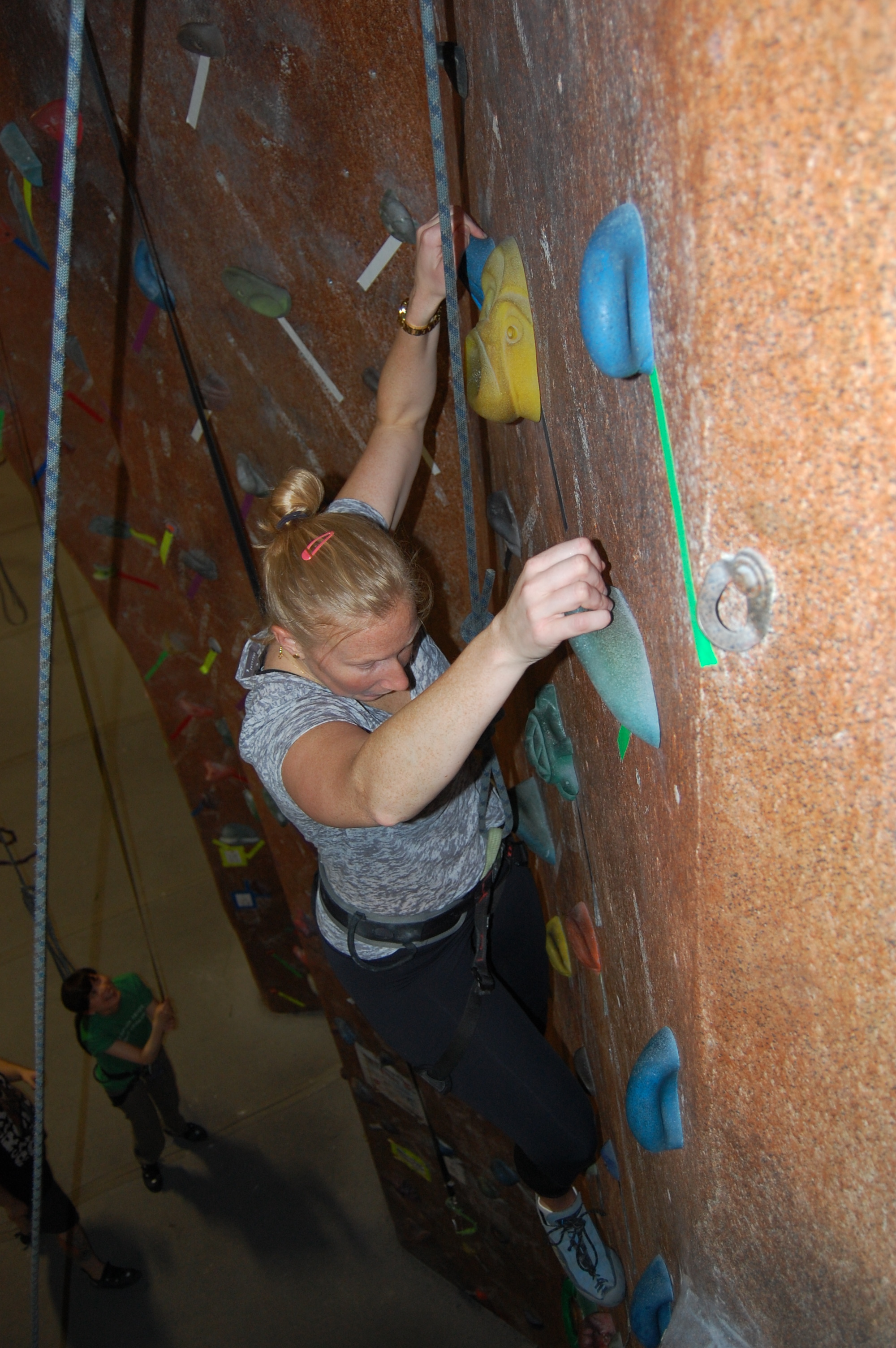
Half way up the wall

As I stepped up to the wall I told myself that I would just give it a chance, and that it didn’t really matter whether or not I was proficient at climbing vertical surfaces. To my great surprise I scampered up the wall at a pretty good pace.  One reason for that pace was that my hands were burning so much that I was not sure how much longer they would be able to cling to the wall. There were a few moments where I was unsure of where to place my feet, or when the next logical hand grip was just too far for me to reach, but I was climbing. I made it all the way up to the top of the wall, and looked down and was truly surprised and impressed with myself. After a few moments of hanging out at the top of the wall, savoring my success, Arianna lowered me back down to the ground and we switched positions so that she could climb. We kept climbing for more than an hour, and while I was not quite as quick or agile on any of my subsequent climbs, it didn’t dampen my glow of accomplishment from my first assent.

Surprisingly, it seems as if self-doubt is becoming a recurring theme of this blog; me resigning myself to the fact that I will be bad at something before I even try it. This is surprising because generally speaking, I don’t think I lack self-confidence (mind you, I don’t have a plethora of it either).  This is something I am going to work on moving forward. The fact that I put myself in new, and sometimes ridiculously foreign situations on a weekly basis is proof of how fearless I am. You never know what you will be good at — or what you will develop a passion for — until you try.

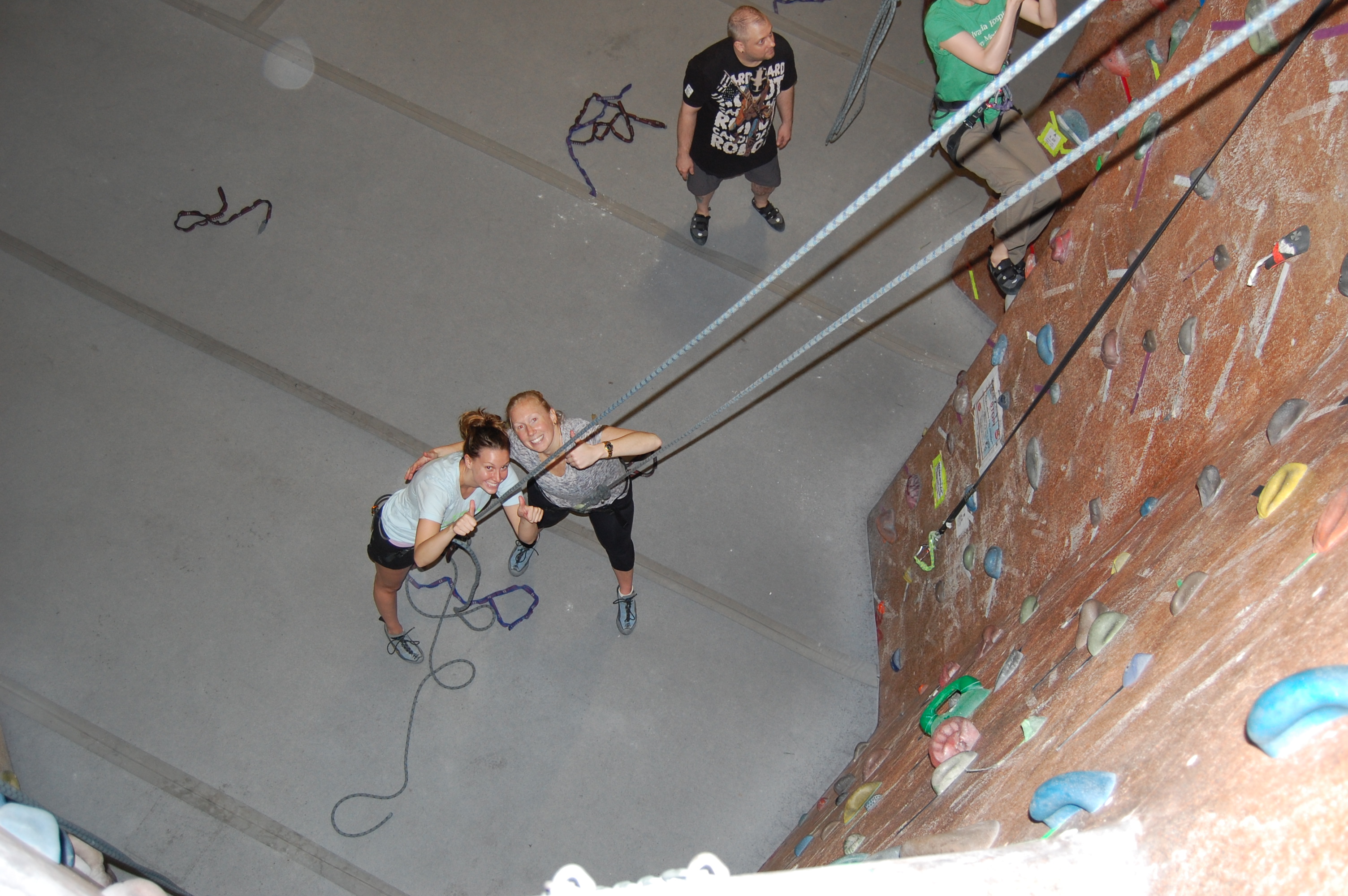
Two very happy climbers

Many thanks to Arianna Rubinstein along with Lindsay and all the folks at Rock Spot Climbing for their help. I was not compensated in any way for this post.

Patience Is A Virtue

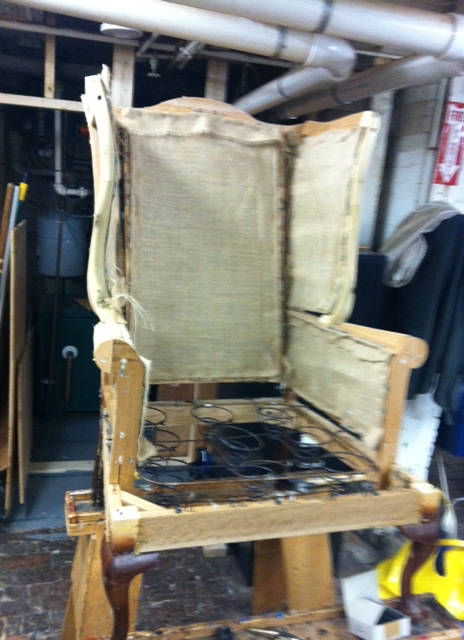
If you read this blog on a regular basis you know that one of my longest-running adventures is learning to upholster. I started taking classes at the Eliot School of Fine and Applied Arts over a year ago and quickly brought a piano bench and ottoman back to life in vivid color.  After those small victories I took on a huge challenge: a wing chair.  When I last updated you on this endeavor, I had broken off one of the legs of my chair in some Valentine’s Day dramatics.  That one night has really epitomized the entire project: one set-back (of varying severity) after another. My teachers, Paul Devito and his son, also named Paul, managed to re-attach the leg using a lot of wood glue, along with nearly 100 staples.

After stripping my wing chair to its bones I start to build it back up

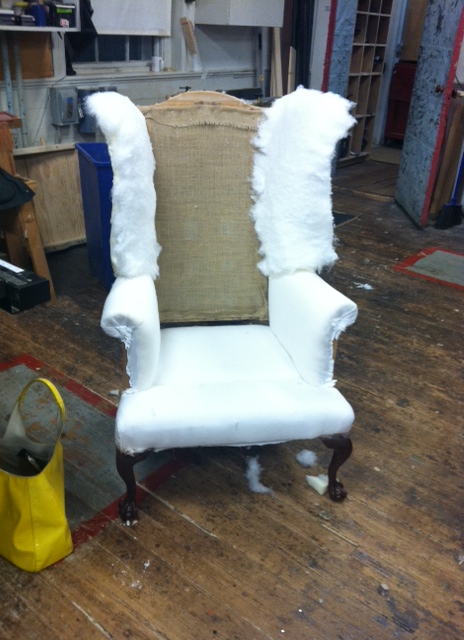
Since I broke my leg I have made slow and steady (with an emphasis on slow) progress on my wing chair.  After stripping the chair down to its bones and tightened its springs, I have been building it back up with layers of cotton, foam, burlap, muslin and finally fabric. This may sound simple, but it’s not, at least not for me. I have been working at a painfully slow pace, unsure of my next move.  My teachers assure me that I am right on track, but I am frustrated to still be working on this chair. I realized that one of the things I liked best about my early small-scale upholstery projects was the gratification I received from finishing a project in a handful of weeks and having physical evidence of all my hard work.  This style of chair is among the most difficult so I realize I should cut myself some slack, but I am not all that good at that.

layers of cotton, foam and muslin

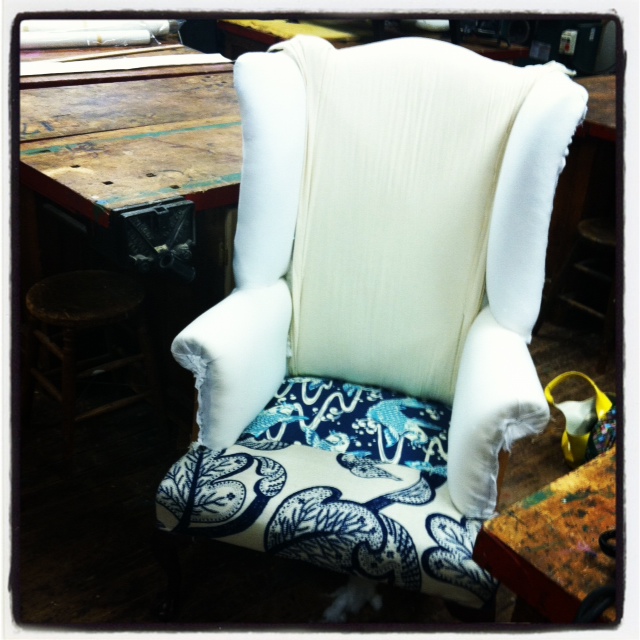
So this past week, when I hit a milestone (the entire front of my chair now has fabric on it), I was overjoyed and reminded why I fell in love with upholstery in the first place.  But should I — or anyone for that matter – only feel a sense of satisfaction from success? Shouldn’t I be satisfied with the experience, and the fact that I am learning how to upholster as I go? Intellectually I know that answer is yes, and as I move closer to completing my chair, I will try to keep that in mind.

Very slow progress

Now, don’t get me wrong, the upholstery process has been a lot fun; my teachers are incredibly knowledgeable and patient with me.  They are also hysterical.  One example is featured in the video below; upholstery tacks are actually sterilized before they are sold so that they can be put in one’s mouth and pushed out with one’s lips one by one on to a magnetic hammer.  This cuts down on the time it takes to tack material to the chair before you staple it into place and it’s known as “spitting tacks.” I have never had luck spitting tacks and nearly swallowed a tack mid-sneeze. After 25 years in the business my teacher is very good at this.  It takes him under three minutes to do something that takes me more than 20. Plus he’s not afraid of swallowing tacks because he has done it before, three times. See for yourself.

Despite all my self-directed frustrations, the upholstery process is still extremely enjoyable.  After a though day at work using my brain, there is nothing better than getting physical and ripping, hammering and going crazy with a staple gun.  And hopefully in the not too distant future I will have a gorgeous chair to show for it. Until that time, I resolve to go a little easier on myself, I am still just learning after all.

The current state of my wing share with some instagram effects for good measure

Clear Eyes, Full Hearts, Can’t Win

How do you feel about Eric Taylor?  If you immediately say you love him, you wish he was your coach, your dad or your brother, please skip to the next paragraph.  If you are scratching your head because you are not familiar with Coach Taylor, continue reading.  Eric Taylor is the fictional coach of the Dillon Panthers football team (later the East Dillon Lions), and the grounding force for not only his players, but for the entire amazing series “Friday Night Lights.”  I loved this show, and my anticipation of the upcoming movie can barely be contained.

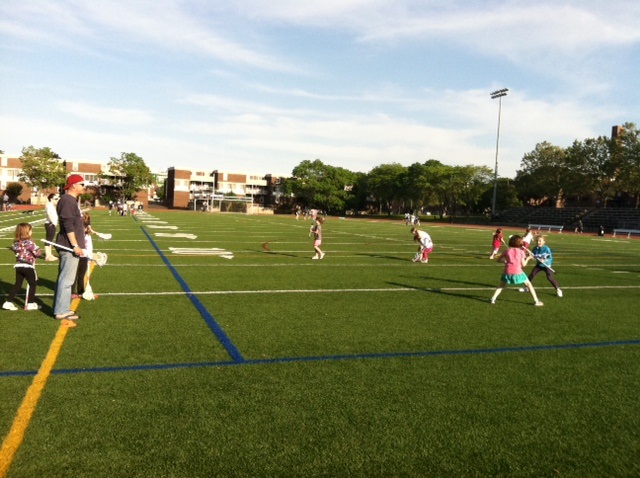
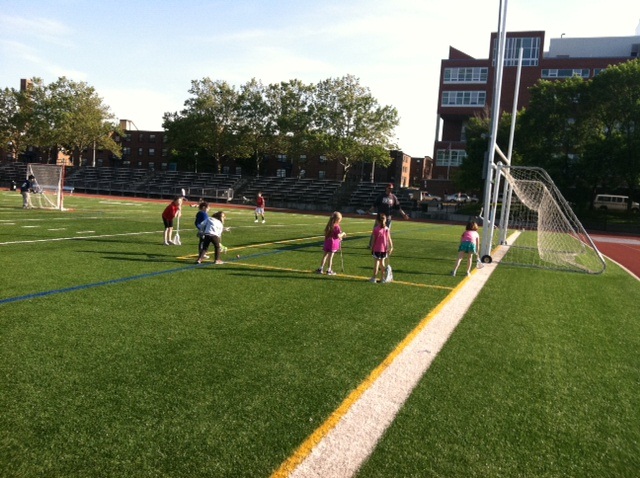
Eric Taylor makes me want to be a coach.  Football season is over, so I had to find an alternative, so I settled for lacrosse!  I played lacrosse for seven years (middle school, high school and one year of club lacrosse in college), and while I anticipated many things about the sport may have changed since the last time I picked up my stick –first a foremost being the stick itself – I was confident that I had something to offer lacrosse stars of the future.  And by future I mean 2023 specifically. That’s right, I volunteered to help a small cadre of dedicated individuals who coach lacrosse to 5-year-old girls in Charlestown. I was aptly wearing my Panthers T-shirt.

Four on four

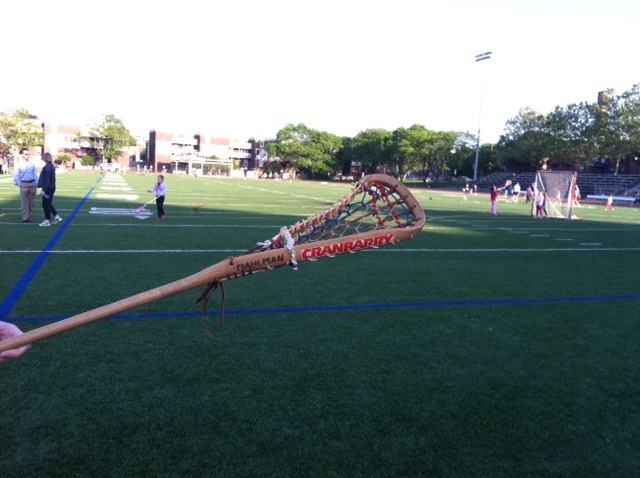
I was the new coach, so I understood that the girls may be a little wary of me at first, but it took me no time at all to realize that they were not looking at me with trepidation, they were looking at my stick.  Yes, the lacrosse stick I was using – and I have used since middle school — is not made of the light-weight, colorful plastic like the sticks all these little ones use. It is made of wood (see below). I had to explain to them that this was a “vintage” stick and everyone played with wooden sticks in the late 90’s.  “The late 90’s?” the girls cooed with wonder as if I was talking about the Depression or some other far-off time.

My “vintage” stick from the late 1990’s

We started stretching after the girls “took a lap,” the command a fellow coach told me to employ whenever I was not sure of what else to do, a brilliant suggestion. Counting out loud while stretching with all the girls after we ran took me back to my lacrosse days.  I was reminded how much I loved the sport and being a part of a team, not to mention how close I was with my teammates. I was instantly excited to be a part of that same experience in these little girls’ lives.

We tried some drills, which were a little on the sloppy side, but then again these girls were five, even Coach Taylor would cut them some slack. Then we planned to scrimmage, four on four.  I explained that one team would be offense and the other would be defense. With great theatric effect, complete with hand motions to motivate the girls, I told them that we would run down the field and the offense would try to score and the defensive team would try to intercept the ball. That’s when all their little faces went blank.  It took me a full minute to realize I was using words that these five-year-olds had not learned yet.  They had no idea what “intercept” meant.  When I said “stay on your man,” they were scratching their heads because they did not see any men, they were all little girls.

It was more difficult than I expected to explain to them how to do something without using my normal lexicon. After I went over my instructions again with a more elementary vocabulary, I brought them all in for a cheer, just like Coach Taylor would do.  I repeated his mantra “clear eyes, full hearts, can’t lose” to them slowly, but after a few minutes of misquoting and some pointing to each other’s eyes and noses, we settled on “go pink” instead. My players were all dressed in pink and they understood all those words. Coach Taylor would be proud of my improvisation.

They never really got the hang of scrimmaging and my pink team was over-powered by their opponents, a team that was not quite organized enough to come up with a name or cheer, but who had a height advantage. The phrases “get open,” and “pass down the field” were over their heads, so everything I was shouting from the sidelines was futile, and I got frustrated with my inability to speak their language.  Then I reminded myself that they were having fun — their squeals and smiles were proof of that — and when it comes down to it, that’s all that really matters.

When one little girl ran over to me and asked, in all seriousness, if we could play duck-duck goose next, a wide grin broke out over my face.  Coach Taylor would go ballistic if Landry asked to play another sport during practice, but these were not the Panthers, so I let her take a bathroom break instead of taking a lap.

Many thanks to the wonderful coaches in Charlestown for letting me help them, and especially to Laura Montgomery for her limitless support of this blog.

To Be 18 Again…

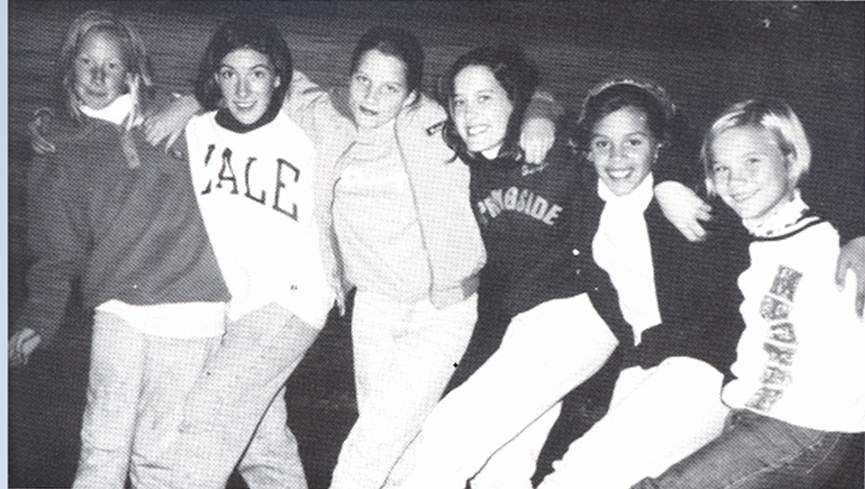
I was recently home in Philadelphia for a long weekend filled with family, friends, birds and an impromptu 10-mile road race.  On Friday night, the main event:  my high school reunion.  I am too vain to say which one, but it will become obvious as you read on. I attended an all-girls school that gradually morphed into a coed curriculum by the end of high school. I feel incredibly lucky that some of the girls I graduated with, and have known since we were 12 (some of them had gone to school together since kindergarten!), are still among my closest friends.

Leading up to my reunion I stumbled upon a tattered envelope containing a questionnaire that I filled out just before graduation. My mother says she remembers me filling it out, but I have absolutely no recollection. It was given to us at our last reunion five years ago and I must have tucked it away some place very safe because it survived the move from SoHo to the South End. In this questionnaire my classmates and I were asked some of our fondest memories of Springside, our favorite teachers, who our friends were at the time (my list still stands up). The final question was the doozy: THINK CAREFULLY BEFORE YOU ANSWER.  WHAT DO YOU THINK YOU WILL BE DOING OR WHAT WOULD YOU LIKE YOUR LIFE TO BE LIKE IN 10 YEARS?

Come on!  Why did the teachers think this was a good idea?  Did they want to drive us to the bar at our ten-year reunion?

I read my answer, which I will not repeat verbatim, because if you haven’t already assumed, the 18-year-old version of me got very specific about her future. My answer included living in Philadelphia (Chestnut Hill to be exact), my level of education (graduate degree), job (working in government or as a professor), I would be close with my parents (Awwww, I was such a sweet kid) and it detailed my anticipated marital and parental status (I thought I would have both a husband and a child by that point). I can understand how 18-year-old Emily would think 30 was a long way off. It was, I packed a lot of amazing and exhilarating experiences into my 20s, but did I really have to write “If I’m not married by 30???”  Please note, I used not one, but three, question marks as if the world would end if I blew out 30 birthday candles without a ring on my finger. Again, I forgive my younger self for not being able to anticipate the whirlwind of a life she would have over seven glorious years in New York, or all she would accomplish.

Having said that, I had to wonder if I could somehow tell 18-year-old Emily that instead of all these things on her life list she would move to New York City hoping to become the next Katie Couric, but find her true passion behind the camera as a writer and producer, associate produce an Emmy-nominated documentary on U.S. Marines in Iraq, write for the longest-running (not to mention most loved) anchor team in the city, make amazing new friends, and keep the valuable old ones (old as in known them longer, we all still look pretty darn young if I do say so myself, see below), then leave it all by picking up and changing cities and careers – what would young Emily say?  Would she be amazed or disappointed with the trajectory of her life?  I can barely recognize myself in the girl who filled out that questionnaire years ago, so I may have to accept that she would not recognize herself in the woman I am today.

Me and some of my to-this-day besties circa 1991…

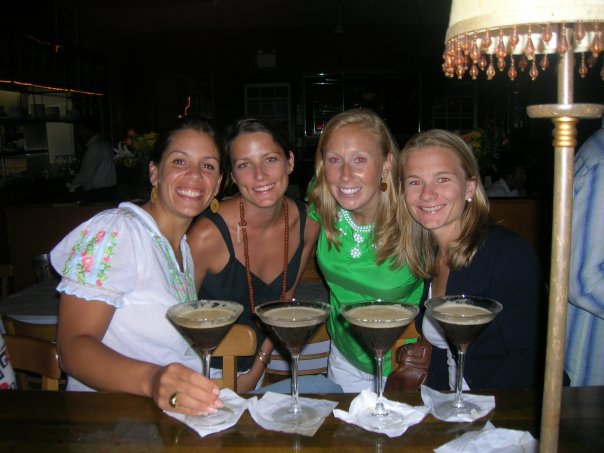
…and many years later, enjoying cocktails, something we never did in high school…of course

So I wasn’t married at 30, and I am still not married at 33. I may get married at 35, or heck, I could meet Mr. Right tomorrow and run off to Vegas before anyone even reads this post. I have had the most amazing journey thus far, filled with amazing friends, relationships that have taught me a great deal, an ever-supportive family, and accomplishments — large and small — that I am infinitely proud of.  Most importantly, and in part through this blog, that journey gets more and more interesting every day.

For The Birds

With Mother’s Day just a few days away, I decided to celebrate by trying out my own mother’s passion and see if that old adage of the apple never falling too far from the tree is true. In fact, it is clear that my apple fell a substantial distance from my mother’s tree, so I knew this adventure was bound to be a very interesting experiment.

In the past I have described my mother as quirky on the pages of this blog, but I am not sure if that adequately describes my loving mother.  She is a newly retired professor and occupational therapist, who dedicated a great deal of her life to helping individuals with physical and intellectual disabilities. She is also an animal lover, who raised my brother and me not to be squeamish – and in fact, to love – all animals, including slimy ones such as insects, lizards, snakes and other creatures that typically make people squeal, or jump on top of chairs.  The fact that we pick bugs up and release them instead of squashing them is a point of pride for her. Having said that, just this past weekend she observed, “Emily, we are very different people.” And she is correct.

Since retiring, my mom has stepped-up her volunteering at the Schuylkill Center’s Wildlife Rehabilitation Clinic and she loves it.  I will never forget how giddy she was when she got vaccinated for rabies. She was not giddy from relief after being bitten by an aggressive, rabid animal, but giddy out of excitement, because now she could work with raccoons at the rehab center. As she animatedly told me over the phone, “many wonderful animals are susceptible rabies!”

Fankie the goat and the center’s roosters

The Schuylkill Center accepts all sorts of sick, injured or orphaned animals in need including birds, possums, bunnies, squirrels, ducklings, goslings,  raccoons, hawks, turtles and recently a celebrated bald eagle. A baby chihuahua with cleft palate, and an abandoned goat have recently ended up there as well.  Frankie, the goat, now serves as unofficial mascot for the center.  He hangs out outside with the chickens and roosters and occasionally head-butts visitors (or maybe just me).

Early one morning this past weekend when I was home in Philadelphia for a visit, she took me with her to feed injured and abandoned birds. The bird room is small, with many of the newborn birds in an incubator.  Older birds who are self-feeding are in mesh, cloth cages, so after changing their cages and getting them fresh food they were good to go.  But the newly hatched birds have to be hand-fed and their nests cleaned, once an hour. This is even more attention than a newborn human requires! This task sounded daunting when we arrive bright and early at 8:00 a.m. and the fact that our shift didn’t end until noon, made me thing that maybe I had made a mistake, and would have preferred to spend my morning in bed.

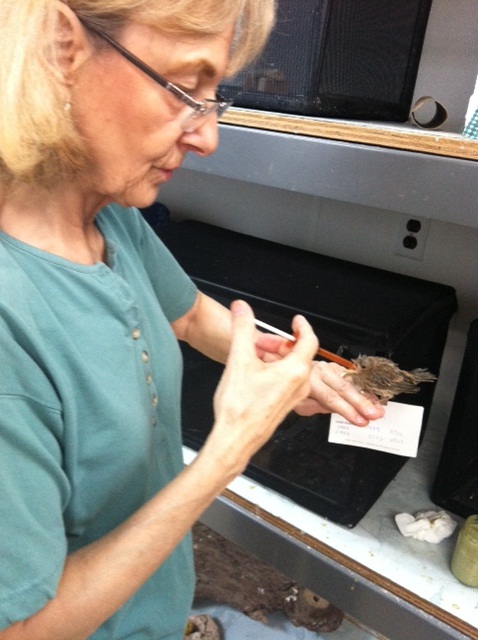
As we got started, my mom demonstrated and talked me through how to feed the birds (she has been trained to handle most of the animals at the center). She mixed up some green goop the color of guacamole and the consistency of french salad dressing that she said is the perfect diet for songbirds. She loaded it into a syringe-like vessel and demonstrated how to stick it down the birds’ throats when they are gaping and squeeze the songbird food in.

My mom feeding a little finch

Birds instinctively gape, and in the wild that is when their mothers feed them from their own mouths. You have to place the syringe far down their throats and bypass their air hole. This all sounded way too complicated, and rather scary. I was very worried that I would choke my new feathered friends so at first I just watched and practiced making clean nests for them out of toilet paper–part of the cleaning process. My mom fed finches, wrens, starlings and a just-hatched robin that resembled an alien or a mystery creature from a horror movie.

My mother also cut meal worms in half and fed them to the wrens using forceps. She apologized to me before she cut the worms, because she had always been very vigilant that we don’t kill living creatures, but in this case it was to feed another living creature so I guess these were special circumstances.

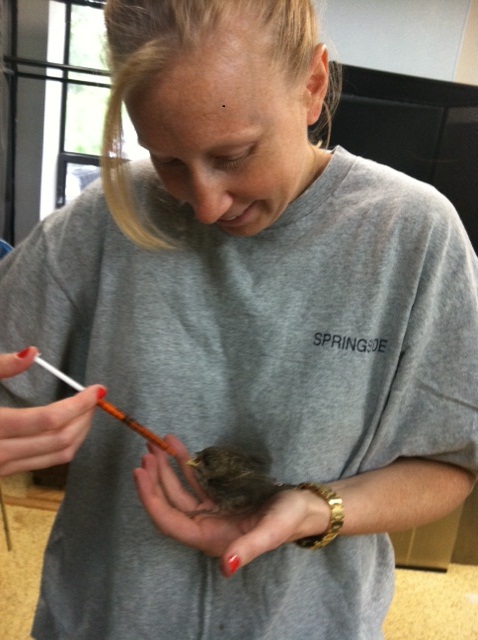
After the first hour of feeding it was time for me to participate. I started with the finches and was hesitant at first – concerned that I would hurt them. But just as my mom assured me, they knew what to do. The birds gaped just as they do with their mothers, and I moved the syringe very close to their mouths.  Before I knew it, my little finch gobbled up the syringe and all I had to do was push the plunger – just a little at a time.  Voila!  I had fed my first bird!

Me feeding my new feathered friend

These rounds of feeding continued for hours, but by the time I started feeding the birds myself the time was flying by. The activity is the definition of “therapeutic,” therapeutic for the birds (obviously) but also for the humans. You can’t really stress about work, or your ever-expanding to-do list if you are concentrating so completely on placing tiny mutilated (for a good cause) meal worms in to the mouths of baby birds at various levels of development and dependency.

I have frequently laughed about my mother’s devotion to these animals, but after spending time with them (the birds and my mom) I can see why she loves them so much. As I have gotten older there have been a plethora of moments, too many to count really, when I have realized that my mother is usually right. I shouldn’t have been so skeptical about animal rehab. Maybe the apple didn’t fall that far from the tree after all…

My mom also races Dragon Boats, maybe I’ll try that next!

Many thanks to Rick Schubert, Wild Life Rehabilitator, Director of Schuylkill Center’s Wildlife Rehabilitation Clinic and the staff and volunteers of the Schuylkill Center for letting me spend a day observing and participating in all the amazing work they do. Additional thanks to my amazing mom.  She asked me not to use her name, she is not too sure about this world wide web, but she is a pretty special lady! I was not compensated in any way for this blog post.

I.P. YAY!

This past weekend I invited dozens of my closest friends, and some total strangers, over to taste the amber I.P.A. that Matt and I brewed (hopefully) to perfection.  The other goals of the soiree were to create some buzz around, and generate some new ideas for, this very blog. Mission accomplished on all fronts!

I had tried my brew a few weeks before the party, when I confirmed that it did indeed taste like beer, but I had not had an entire bottle yet. Even if I had, I’m not sure if I have a sensitive enough palate to tell if the I.P.A. was really any good. As a result I bought an extra case of beer, just in case.

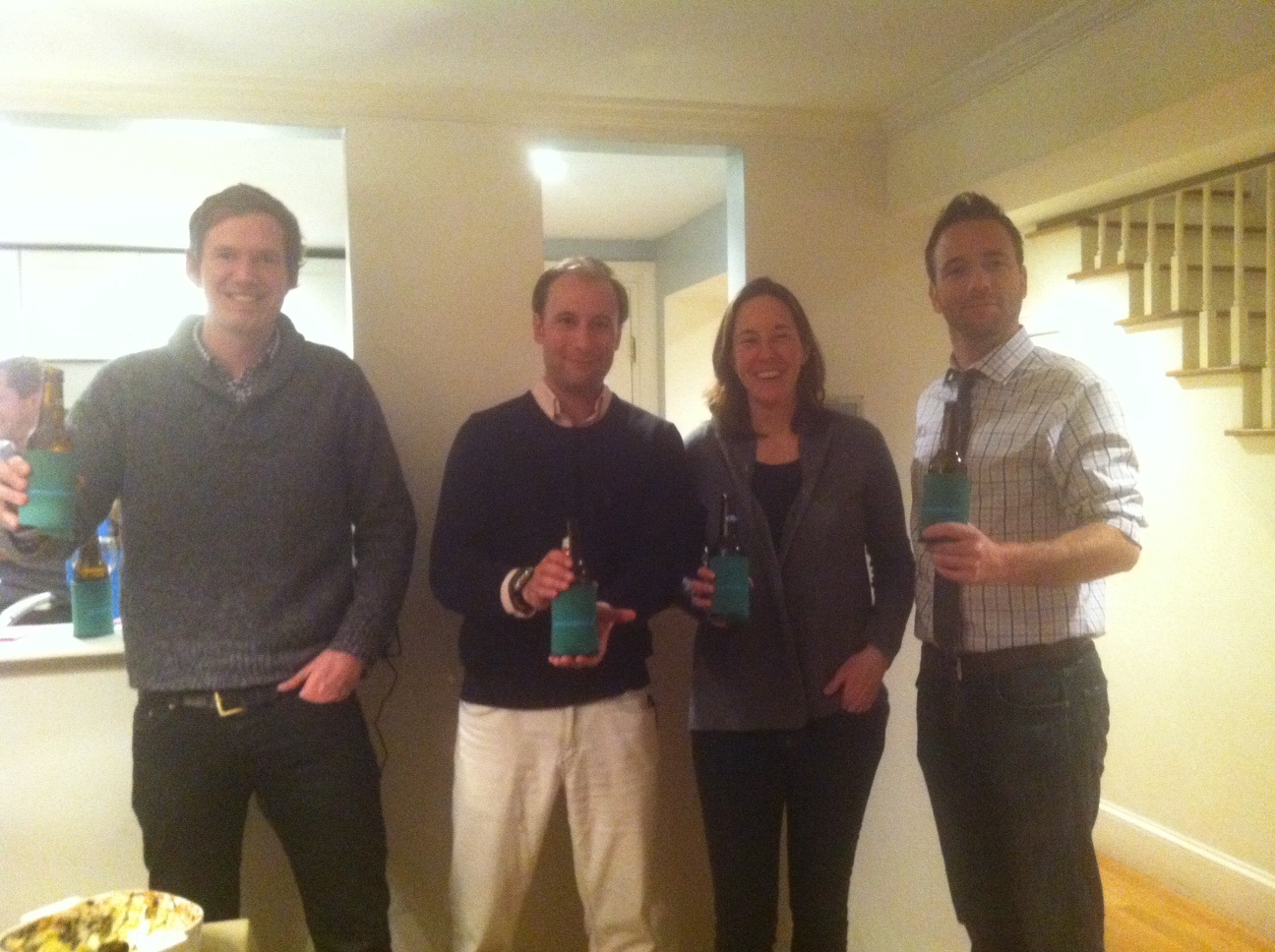
Some of my satisfied customers
Photo courtesy of Erin Wilson

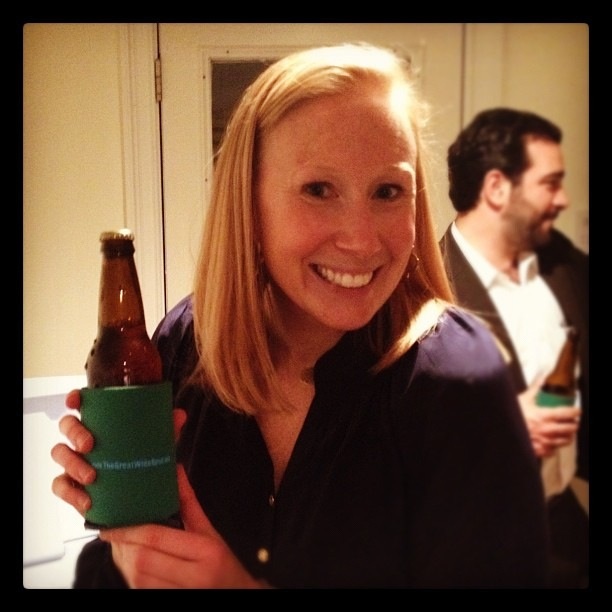
As people filtered in I served the beer in a custom-made koozie with the url for this blog on it (I claimed it was grassroots marketing,which it was of course, but in addition, I couldn’t figure out how to make labels for the bottles). When the first guest said they really liked the beer, I thought they were being polite.  As more people tried it, however, I saw the look of shock on their faces as they told me how great my beer was. It was at that point that I really started to believe that they actually liked it! I felt like Sally Field at the Oscars! I could not believe that it was actually good!  This tasty outcome may make me reconsider brewing again, despite the slow pace of the process.

“Fantastic,” my friend Pete texted the next day.  Another friend, a connoisseur of I.P.A.’s, picked up several undertones (such as florals, caramel and blackberry) that not only was my palate not sophisticated enough to sense, but I’m not even sure which ingredient I can attribute the tastes to.  But I will take all the compliments I can get!

Me and my I.P.A., in its custom koozie, of course
Photo courtesy of Kara Feigenbaum

In addition to drinking — and to my surprise — raving, about my beer, guests were also talking about this blog.  Some people had never met me, and had never read my blog, so it was wonderful to tell them how I embarked on this adventure to find my next passion.  To hear their reactions, observations and encouragement was fantastic. A new audience with fresh perspectives and ideas was exactly what I needed!

In preparation for this party I created a suggestion box. Yes, a good old middle school style, arts and crafty suggestion box.  I encouraged guests to help me brainstorm what I should try next and I got some great ideas…some off-color suggestions…but lots of good, clean ideas that I will pursue and hopefully you will read about on these pages over the next weeks and months.

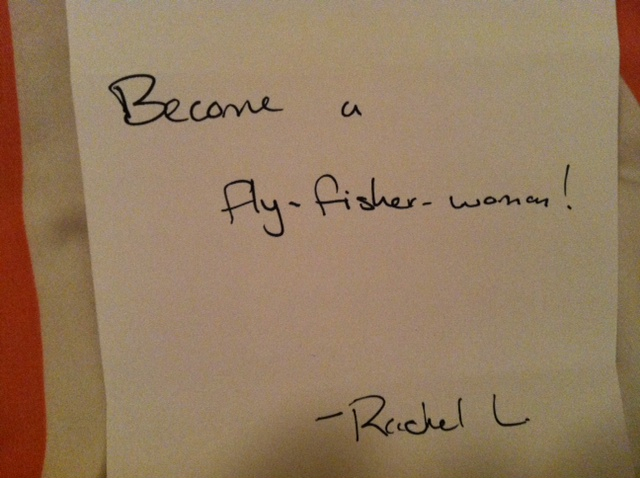
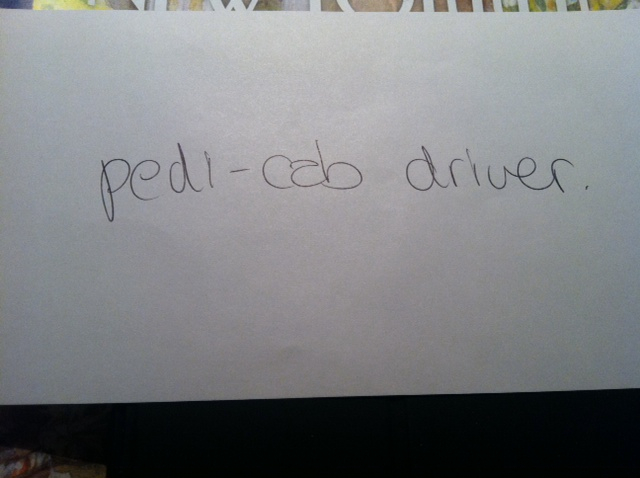
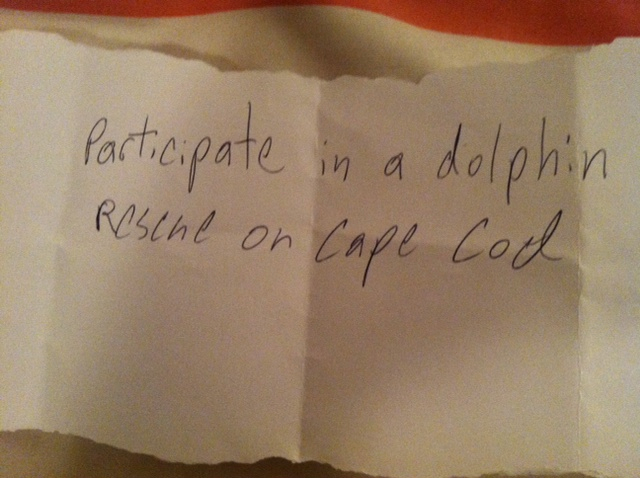
You can find a sampling of the suggestions below. Boy, oh boy, is this going to be fun!

In addition to the suggestions I received in my nifty suggestion box, I always accept suggestions electronically.  Please feel free to leave a comment or email me your bright idea at thegreatwideopenblog(at)gmail(dot)com!